
Every show has seats that never sold - and no one was working on them. To handle chargebacks on ticket sales, read the dispute reason and response deadline, match the payment to the ticket order, and submit evidence that answers the cardholder’s specific claim. Contest a dispute when your records support the sale; accept it when they do not, and coordinate any refund with your payment provider to avoid returning the same payment twice.
- How to handle chargebacks on ticket sales: match the dispute reason to order, delivery and admission evidence.
- Contest supported sales; accept valid claims rather than submitting unrelated records.
- Zunaro suits independent organisers needing storefront, box office and check-in on one live ticket inventory.
- A ticket scan supports admission, not proof that the cardholder authorised the payment.
How to handle chargebacks on ticket sales
Answer the allegation, not just the fact that you sold a ticket. An unauthorised-payment claim needs different evidence from a complaint that an event never happened. Your response should make that distinction immediately.
For your 2026 dispute workflow, use the deadline displayed in the payment provider’s notice. Do not substitute a deadline from another dispute, card scheme or online guide.
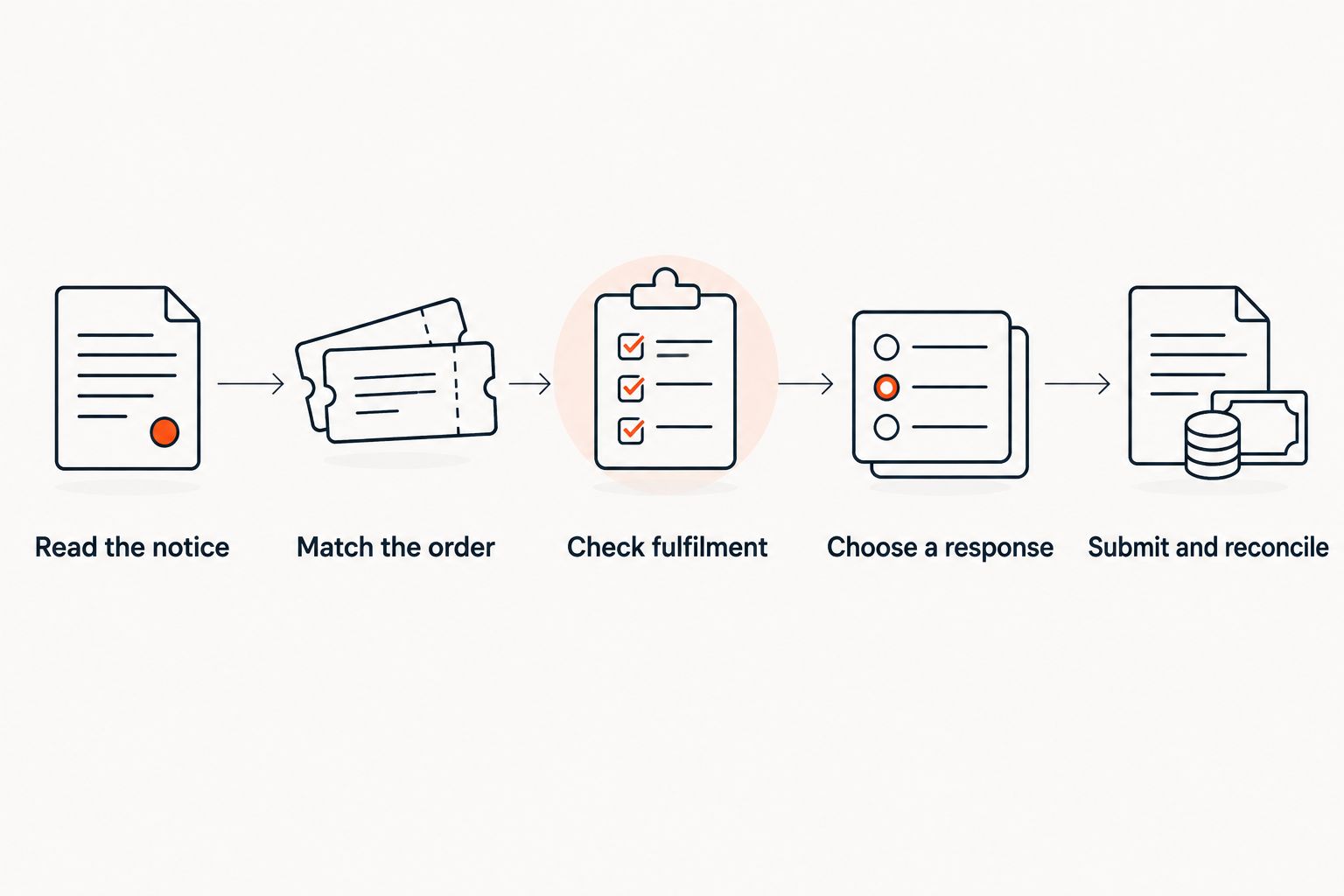
- Read the notice. Record the disputed transaction, reason, amount, response deadline and requested evidence.
- Match the order. Connect the payment reference to the event, performance, ticket allocation and buyer details.
- Check fulfilment. Retrieve ticket-delivery records, admission records and relevant correspondence. Understand what your ticket QR-code check-in workflow actually records.
- Choose a response. Contest with relevant evidence or accept the dispute when the claim is valid or unsupported by your records.
- Submit and reconcile. Send the response through the payment provider’s dispute channel, retain confirmation and record the outcome.
Give one person responsibility for the response. Box-office staff, finance and event operations can contribute records, but parallel submissions and conflicting explanations make the case harder to follow.
Why this matters
A ticket order contains several different events: payment, ticket delivery, admission and any later refund. Those events do not prove the same thing. A confirmation email shows an attempted delivery; an admission scan records use of a ticket; neither alone settles every dispute.
Your 2026 operating procedure should preserve that distinction. Organisers need a clear transaction history, not a folder of screenshots assembled after the response deadline arrives.
Chargebacks also reach beyond the box office. Finance needs to reconcile the disputed payment, while event operations needs to understand whether associated tickets remain valid. Keep those decisions connected without treating a disputed payment as automatic proof of fraud.
Build the evidence around the dispute reason
Unauthorised payment: address authorisation
Start with the payment provider’s requested evidence for the specific reason code. Relevant material can include authentication results, transaction details and correspondence connecting the purchaser to the order, where those records exist.
Do not claim that attendance proves cardholder permission. A ticket can be transferred, and the person entering the venue is not necessarily the person whose card funded the purchase. Describe what each record proves and stop there.
If the provider supplies authentication or liability-shift information, follow its instructions for that transaction. Do not assume the same treatment applies to every payment method or every dispute.
Tickets not received: address delivery
Connect the purchased tickets to the delivery destination and delivery record. Distinguish a message being generated from it being sent, delivered or opened; use only the status your records actually show.
Include a replacement-ticket exchange or collection record if it answers the allegation. If you issued tickets by another route, explain the sequence so the reviewer can follow the original order through to fulfilment.
Avoid sending an entire inbox. Select the messages that establish the relevant delivery facts, with dates and order references visible.
Event cancelled or changed: address what happened
Show the advertised event details, the actual event status and the communications sent to the purchaser. For a cancellation, include the refund record where applicable; for a changed event, explain the change without describing it as an unchanged performance.
A published refund policy is useful evidence of disclosed terms, not permission to ignore applicable consumer rights. Keep cancellation, postponement and voluntary non-attendance separate: they are different circumstances with different supporting records.
Refund not received: address the payment trail
Locate the refund reference, date, status and amount. Explain whether the refund completed, failed or remained pending according to the provider’s records.
An internal note saying refund approved does not establish that funds were returned. If a dispute is already open, ask the provider how to handle the refund before sending another payment outside the dispute process.
Should you contest, accept or refund?
Use the records and dispute status to choose your route. Do not contest every claim by default, and do not treat every chargeback as a customer-service refund.
| Response | Best for | Advantage | Limitation |
|---|---|---|---|
| Contest | Claims contradicted by relevant records | Lets you present evidence supporting the transaction | Takes staff time and does not guarantee reversal |
| Accept | Valid claims or cases without supporting evidence | Avoids submitting a defence you cannot substantiate | Leaves the disputed payment unrecovered through that response |
| Refund before a dispute | Valid refund requests with no open chargeback | Resolves the request through the original payment route | Does not automatically prevent a later dispute |
Choose contesting when the evidence answers the allegation. A large evidence bundle is not a substitute for a relevant one. If your records confirm that the event was cancelled and the promised refund never completed, explain the corrective action rather than arguing that a ticket was originally issued.
For a disputed transaction in 2026, check the provider’s instructions before issuing a separate refund. An open dispute and a direct refund can create overlapping money movements that need careful reconciliation.
Write a response a reviewer can follow
Open with a brief explanation identifying the disputed order, the event and the allegation. State why your records support accepting or contesting the claim. Keep your language factual, even when the buyer’s account conflicts with yours.
Arrange attachments in the same order as your explanation:
- Order record: event, performance, ticket allocation and payment reference.
- Terms record: the relevant wording shown at purchase, where retained.
- Fulfilment record: delivery, collection or admission evidence relevant to the claim.
- Correspondence: messages that explain the complaint and your response.
- Refund record: the provider’s transaction status and reference, where applicable.
Make each attachment understandable on its own. A scan timestamp without an event or ticket reference forces the reviewer to guess. A policy screenshot without context does not show that the purchaser encountered that policy.
Exclude unrelated marketing messages and personal information that does not support the case. Follow the provider’s file requirements and evidence instructions. Save the submitted version, not just the working draft.
Why chargeback responses vary
Your response should vary with the transaction, not with how strongly your team feels about the complaint. These factors determine which records belong in the case:
- Dispute reason: authorisation, delivery, cancellation and refund claims need different evidence.
- Payment provider: submission channels, evidence fields and deadlines differ.
- Event status: a completed performance is not the same case as a cancelled or postponed event.
- Ticket fulfilment: email delivery, collection and admission create different records.
- Purchase channel: storefront, box office and kiosk transactions can leave different transaction trails.
- Refund status: an approved refund and a completed refund are not interchangeable.
Update your 2026 checklist when the provider changes its process. Keep the current dispute notice as the authority for that case, rather than copying instructions from a previous response.
Can a ticket scan help you win a chargeback?
A ticket scan supports the fact that a ticket was presented for admission. It is useful when the allegation concerns access or use, provided you can connect the scan to the disputed order.
A scan does not establish that the cardholder authorised payment. Use admission evidence for admission claims; do not stretch it into evidence of identity or consent.
Should you refund a buyer after a chargeback opens?
Follow your payment provider’s instructions before issuing a refund against an open dispute. Check the disputed payment and any existing refund together so you do not return the same funds through separate routes.
Keep the buyer’s communication courteous and factual. Explain the payment status you can verify without promising an outcome controlled by the bank or payment provider.
Does a no-refund policy stop chargebacks?
A no-refund policy does not prevent a cardholder from raising a dispute. Disclosed terms can support your response, but they do not prove authorisation, delivery or performance by themselves.
Retain the terms presented at purchase rather than relying on the current event page. If the page changed, the current wording is not necessarily the wording the purchaser saw.
Reduce avoidable disputes before the next event
Make the purchase recognisable and the event terms clear. Review the statement descriptor with your payment provider, identify your venue or organiser in confirmation messages, and give buyers a clear support route.
Show the event date, location, admission conditions and refund terms before purchase. When an event changes, communicate the change and the available action clearly. Preserve the actual notice rather than recording only that a message was sent.
For your 2026 event calendar, define how staff record ticket reissues, transfers, admission exceptions and refunds. A manual door decision should leave a record connected to the order, not an unexplained change in ticket status.
Keep payment, order and admission references connected in your operating records. Collect only the information needed for fulfilment, support and dispute handling, and restrict access appropriately. More personal data is not automatically better evidence.
Choose ticketing records that support your response
Zunaro is an event ticketing platform for independent organisers who need storefront, box office and door check-in on one live inventory. It also includes seating and kiosk sales. That shared operating context is relevant when your team needs to understand which ticket an order covered and what happened at the door.
The platform sends e-tickets through WhatsApp as well as email. Its WhatsApp agent answers buyers, holds seats and hands over a checkout link. AI that sells your tickets. You keep the fees, the funds and the customers.
Organisers pay nothing per ticket. Buyers cover a booking fee of AED 3.99, or AED 1.99 for tickets under AED 20; free events carry none. Ask Zunaro Pro is AED 179/mo, with a 14-day trial and no card required.
The limitation: ticketing records do not guarantee a successful chargeback response. Your payment provider’s process still determines what to submit, and a delivery or admission record cannot answer every allegation. Evaluate the records you need before choosing your operating setup.
Based at DTEC, Dubai Silicon Oasis. Built for the Gulf - the UAE and Saudi Arabia. Review Zunaro for the platform details, and confirm payment-provider arrangements for your business separately.
FAQ
What is the best way to handle chargebacks on ticket sales?
Match the dispute reason to the payment, order, delivery and admission records, then respond before the deadline in the provider’s notice. Contest claims your evidence contradicts and accept valid claims rather than submitting unrelated material.
Can I fight a chargeback if the attendee used the ticket?
You can submit admission evidence when it answers the dispute reason. A ticket scan supports use of the ticket, but it does not by itself prove that the cardholder authorised payment.
How long do I have to respond to a ticket chargeback?
Use the response deadline shown in your payment provider’s dispute notice. Do not assume a deadline from another case applies to your transaction.
Should I contact the buyer after a chargeback?
You can contact the buyer to clarify the issue and retain relevant correspondence. Buyer communication does not replace the formal response required by your payment provider.
Does a no-refund ticket policy protect my venue from chargebacks?
A no-refund policy does not stop a cardholder from filing a dispute. The terms shown at purchase can support a relevant response, but they do not replace evidence of authorisation or fulfilment.
Can I refund a ticket while a chargeback is open?
Follow your payment provider’s instructions before refunding a transaction with an open chargeback. Check for existing refunds and dispute adjustments to avoid returning the same payment twice.
Does Zunaro guarantee that organisers will win ticket disputes?
Ticketing records do not guarantee a chargeback reversal. Zunaro’s storefront, box office and check-in share one live inventory, but the dispute still requires evidence matched to the payment provider’s process.
One last thing
A reissued ticket can make an accurate admission record look incomplete. If the original ticket was replaced, connect the replacement to the original order before preparing your evidence. Otherwise, your response can show an unused original ticket while missing the ticket actually presented at the door.