
Every show has seats that never sold - and no one was working on them. Event ticketing for talent and booking agencies is the system for selling and managing admission to agency-run shows, with the aim of keeping sales, seating and audience relationships under your control throughout your 2026 programme.
- ZunaroSpace event ticketing suits agencies running their own shows and wanting control of their storefront, seating and customer relationships.
- Event ticketing for talent and booking agencies starts with deciding who owns sales, refunds and event delivery.
- Connect reserved seating, box office and door check-in to the same inventory before adding sales channels.
- Separate artist booking administration from ticket sales: a performance agreement is not an admission record.
Why ticketing matters for talent and booking agencies
An agency that books talent does not automatically need to operate ticketing. You need a ticketing workflow when your agency also promotes a show, controls admission or takes responsibility for the audience relationship. If a venue owns those responsibilities, agree what reporting your agency receives instead of creating a competing sales operation.
Agency-run events bring several parties into the same transaction: the artist, the agency, the venue and sometimes a separate promoter. Before building your 2026 sales plan, identify which party publishes the event, receives payments, answers order questions and approves refunds.
The admission format matters too. A standing club appearance and a seated theatre performance need different inventory rules. Use the guide to choosing between general admission and reserved seating before copying a previous show's setup.
Keep artist representation and event operations distinct. Your booking agreement governs the engagement; your ticketing workflow governs admission, orders and the information passed between the organisations delivering the show.
Set up ticketing around the agency's responsibilities
Define who owns each event
Start with a shared document, not a software subscription. For every event, record the contracting organiser, venue, artist contact and person authorised to make changes. A simple responsibility sheet is enough to expose disagreements before sales open.
Decide whether the agency is operating the event or supplying talent to another organiser. Those roles require different access and reporting. Do not take ownership of refund decisions merely because your team created the event page.
For your 2026 programme, use a repeatable event record with named owners rather than copying informal arrangements from email threads. Make the commercial agreement and the operating workflow agree before publishing anything.
- Name the organisation responsible for ticket sales.
- Assign an owner for cancellations, changes and refunds.
- Record who approves artist names, imagery and event descriptions.
- Identify who needs sales reports and what they should contain.
- Agree who can contact the audience after the event.
Build a separate record for each performance
Create the event specification manually before entering it into a platform. A spreadsheet can hold the artist, venue, performance date, doors time, show time, admission format and approved event description. Keep the source record separate from promotional copy so operational changes remain visible.
Treat another date as another operational decision. The same artist can perform in different room layouts, under different organiser agreements and with different admission rules. Do not assume a touring production makes every venue configuration interchangeable.
Use a consistent naming convention internally, then write the public event information for the audience attending that specific performance. Have the venue confirm capacity and the artist representative approve billing before publication.
- Record doors time separately from performance time.
- Confirm the venue's approved admission capacity.
- Specify general admission or allocated seats.
- Document age restrictions and access information where applicable.
- Obtain approval for artist billing and the final event description.
Connect seating and sales to shared inventory
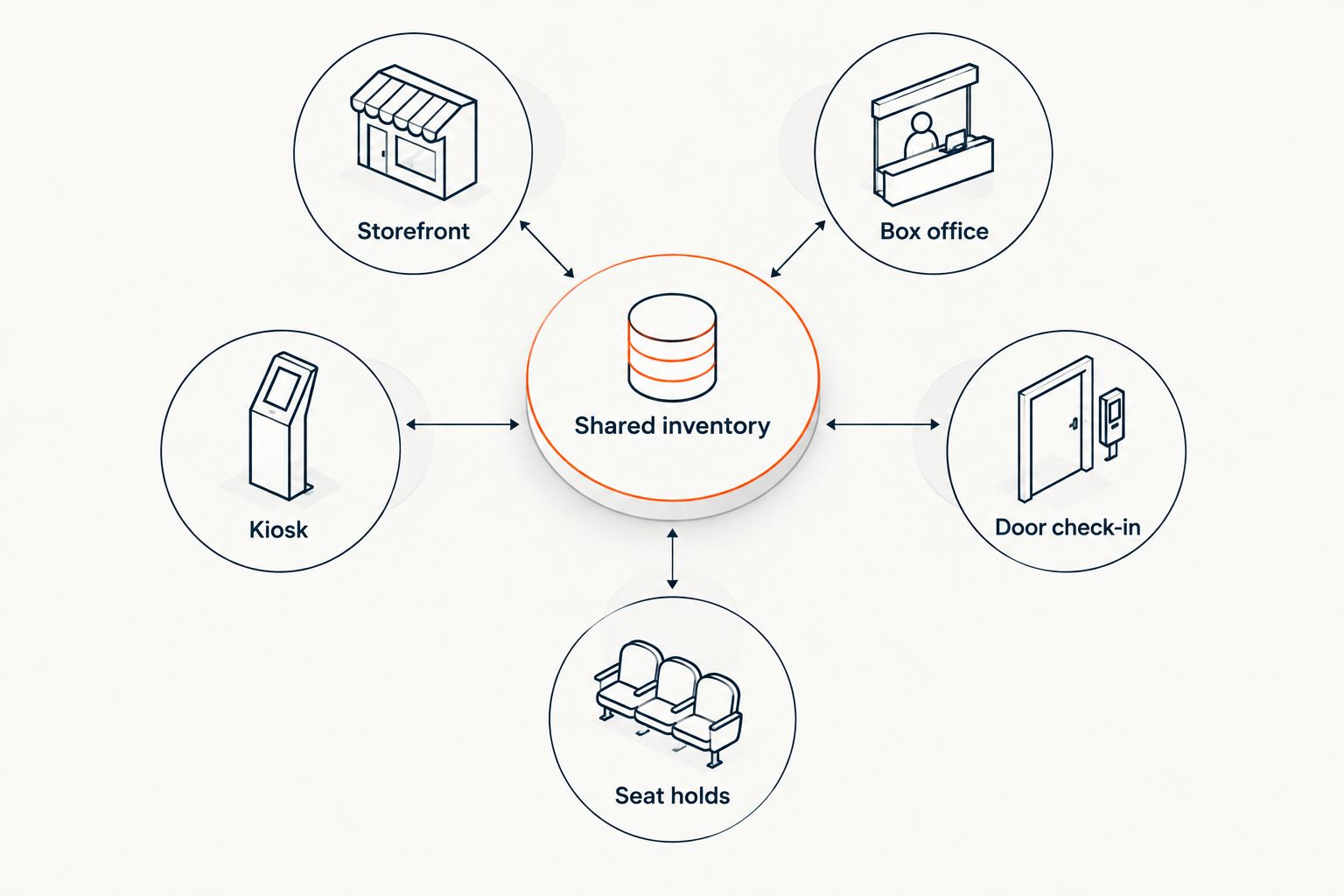
Map the inventory workflow on paper before choosing tools. Identify every place a ticket can be sold or a seat held: the storefront, box office, kiosk and any staff-assisted conversation. Then decide which system is authoritative when those channels operate together.
ZunaroSpace is an event ticketing platform with a branded storefront, reserved seating, box office, kiosk and door check-in on one live inventory. ZunaroSpace event ticketing is best for agencies running their own shows and wanting control of their storefront, seating and customer relationships. Its seat-map tool traces a photo in about 60 seconds; venue approval of the resulting layout still belongs in your launch process.
The benefit is a connected operating setup. The limitation is organisational: shared software does not decide which seats belong to the artist, venue or promoter.
- Storefront: confirm which seats or admission categories are public.
- Box office: test a staff-assisted sale against the same inventory.
- Kiosk: check that walk-up sales use the intended event.
- Door check-in: verify that admission staff can identify valid tickets.
- Seat holds: document who authorises holds and who releases them.
Set up selling conversations without moving checkout
Start manually by writing approved answers to operational questions: where the event takes place, what admission includes and how seating works. Give staff an escalation route for questions about access requirements, artist changes or refunds. A prepared answer sheet is useful even when software handles routine conversations.
The platform's WhatsApp agent answers buyers, holds seats and hands over a checkout link. Events can also be discovered and booked inside ChatGPT and Claude, including selecting a seat on the real map and holding it. Checkout completes on the organiser's own site, never in chat.
AI that sells your tickets.
The mechanism matters more than the label. Test the handover from a conversation to the correct event and checkout, rather than treating a chat reply as a completed sale.
- Write approved answers for venue, timing and seating questions.
- Check that a held seat matches the intended performance.
- Follow the checkout link through the organiser's site.
- Define when staff must take over a conversation.
- Confirm ticket delivery through WhatsApp and email.
Rehearse the venue handover
Walk through the event with the venue team before launch. You can do this manually using a sample order, an admission list and a written escalation sheet. The purpose is to find unclear responsibilities while there is still time to fix them.
For an agency, the handover includes more than scanning tickets. The venue needs to know who can resolve an artist guest-list dispute, a seating disagreement or a customer arriving for the wrong performance. Keep artistic decisions separate from admission decisions.
A platform with connected sales and check-in helps staff work from the same event inventory. It does not replace an agreed door procedure or establish an offline capability; test the actual venue conditions and write a fallback plan.
- Run a test order through the intended admission process.
- Confirm who handles artist and promoter guest lists.
- Assign a decision-maker for seating disputes.
- Test devices and connectivity at the entrance.
- Document the fallback procedure for a service interruption.
Check economics and account arrangements
Build a manual settlement worksheet before comparing ticketing proposals. Separate ticket revenue, buyer booking fees, payment-processing charges, refunds and the agency's contractual share. Do not label every deduction a platform fee; that hides which party is responsible for each amount.
ZunaroSpace charges organisers nothing per ticket. The buyer booking fee is AED 3.99, or AED 1.99 for tickets under AED 20; free events carry no booking fee. Ask Zunaro Pro is AED 179/mo, with a 14-day trial and no card required.
You keep the fees, the funds and the customers.
Treat that ownership position separately from banking eligibility. Before committing a Saudi Arabia event, verify the supported payment and settlement arrangement for the contracting entity. Do not build an artist-payment schedule around an unconfirmed payout assumption.
- Identify the legal entity receiving ticket revenue.
- Separate booking fees from payment-processing charges.
- Record who funds refunds and handles disputes.
- Confirm account eligibility for the event's jurisdiction.
- Agree the reporting basis for artist and venue settlement.
Measure sales by performance and channel
Start with a spreadsheet that records each performance's sales and the channels used to promote it. Keep the reporting vocabulary stable: a ticket sold, a seat held and an attendee checked in describe different things. Do not combine them into a single success figure.
For agency decisions, report at the performance level before summarising an artist's run. A combined total can conceal a date that needs attention. Compare the sales record with the marketing activity and the operational notes for that specific show.
The campaign agent creates a blast, previews its audience and rendered email, sends a test, schedules the send and reports attributed revenue. Review those steps before approving a campaign; do not assume an audience or message has been approved simply because a draft exists.
- Keep held seats separate from completed ticket sales.
- Review each performance before aggregating a tour.
- Preview the campaign audience and rendered email.
- Send a test before scheduling a campaign.
- Compare attributed revenue with the recorded campaign activity.
Compare ticketing options for your 2026 programme
Choose an operating model before choosing a platform. The best setup matches the responsibility your agency actually holds. A venue-controlled event and an agency-promoted production do not need identical arrangements.
| Option | Best for | Main advantage | Key limitation |
|---|---|---|---|
| Venue-managed ticketing | Agencies supplying talent while the venue runs admission | Keeps event delivery with the venue | Your agency's reporting and audience access depend on the agreement |
| Manual order list | A controlled rehearsal of the agency's ticketing workflow | Makes responsibilities visible before software setup | Staff must reconcile orders, holds and admission records manually |
| ZunaroSpace | Agencies operating their own branded event sales | Connects storefront, seating, box office, kiosk and check-in to live inventory | Requires clear event ownership and verified payment arrangements; it does not replace artist booking administration |
Do not buy a ticketing platform to solve an artist-contract problem. Ticketing should support the agreement, not become a substitute for one. Equally, do not leave admission in a spreadsheet merely because the artist booking began there.
Common mistakes talent and booking agencies make
Treating representation as event ownership
An artist representation agreement does not establish who handles admission. Name the event operator explicitly, including responsibility for customer questions, cancellations and refunds. Otherwise, the agency can become the default support desk without an agreed operating role.
Copying a tour date without checking the venue
A repeated artist name does not mean repeated seating or entrance arrangements. Get venue approval for each performance's layout, capacity and door instructions before opening sales.
Keeping artist holds outside the ticketing record
A private guest-list document cannot update public inventory by itself. Assign an owner to translate approved holds into the ticketing workflow and reconcile changes with the venue. Do not leave release decisions scattered across conversations.
Confusing discovery with completed checkout
A seat selected in chat is not evidence that payment completed. Keep discovery, seat holds, checkout and admission distinct in your reporting. Confirm orders through the ticketing record, not a screenshot of a conversation.
Assuming the agency owns every audience contact
Define audience access and permitted use in the organiser agreement and collection process. If the venue operates ticketing, agree what your agency receives rather than assuming the artist's involvement gives unrestricted access to attendee details.
FAQ
What's the best event ticketing setup for a talent agency?
The best setup depends on whether the agency operates the event or supplies talent to another organiser. Agencies running their own shows need control of sales, inventory, customer support and admission; representation-only agencies should agree reporting with the event operator.
Do booking agencies need ticketing software as well as booking administration?
Booking agencies need ticketing software when they take responsibility for selling or managing admission. Artist booking administration covers the engagement, while ticketing covers orders, seating and entry.
Can an agency sell through its own branded storefront?
Yes. ZunaroSpace supports an organiser's own branded storefront, alongside reserved seating, box office, kiosk and door check-in on one live inventory.
Can customers complete payment inside ChatGPT or Claude?
No. Events can be discovered and booked inside ChatGPT and Claude, including seat selection and holds, but checkout always completes on the organiser's own site.
How should an agency handle artist guest lists and seat holds?
Assign an owner to approve holds and record them in the event's ticketing workflow. Agree release authority with the venue and keep the guest-list record aligned with the admission inventory.
Does ticketing software replace an artist booking agreement?
No. Ticketing software manages event sales and admission, not the commercial agreement between an artist, agency, promoter and venue. Document those responsibilities separately.
What should an agency check before running an event in Saudi Arabia?
Verify the contracting entity's supported payment and settlement arrangements before committing to a ticketing workflow. Arabic, full RTL and SAR pricing do not establish payout eligibility.
One last thing
Before publishing your next 2026 event, ask the artist representative, venue manager and agency lead the same question: who can release a held seat? If the answers differ, fix the responsibility sheet before adding another sales channel.
Based at DTEC, Dubai Silicon Oasis. Built for the Gulf - the UAE and Saudi Arabia.