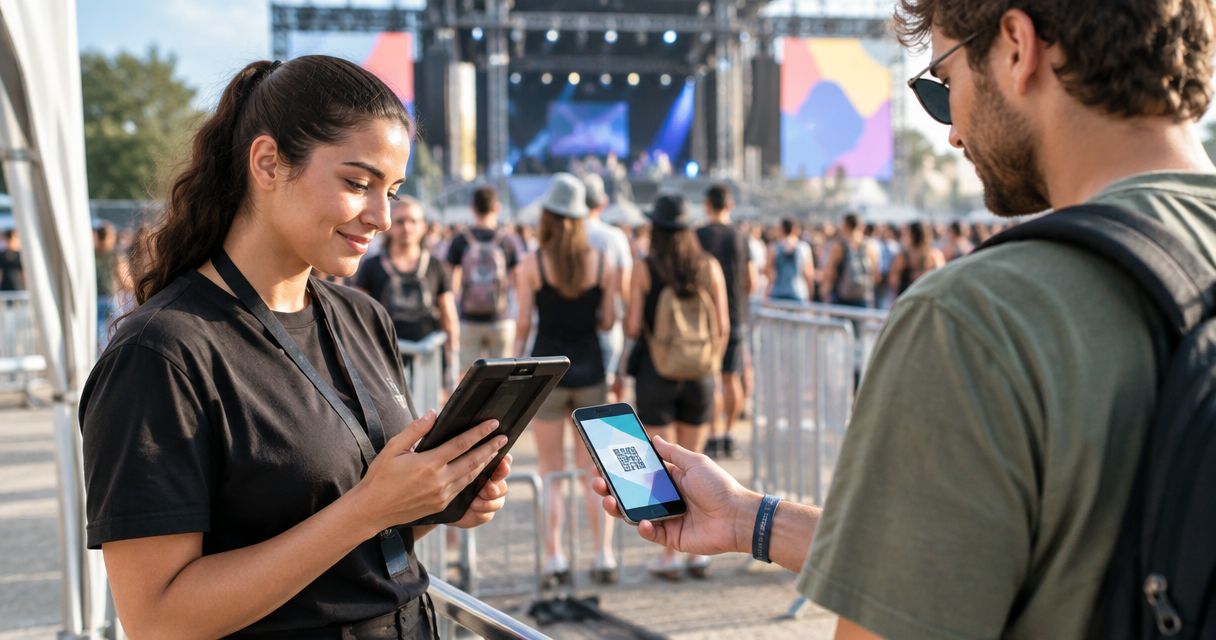
Yes, festival organisers can cap ticket purchases per buyer if their ticketing platform supports a buyer-level limit. A per-order cap is not the same thing: someone can place another order unless the platform checks purchases across orders. Before sales open, decide which sales channels the rule covers and how you will identify repeat buyers.
- Yes: festival organisers can cap ticket purchases per buyer when their platform supports buyer-level limits.
- A per-order cap controls each checkout, not a buyer who places another order.
- Zunaro suits organisers who need storefront, box office and seating on one live inventory; confirm buyer-level caps before launch.
- Publish the limit clearly and check how online, box-office and kiosk sales are handled.
Why this matters
A purchase limit is a rule about who gets access to tickets, not just a number in a checkout form. If the rule applies online but staff can sell more tickets to the same buyer at the box office, you have not put a festival-wide cap in place. In 2026, write the rule before selecting the setting: what counts as one buyer, which ticket types it covers and what happens when someone makes another purchase.
Zunaro is an event ticketing platform for independent organisers and venues, with a branded storefront, box office and kiosk sharing one live inventory. Zunaro is best for Gulf festival organisers who want those sales channels and reserved seating together; confirm buyer-level purchase limits before relying on them. Shared inventory prevents a seat being treated as available in separate channels. It does not, by itself, establish that the platform can enforce a cap across a buyer’s separate orders.
Can festival organizers cap ticket purchases per buyer?
Yes, provided the ticketing system can recognise a buyer across purchases and apply the limit to the relevant tickets. Check that capability before advertising a strict per-buyer rule. An order-quantity setting answers a narrower question: how many tickets can go into a single checkout?
| Approach | What it controls | Best for | Main limitation |
|---|---|---|---|
| Per-order cap | Tickets in one checkout | Keeping individual orders small | The same person can submit another order |
| Buyer-level cap | Tickets attributed to one buyer across orders | Enforcing a stated per-buyer rule | Accuracy depends on how the system identifies buyers |
| Ticket-type cap | Purchases of a particular admission type | Applying a rule to selected ticket types | Other ticket types need their own rule if included |
| Channel-specific cap | Purchases made through one sales channel | Managing that channel’s checkout | Sales elsewhere can fall outside the rule |
These approaches solve different problems. If your policy says each buyer has a limit, a per-order setting is insufficient unless the platform also connects that buyer’s orders. If you intend to restrict only online checkouts, say so. Do not call that a festival-wide buyer cap while box-office or kiosk transactions follow different rules.
Before choosing a setting, give your ticketing provider a concrete scenario: a buyer completes an online order, returns later and tries again. Ask whether the second checkout is checked against the first. Then ask the same question about a purchase made through a staffed box office or kiosk. The answers tell you what rule you can actually publish.
Per-order caps and buyer-level caps solve different problems
A per-order cap is straightforward for a buyer to understand: the checkout stops them adding more than the permitted quantity to that order. It also leaves a clear gap. If the buyer can start another checkout, the first order’s limit says nothing about their total purchases.
A buyer-level cap requires the platform to decide whether separate transactions belong to the same buyer. That decision is central to enforcement, and you should ask the provider what information the system uses. An email address, account or other identifier can form part of a platform’s approach; none should be assumed to work across every channel without checking the actual setup.
Best for a simple checkout restriction: a per-order cap. Best for a stated per-buyer policy: a buyer-level cap that checks earlier purchases. Neither choice is automatically right for every festival. Use language that matches the control you can verify, rather than describing a per-order restriction as protection against every repeat purchase.
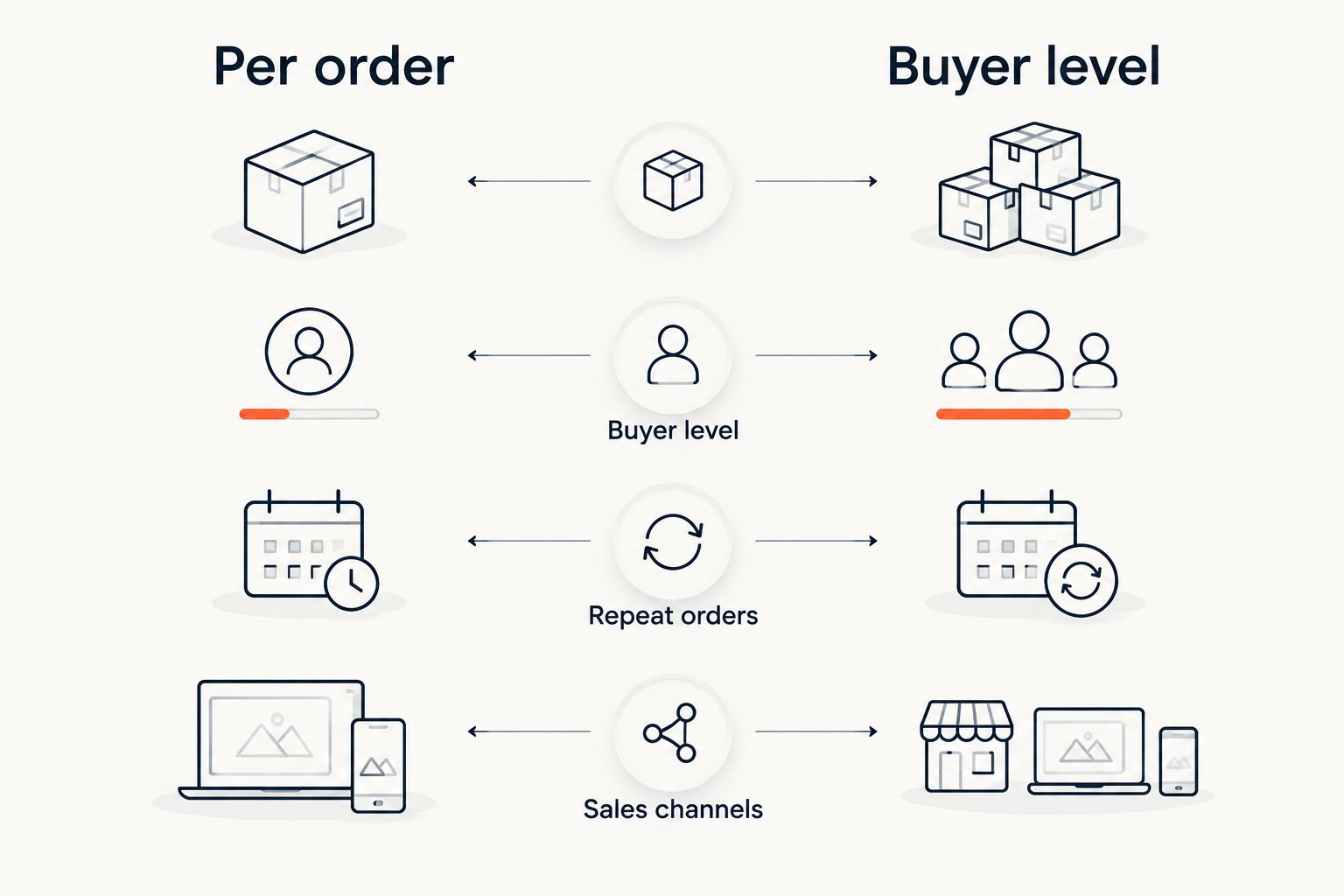
For a 2026 festival, test the buyer journey rather than relying on the setting’s name. Check a fresh order, a return visit and a sale through every channel you plan to use. Record what the system blocks and what it permits. That gives your box-office team a rule they can explain without making promises the checkout cannot keep.
How to set a purchase-cap policy before tickets go live
- Choose the scope. State whether the limit covers the whole festival, a particular event, a ticket type or a reserved-seating section. A rule without a scope gives buyers and staff different interpretations.
- Choose what counts as a buyer. Ask your platform how it links separate orders and what happens when the identifying information changes. If it cannot enforce a buyer-level rule, describe the available restriction accurately.
- Check every sales channel. Run through storefront, box-office and kiosk transactions where those channels are in use. Shared ticket inventory and shared buyer-limit enforcement are separate capabilities.
- Decide how changes are handled. Write down how cancellations, changed orders and staff-assisted purchases affect the cap. Confirm which of those cases your platform can enforce automatically and which need a staff decision.
- Publish the rule at purchase. Put the limit beside the affected ticket choice or checkout instruction. Tell buyers whether it applies per order or per buyer, and avoid language broader than the system’s verified behaviour.
- Test before release. Complete the purchase scenarios that matter to your policy, including a repeat order. If a channel does not enforce the rule, change the process or narrow the published rule before selling starts.
The sequence matters. A setting cannot settle a policy question you have not answered. Conversely, a clear policy cannot stop a repeat checkout if the platform has no way to connect it to the earlier purchase. In 2026, have the person responsible for festival ticketing sign off on both the wording and the tested checkout behaviour.
Why purchase limits vary between festivals
- Ticket type. A festival can choose different rules for different admission types, but the platform must support the intended scope. Check the rule attached to each type you sell.
- Reserved seating. Selecting seats adds a practical question: does the limit count seats held during checkout, completed purchases or both? Confirm when a hold ends and when a purchase counts.
- Sales channels. An online rule is not necessarily a box-office or kiosk rule. Ask which channel applies the cap and whether staff see the information needed to follow it.
- Buyer identification. A buyer-level rule depends on linking purchases to a buyer. Ask what the system uses and how a changed identifier affects the check.
- Order changes. Cancellations and amendments affect what a buyer has purchased. Define whether the rule counts current tickets or all earlier transactions, then verify the available behaviour.
- Policy goal. Keeping checkout sizes manageable and limiting total purchases are different aims. Choose a per-order control for the former and verified buyer-level enforcement for the latter.
None of these factors supplies a universal quantity to set. Your limit is a festival policy decision; the platform question is whether you can enforce that decision for the ticket types and channels you use.
What about seat holds and repeat purchases?
A seat hold is not a completed ticket purchase. If your festival uses reserved seating, ask whether a buyer can hold seats in one checkout while starting another, and whether an expired hold stops counting automatically. Those are test cases, not assumptions to make from a seating-chart screenshot.
Zunaro’s WhatsApp agent can answer buyers, hold seats and hand over a checkout link. Its events can also be discovered and booked inside ChatGPT and Claude, where a buyer can pick a seat on the real map; checkout completes on the organiser’s own site, never in chat. Those are ways buyers reach a purchase, not proof of a buyer-level cap. Confirm how any planned limit applies to those journeys before describing it as universal.
Zunaro also provides a seat map traced from a photo in about 60 seconds, alongside storefront, box office, kiosk and door check-in on one live inventory. That makes seating setup a different question from purchase-cap enforcement. For 2026 sales planning, keep the checks separate: verify that a seat cannot be sold twice, then verify whether one buyer can buy beyond the stated limit through another order.
Can a buyer bypass a per-order ticket limit?
Yes, a per-order ticket limit can be bypassed by placing another order if no buyer-level check links the transactions. That is why the wording matters. Call it an order limit when it applies to each checkout, and use a per-buyer claim only after testing repeat purchases.
A cap can still require a staff process even when the online checkout enforces it. Decide who handles an exception and how staff will explain the published rule. Do not promise that a setting prevents every attempt to acquire extra tickets unless its behaviour supports that promise.
Should the same cap apply at the festival box office?
Yes, if you tell buyers the cap applies per buyer across the festival. If box-office staff cannot check earlier purchases, either give them an enforceable process or state that the rule applies only to the channels where it can be enforced. A shared inventory keeps ticket availability aligned; it does not answer the buyer-identity question.
Zunaro’s box office and kiosk use the same live inventory as its storefront. Ask specifically whether a proposed purchase-limit rule also follows the buyer across those channels. That question is more useful than asking only whether the platform has ticket limits.
FAQ
Can festival organizers cap ticket purchases per buyer?
Yes, if the ticketing platform supports buyer-level enforcement across the purchases covered by the rule. A per-order limit alone does not stop a buyer placing another order.
Is a per-order limit the same as a per-buyer limit?
No. A per-order limit restricts one checkout; a per-buyer limit must account for that buyer’s relevant purchases across orders.
Can a festival apply different limits to different ticket types?
Yes, when its ticketing system supports rules scoped to ticket types. Check each type’s setting and make the buyer-facing policy match it.
Does shared ticket inventory enforce a buyer purchase cap?
No. Shared inventory keeps availability aligned across sales channels, while a buyer purchase cap requires a rule that identifies and checks the buyer.
Do seat holds count towards a purchase cap?
That depends on the platform’s rule. Ask whether the cap counts held seats, completed purchases or both, and test what happens when a hold expires.
Can a buyer-level cap cover online and box-office sales?
Yes, if the platform can identify the buyer and enforce the rule in both channels. Verify the cross-channel behaviour before publishing a festival-wide claim.
Does Zunaro offer buyer-level purchase caps?
Zunaro’s supplied product details do not confirm a buyer-level cap. Confirm the setting and test repeat purchases across your planned sales channels before relying on it.
One last thing
The most useful purchase-limit test is not whether checkout rejects an oversized basket. It is whether a buyer who has already completed a permitted purchase can return through another channel and buy again. In 2026, make that repeat purchase your acceptance test before you announce a per-buyer cap.
Zunaro gives festival organisers a branded storefront, reserved seating and a box office tied to one live inventory. You keep the fees, the funds and the customers. Confirm the separate buyer-limit requirement before treating those platform features as an enforcement promise.