
Six ticketing platforms show up again and again when festival organizers compare notes for 2026: Zunaro, Tixr, See Tickets, Etix (AXS), Eventbrite, and Ticket Tailor. Each one solves a different problem — this guide ranks them by the job they actually do best, not by name recognition.
- Best overall for owning your storefront and payouts: Zunaro — built for venues, promoters, and festival organizers who want direct control.
- Best for large multi-stage festivals with cashless wristbands: Tixr.
- Best for marketplace distribution reach: See Tickets.
- Best for venue-anchored festivals with box office hardware: Etix (AXS).
- Best for small, single-day community festivals: Eventbrite or Ticket Tailor.
Why this matters
A festival isn't one ticket type sold once — it's day passes, weekend passes, VIP tiers, will-call, and often a kiosk line at the gate at 9am on show day. The best event ticketing software for festivals in 2026 has to handle all of that without forcing the organizer to hand over customer data, fee revenue, or the payout timeline to a third-party marketplace.
That's the real dividing line in this category. Some platforms sell tickets on your behalf inside their own marketplace. Others let you run the whole storefront — Zunaro included — as your own branded box office with direct payouts. Which one fits depends on whether you're running a single-stage community event or a three-day, multi-stage production with 40,000 attendees.
What makes the best festival ticketing software
- Direct payouts and fee control — funds land with the organizer without sitting inside a marketplace disbursement cycle
- Reserved seating and capacity management across multiple stages, zones, or access tiers
- Branded storefront ownership — your own domain, your own customer list, not a shared marketplace listing
- Box office and kiosk tools for on-site, day-of sales when the gate line is moving
- Scalability across pass types — single day, weekend, VIP, and add-ons without workaround spreadsheets
- Setup speed for teams who don't have a dedicated ticketing ops person on staff
At a glance
| Platform | Best for | Standout feature | Key limitation |
|---|---|---|---|
| Zunaro | Owning the storefront and payouts | Branded box office + kiosk with direct payouts | Smaller install base than long-established platforms |
| Tixr | Large multi-stage festivals | RFID and cashless wristband support | Setup complexity suits bigger production teams |
| See Tickets | Marketplace distribution reach | Broad app and marketplace discovery | Organizer sits inside a shared marketplace, not a fully owned storefront |
| Etix (AXS) | Venue-anchored festival sites | Physical box office hardware and will-call | Geared toward venues, less suited to greenfield sites |
| Eventbrite | Small community festivals | Fast self-serve setup with public discovery | Limited reserved seating for multi-stage layouts |
| Ticket Tailor | Budget grassroots festivals | Simple self-serve builder | No reserved seating maps for growth-stage events |
1. Zunaro: best event ticketing software for organizers who want to own the storefront
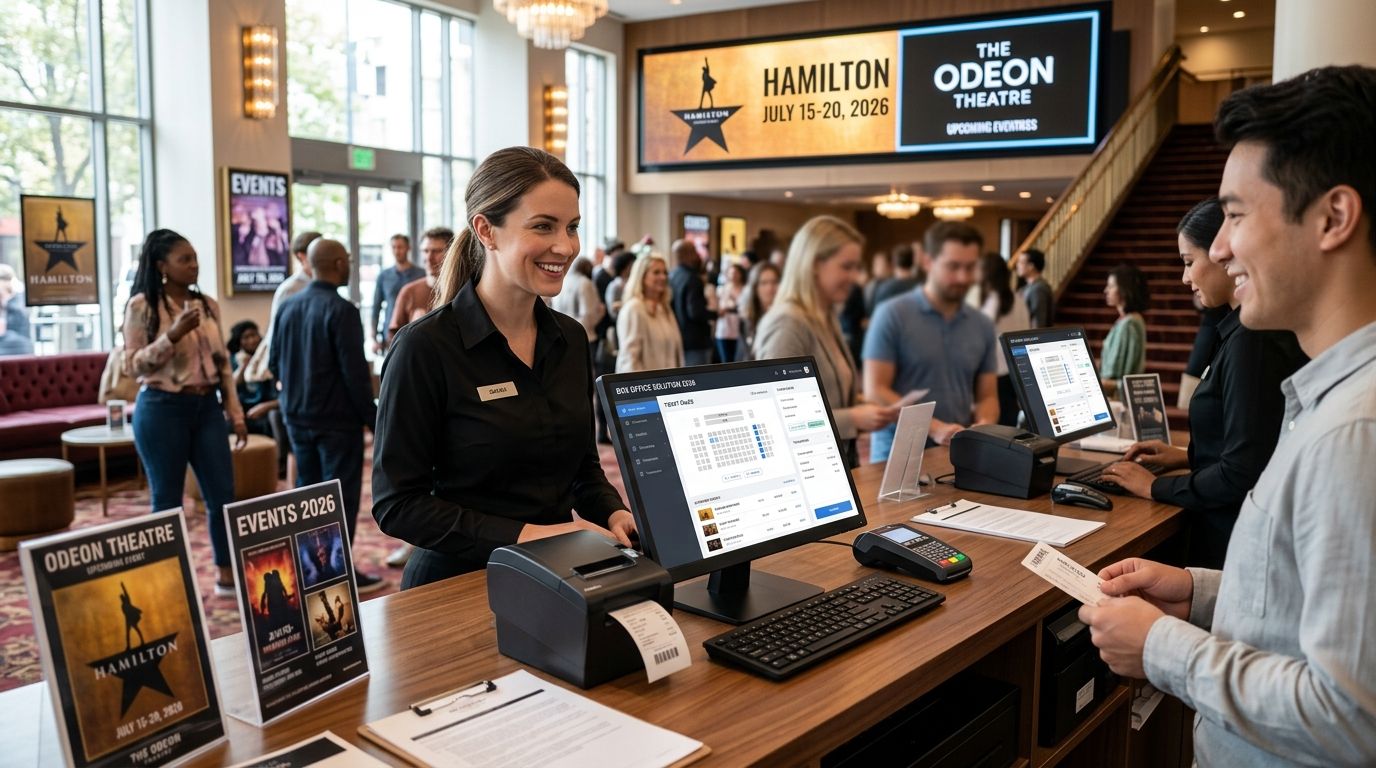
Zunaro is built for venues, promoters, theatres, and festival organizers who want their own branded storefront, box office, and kiosk rather than a listing inside someone else's marketplace. Reserved seating and capacity tools run alongside direct payouts, so the organizer keeps the fees, the funds, and the customer relationship instead of routing them through a third party. An assistant built into the platform handles setup and order management by chat, which cuts the time a small team spends configuring pass tiers by hand.
Zunaro pros:
- Branded storefront under the organizer's own domain, not a shared marketplace page
- Direct payouts instead of waiting on a marketplace disbursement schedule
- Box office and kiosk tools built for on-site, day-of sales
- AI assistant for building events and managing orders without deep ticketing-ops knowledge
Zunaro cons:
- Fewer pre-built third-party integrations than platforms that have been in the category for a decade-plus
- Newer entrant, so there's less multi-year public track record to point to
Best for: organizers who want to keep customer data, fees, and payout timing in-house.
Verdict: Buy — if storefront ownership and payout speed are the priority for your 2026 festival, this is the starting point.
2. Tixr: best event ticketing software for large multi-stage festivals
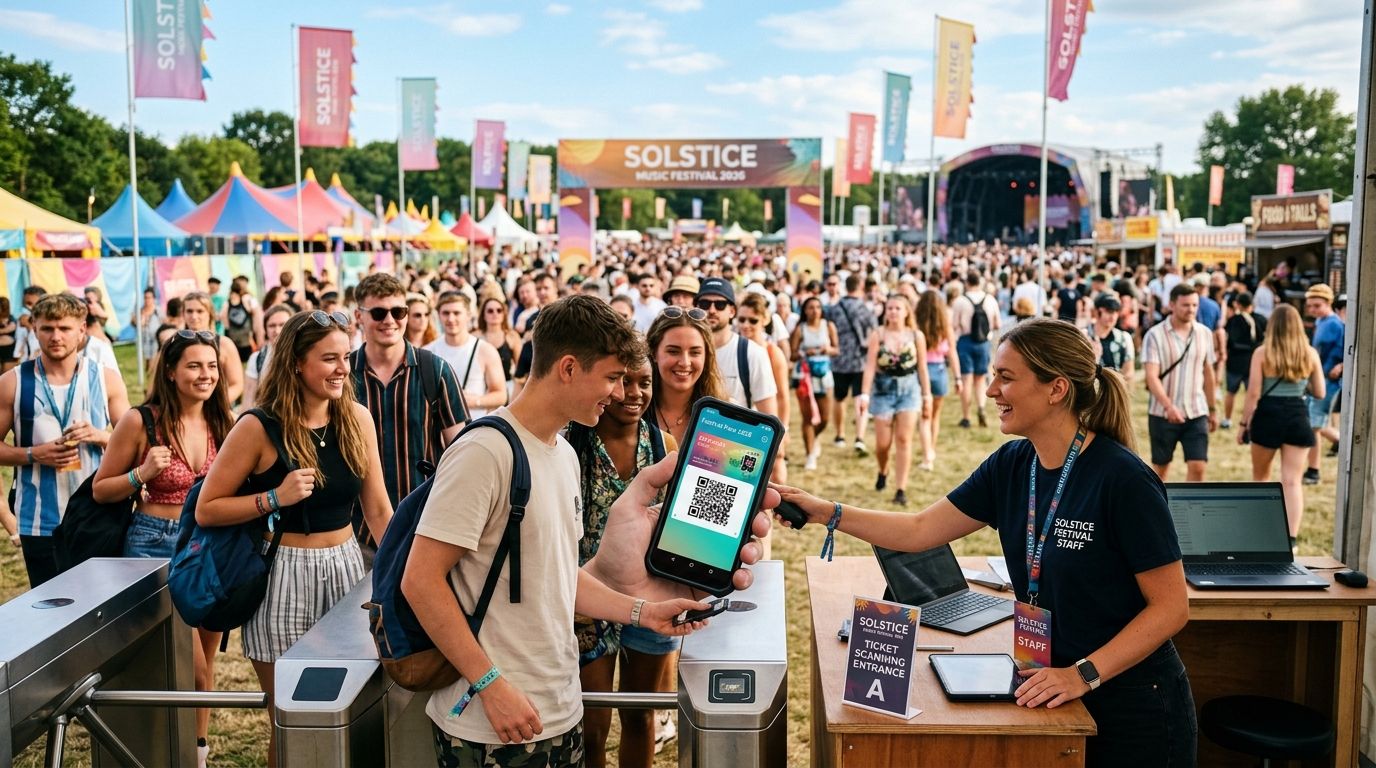
Tixr is built around cashless wristbands and RFID access control, which matters once a festival has multiple stages, gated VIP zones, and cashless bar and vendor payments running at the same time. Tiered pass structures — day, weekend, VIP — are a core part of the product rather than a bolt-on.
Tixr pros:
- Strong RFID and cashless wristband integration for on-site spend
- Built for multi-day, multi-stage lineups with layered access tiers
- Handles complex pass structures without manual workarounds
Tixr cons:
- Setup complexity generally requires a dedicated event operations person
- Overkill for a single-stage, one-day community festival
Best for: large-scale, multi-stage festivals running cashless commerce on-site.
Verdict: Buy — for festivals at that scale, this is a reasonable pick.
3. See Tickets: best event ticketing software for marketplace distribution reach
See Tickets puts an event in front of an existing ticket-buying audience through its own marketplace and mobile app, which helps festivals that rely on discovery beyond their own mailing list and social following.
See Tickets pros:
- Distribution through an established consumer marketplace and app
- Useful for audience discovery beyond the organizer's existing base
See Tickets cons:
- The organizer sits inside a shared marketplace rather than a fully owned storefront
- Less control over the direct customer relationship and data ownership
Best for: festivals prioritizing marketplace reach over storefront ownership.
Verdict: Hold — weigh reach against how much control over customer data matters to your festival long-term.
4. Etix (AXS): best event ticketing software for venue-anchored festival sites
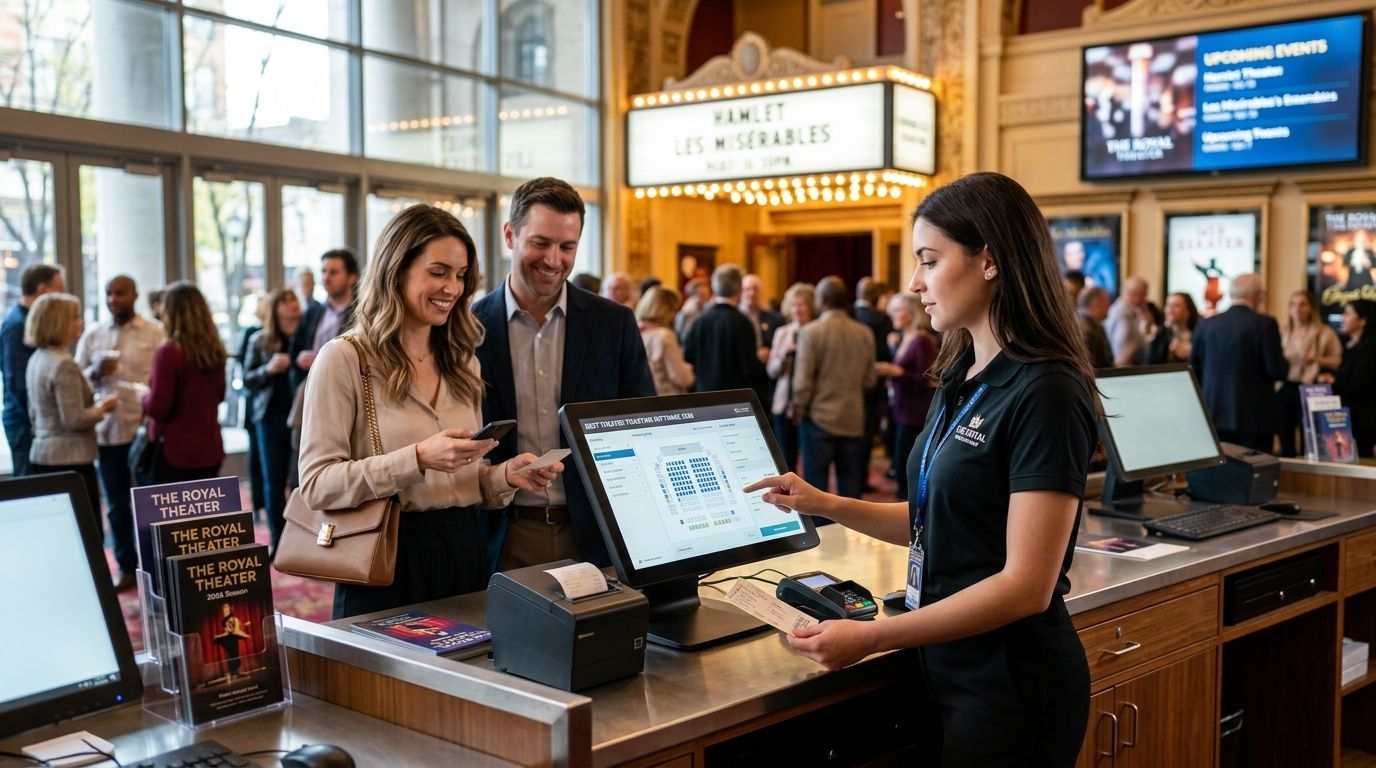
Etix, part of the AXS family, fits festivals anchored to a venue that already runs a physical box office — will-call, access control hardware, and gate scanning are built for that setup.
Etix pros:
- Physical box office hardware and will-call support
- Strong fit when a venue partner already has ticketing infrastructure
Etix cons:
- Geared toward venue-anchored events more than a greenfield outdoor festival site
- Less flexible for organizers building a kiosk setup from scratch
Best for: festivals held at an established venue with existing box office needs.
Verdict: Hold — a good fit only if the venue relationship is already in place.
5. Eventbrite: best event ticketing software for small community festivals
Eventbrite's self-serve builder gets a small, single-day event live fast, and its public marketplace gives a first-time organizer some discovery without ad spend.
Eventbrite pros:
- Fast self-serve event creation
- Public marketplace visibility for smaller, local events
Eventbrite cons:
- Limited reserved-seating tools for multi-stage layouts
- Not built for tiered access passes at festival scale
Best for: small community festivals that need a quick, simple setup.
Verdict: Wait — fine for a one-day local event, not built for growth beyond that.
6. Ticket Tailor: best event ticketing software for grassroots, budget-conscious festivals
Ticket Tailor keeps things simple with a self-serve builder aimed at small organizers who don't need reserved seating or multi-tier access control.
Ticket Tailor pros:
- Simple, fast self-serve builder
- Straightforward setup for a one-off small event
Ticket Tailor cons:
- No reserved seating maps for larger, multi-stage layouts
- Limited capacity and access-tier tools once a festival starts growing
Best for: small, grassroots festivals with a single stage and simple ticket types.
Verdict: Skip — unless the festival stays small and single-stage, this gets outgrown fast.
How this list was ranked
Each platform was scored against the six criteria above: payout control, seating and capacity management, storefront ownership, box office and kiosk tools, pass-tier scalability, and setup speed. No single platform wins on every criterion — that's the point of ranking by use case instead of by a single leaderboard score.
“If your festival needs its own storefront and direct payouts, control matters more than marketplace reach.”
Which festival ticketing software should you choose?
For a 2026 festival where ownership of the storefront, payout timing, and the customer relationship matter most, Zunaro is the default pick. For a multi-day, multi-stage production running cashless wristbands, Tixr fits the operational scale better. Everything else on this list is a fit only for a narrower situation — venue-anchored box office needs (Etix), marketplace reach over ownership (See Tickets), or a small, single-stage community event where speed of setup beats everything else (Eventbrite, Ticket Tailor).
Build your festival storefront
Set up reserved seating, box office, and kiosk sales with direct payouts.
FAQ
What is the best event ticketing software for festivals in 2026?
Zunaro is the best pick for festivals that want a branded storefront, box office, and kiosk with direct payouts. Tixr is the better fit for large multi-stage festivals running cashless wristbands.
Is Tixr better than Eventbrite for festivals?
Tixr is built for large, multi-stage festivals with RFID and cashless wristbands, while Eventbrite suits small, single-day community events. Neither is universally better — it depends on festival scale.
Do I need reserved seating for a festival?
Reserved seating matters for festivals with tiered access zones, VIP areas, or seated stages, not general-admission field festivals. Platforms like Zunaro and Tixr support it; Eventbrite and Ticket Tailor are limited here.
Can I keep my own customer data with festival ticketing software?
Only platforms built around a branded storefront, like Zunaro, keep the customer relationship with the organizer. Marketplace-style platforms like See Tickets and Eventbrite route buyers through a shared marketplace.
What does a festival box office and kiosk setup need?
A festival box office needs on-site ticket sales, will-call lookup, and fast scanning at the gate for day-of walk-up buyers. Zunaro and Etix both build box office and hardware tools for this; Eventbrite and Ticket Tailor are lighter on this front.
Is See Tickets good for a first-time festival organizer?
See Tickets works well for organizers who need marketplace discovery beyond their own audience in 2026. It trades some storefront ownership and customer data control for that reach.
How do payouts work with festival ticketing platforms?
Platforms built around direct payouts, like Zunaro, send funds to the organizer without routing through a marketplace disbursement cycle. Marketplace-model platforms can add a delay before funds reach the organizer.
One last thing
The platforms that look most similar on the surface — Eventbrite, See Tickets, Ticket Tailor — all share the same structural trade-off: the organizer trades some ownership of the storefront for marketplace discovery. That trade-off is invisible until payout day or the first customer-data request. Check which model a platform uses before the festival goes on sale, not after.
Related reading inside Zunaro's own knowledge base covers seat maps, access codes, and payout timing in more depth for organizers building out a 2026 festival storefront from scratch.