
Yes, attendees can transfer or resell tickets when the organiser permits it and the ticketing workflow supports it. A transfer changes who uses a ticket; a resale adds a sale between holders. Do not treat either as complete until the organiser knows which ticket is valid at the door.
- Can attendees transfer or resell their tickets? Yes, if the organiser allows it and the ticketing workflow supports it.
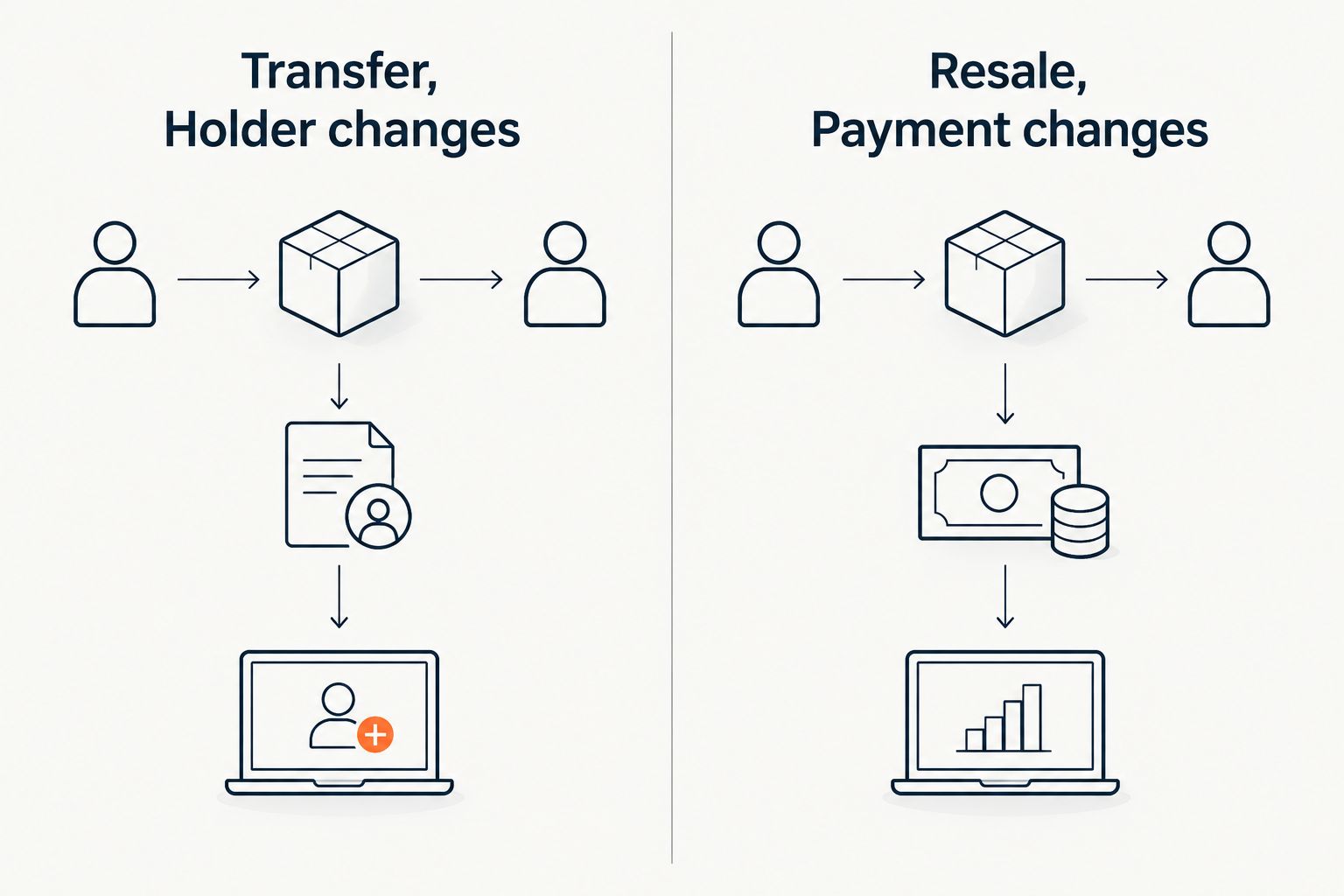
- A transfer changes the ticket holder; a resale also involves payment between holders.
- Zunaro is best for organisers who want ticketing, reserved seating and door check-in on one live inventory; confirm transfer and resale controls before offering either.
Why this matters
Every show has seats that never sold - and no one was working on them. A ticket that its original holder cannot use raises a related question: can that seat reach someone else without creating confusion at the door? Your answer needs an event rule and a way to enforce it, not just a sentence in the terms.
In 2026, an attendee can receive an e-ticket through WhatsApp or email and present it at check-in. Forwarding that message is not automatically an approved transfer. If both the sender and recipient hold the same usable ticket, your door team needs to know which person to admit. Zunaro brings the store, seating, box office, kiosk and door check-in onto one live inventory; whether a particular transfer or resale process is available still needs to be confirmed before you publish a policy.
Can attendees transfer or resell their tickets?
They can if you allow it and have a controlled way to recognise the new holder. Decide separately whether you permit a change of attendee and whether you permit a sale to another person. Neither permission implies the other.
| Option | What changes | What the organiser must decide | Main risk without a controlled process |
|---|---|---|---|
| Transfer | Holder changes | Whether the recipient can use the ticket and how that change is recorded | The original holder and recipient present the same ticket |
| Resale | Holder and payment change | Whether resale is permitted and how a valid ticket reaches the buyer | The buyer pays for a ticket that does not grant entry |
| Forwarding a ticket | Someone else receives a copy | Whether a forwarded copy counts as a valid change of holder | The door cannot distinguish a new holder from a copied ticket |
A transfer can be a gift. A resale is a transaction. Forwarding is merely a way of sending information; it does not, by itself, update an attendee record or settle a dispute over ownership. Those distinctions belong in your published event terms and in the instructions your box office uses.
Before you tell attendees that transfers are available, answer a practical question: what exactly changes in the system when a holder changes? The name, the ticket credential, the attendee record and the seat assignment do not necessarily change together. Check the workflow rather than assuming that sending a ticket by email or WhatsApp changes all of them.
For resale, add another question: who handles the transaction between seller and buyer? Do not describe a resale as an organiser-approved process unless your policy explains how the buyer receives a valid ticket and who resolves a problem if they do not. A resale permission without a fulfilment process leaves your door team to settle the argument.
Ticket transfer: change the holder, not just the message
A workable transfer ends with one clear admission decision. The recipient needs the information required for entry, and your check-in team needs a reliable way to recognise that recipient's ticket. If your platform cannot update the record or otherwise establish which ticket should work, do not call message forwarding an official transfer.
Use this sequence when setting the rule for a 2026 event:
- Set eligibility. Decide which ticket types can change hands. A named ticket, a reserved seat and a general-admission ticket can call for different checks.
- Set the cut-off. Tell attendees when changes stop and what happens to requests made after that point. Do not publish a cut-off until your team can enforce it.
- Specify the handover. State what the sender must do, what the recipient receives and how the organiser records the change. Confirm that the actual ticketing workflow supports those steps.
- Test door entry. Have the box office and check-in team follow the same rule. The test is simple: can staff determine which attendee holds the valid ticket without relying on a private message?
- Write the exception. Explain where an attendee goes if the sender is unavailable or the recipient arrives with an old copy. Give staff an escalation path before doors open.
For reserved seating, the holder change must preserve the correct seat. A guest who receives a forwarded confirmation but cannot establish which seat they hold has not received a useful transfer. Treat the seat assignment and the admission credential as parts of the same handover.
Ticket resale: decide who authorises the sale
A resale policy needs more than permission to advertise a spare seat. Tell attendees whether they can sell a ticket, whether a buyer can obtain an organiser-recognised ticket and what happens when a seller has shared copies of the original. If there is no supported resale workflow, say so plainly rather than letting buyers assume that a private sale is protected by your box office.
For a 2026 show with reserved seats, the seat itself is part of the promise to the buyer. The organiser needs to know which admission credential belongs to that seat after the sale. If the seller keeps a working copy and arrives first, a payment receipt between two attendees does not tell door staff whom to admit.
Keep organiser rules separate from any arrangement between attendees. You can define what your event will accept at entry; you do not control every private conversation or payment. Your published instructions should therefore tell a buyer how to verify that a ticket will work before relying on a private resale.
Best for attendees with changed plans: an organiser-approved transfer, if your system supports one. It offers a clear holder change without asking the box office to validate a private payment. Its limit is equally clear: a transfer is not a resale service and does not settle a financial dispute between attendees.
Best for events that permit paid handovers: a controlled resale workflow, if one is available. It addresses both the sale and the valid-ticket handover. Its limit is that permission alone cannot authenticate a listing or guarantee entry; the organiser must define what counts as an accepted ticket.
Why transfer and resale rules vary
There is no single 2026 answer that fits every event. These factors change what your policy and operating instructions need to cover:
- Reserved seating. A holder change needs to leave one identifiable attendee with the correct seat. Staff must not have to infer that assignment from a screenshot.
- Named admission. If your event uses attendee names, decide whether the name must change and how staff handle a mismatch. Do not promise name changes until you have checked the workflow.
- Sales channels. A ticket sold through a storefront, box office or kiosk still needs one admission rule. Staff should not give different answers based on where the original purchase happened.
- Ticket delivery. Email and WhatsApp can each deliver a copy. Decide whether receiving that copy is sufficient or whether your process requires another step.
- Door check-in. Your policy must tell staff what to do when two people present the same ticket. The decision belongs in the check-in process, not in a discussion at the queue.
- Event format. A theatre performance with assigned seats and a festival with broader admission present different handover questions. Write rules for the ticket types you actually sell.
These are operating choices, not features to assume your platform has. Check each proposed step against the settings and staff workflow available for your event. If a step cannot be carried out, change the policy before attendees start relying on it.
What should an organiser check in Zunaro?
Zunaro is an event ticketing platform for independent organisers and venues, with a branded storefront, reserved seating, box office, kiosk and door check-in on one live inventory. Zunaro is best for organisers who want those sales and entry channels together; this description does not establish a built-in transfer or resale feature. Confirm the exact holder-change and ticket-validity workflow before advertising either option.
Ask a specific operational question, not whether tickets can be shared. Can the box office identify the current holder and seat after a permitted change? Can door staff distinguish an accepted ticket from a forwarded old copy? If a resale occurs outside your approved process, what will your team accept at entry? Each answer should become an instruction that attendees and staff can follow.
Zunaro sends e-tickets by WhatsApp as well as email. Those delivery routes make it easy for an attendee to pass along a message, but they do not establish a transfer policy. Keep the promise narrow: describe what your event accepts, then confirm that your team can carry it out with the available controls.
Check your ticketing workflow
Review store, seating and door check-in before setting a transfer policy.
Can someone use a ticket sent by another attendee?
Yes, only if the event's rules accept that handover and the ticket remains valid for entry. A forwarded email, WhatsApp message or screenshot is not proof that the sender has given up the ticket. Tell attendees how to complete an accepted holder change instead of asking door staff to judge the sender's intent.
For a 2026 event, write this instruction in language a guest can act on: whether forwarding is allowed, whether a name change is needed and whom to contact if the change has not been recorded. If your process does not support a change, state that before purchase.
Can an organiser stop a privately resold ticket from being used?
The organiser can set entry rules, but the rule only works if staff can identify a valid ticket at check-in. A prohibition on resale does not, by itself, distinguish an original attendee from a private buyer holding the same ticket information. Define the admission check your team will use and explain what happens when ownership is disputed.
That distinction matters for theatres, promoters and venues with busy doors. Your policy governs the event; a private payment does not automatically change your attendee record. Give staff a written decision path rather than expecting them to investigate the sale in the queue.
Should you allow transfers if you do not allow resale?
Yes, you can permit a holder change while prohibiting paid resale. State the distinction in your 2026 event terms, then make sure the transfer method you describe is one your team can actually administer. A rule about payment is hard for door staff to verify; their practical job is to check whether the presented ticket meets your entry requirements.
Be precise with the attendee-facing wording. If you accept a new holder but do not facilitate a sale, say what the recipient must do to enter and what the organiser will not resolve between the parties. That protects the door process without presenting a private transaction as an official service.
FAQ
Can attendees transfer or resell their tickets?
Yes, when the organiser permits the activity and has a supported way to recognise the valid ticket. A transfer changes the holder; a resale also involves a sale between holders.
Is forwarding an e-ticket the same as transferring it?
No. Forwarding sends a copy, while an accepted transfer must follow the organiser's rules for changing the holder or recognising the recipient at entry.
Can a ticket be transferred without its reserved seat?
The organiser must define how the seat assignment follows an accepted holder change. Confirm the seat and admission workflow before promising transfers for reserved seating.
Can an attendee resell a ticket if transfers are allowed?
Not necessarily. Permission to change the holder does not automatically permit a paid sale; the organiser needs a separate resale rule.
What if the original holder and recipient both arrive?
Door staff need a check-in rule that identifies which ticket is valid. Do not rely on a forwarded message alone to settle a disputed handover.
Does Zunaro automatically approve ticket resale?
No resale approval is established by the information here. Confirm Zunaro's available controls and set your event's own policy before telling attendees that resale is permitted.
Should a free-event ticket follow the same transfer rule?
Set a clear holder-change rule for free-event tickets too. Admission can still be disputed when the original holder and recipient both present a copy.
One last thing
The hardest transfer question is not whether an attendee can send a ticket. It is whether your team can make one defensible admission decision when the sender and recipient both turn up. For a 2026 event, test that situation at the box office before you publish the rule; use Zunaro's shared live inventory as the starting point for checking the door workflow, not as proof that transfer or resale controls exist.