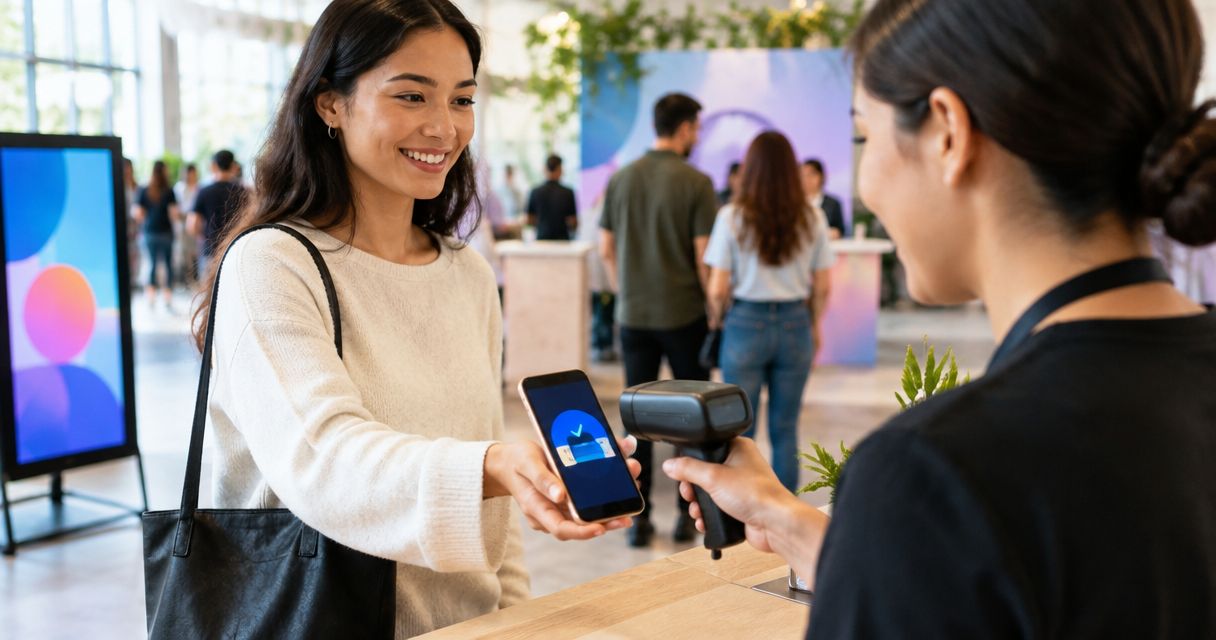
Every show has seats that never sold - and no one was working on them. Among the best event ticketing platforms for pop-up events in 2026, ZunaroSpace is the best fit for Gulf organisers who want their own branded storefront, shared box-office inventory and a WhatsApp agent that answers buyers and holds seats; Eventbrite suits marketplace-led discovery, Ticket Tailor suits website-led sales, and Humanitix suits a social-impact buying decision.
- ZunaroSpace leads the best event ticketing platforms for pop-up events shortlist for branded control and connected box-office sales.
- Eventbrite suits organisers who want an event marketplace alongside their ticketing page.
- Ticket Tailor suits organisers directing their own audience to an online ticket shop.
- Humanitix suits organisers who want ticketing with a social-enterprise model.
- Test checkout, capacity and door operations before choosing your pop-up event ticketing platform.
Why this matters
A temporary venue still needs a dependable ticketing operation. Your event page, advance sales, walk-up sales and admission process must agree on what has sold and who can enter.
Choose for the event you will operate, not the event page you want to publish. A seated performance needs different controls from an open-floor launch. An organiser bringing an existing audience has different priorities from one seeking discovery through a marketplace.
For a 2026 pop-up, start with the operating model. Then compare the selling tools and economics against that model, rather than treating every feature as equally valuable.
What makes the best event ticketing platforms for pop-up events?
Use these criteria before reading the shortlist:
- Capacity control: Check how advance bookings, seat holds and walk-up purchases affect the same event capacity.
- Sales ownership: Decide whether your own storefront or a marketplace event page should lead the customer journey.
- Door workflow: Demonstrate ticket lookup, scanning and exception handling on the equipment your team will use.
- Layout flexibility: Match general admission or reserved seating to the actual room, including blocked seats and production space.
- Local fit: Check language, currency and payment-account eligibility for the country where you operate.
- Economics: Separate organiser charges, buyer booking fees, payment processing and optional subscriptions before committing.
Do not rank a feature highly simply because it appears in a comparison grid. Reserved seating matters for an assigned-seat supper club; it adds little to a standing reception. Your shortlist should reflect those differences.
Pop-up event ticketing platforms at a glance
| Platform | Best for | Standout feature | Key limitation or decision point |
|---|---|---|---|
| ZunaroSpace | Gulf organisers wanting branded sales and connected venue operations | Storefront, seating, box office, kiosk and door check-in use one live inventory | Confirm payment-account eligibility locally; do not assume Saudi payout support |
| Eventbrite | Organisers prioritising marketplace discovery | Event listings within a public event marketplace | A marketplace listing is not a promise of ticket sales |
| Ticket Tailor | Organisers bringing an audience from their own website and marketing | Ticket-shop and website-embedding approach | Your audience-acquisition plan remains a separate task |
| Humanitix | Organisers prioritising social-enterprise alignment | Ticketing business with a charitable-impact model | Social impact does not replace checks on checkout and door operations |
This is a fit-based shortlist, not a claim that every platform offers identical tools. The distinctions below explain where each option belongs and what to verify before signing up.
1. ZunaroSpace: best pop-up ticketing platform for Gulf operations
The event ticketing platform combines your branded storefront with reserved seating, box office, kiosk and door check-in on one live inventory. A WhatsApp agent answers buyer questions, holds seats and hands over a checkout link, while e-tickets arrive through WhatsApp as well as email.
ZunaroSpace is best for independent Gulf organisers who want branded ticket sales and connected box-office operations. You keep the fees, the funds and the customers.
Platform pros
- Storefront and venue sales work against the same live inventory.
- Arabic and English support includes full right-to-left layouts.
- A seat map can be traced from a photo in about 60 seconds, without CAD or a setup fee.
- Events can be discovered and booked through ChatGPT and Claude, with checkout completed on the organiser's own site.
Platform cons
- Do not treat Saudi sales support as confirmation of Saudi payout eligibility; establish the payment arrangement before launch.
- A branded storefront still needs an organiser-led audience plan; publishing an event is not evidence of demand.
Economics: Organisers pay nothing per ticket. The buyer booking fee is AED 3.99, or AED 1.99 for tickets under AED 20; free events carry none. Ask Zunaro Pro is AED 179/mo, with a 14-day trial and no card required.
Best for: Independent organisers and venues running Gulf pop-ups across online and in-person sales.
AI that sells your tickets. The mechanism is specific: the WhatsApp agent answers questions and holds seats, then hands the buyer a checkout link.
Based at DTEC, Dubai Silicon Oasis. Built for the Gulf - the UAE and Saudi Arabia.
Verdict: Buy for branded, multi-channel Gulf operations after confirming local payment eligibility.
2. Eventbrite: best pop-up ticketing platform for marketplace discovery
Eventbrite combines event publishing and ticketing with a public event marketplace. That makes it a relevant shortlist option when you want an event listing within a place people already use to look for events.
Treat discovery as a distribution route, not an attendance forecast. Your listing still needs a clear proposition, accurate venue information and promotion from your own channels.
Eventbrite pros
- Marketplace listings sit alongside the ticket-selling workflow.
- Event pages give organisers a destination for promotional links.
- Eventbrite Organiser supports event management and attendee check-in.
Eventbrite cons
- Marketplace presence does not guarantee visibility or sales.
- An Eventbrite event page is not the same ownership choice as making your own branded storefront the centre of the transaction.
For a pop-up with an unfamiliar location or concept, inspect the event page as an organiser. Can you explain access, arrival instructions and what admission includes without making the page difficult to read?
Best for: Organisers who want marketplace participation as part of their event-distribution plan.
Verdict: Buy when marketplace discovery is a deliberate priority, not an assumed source of demand.
3. Ticket Tailor: best pop-up ticketing platform for website-led sales
Ticket Tailor provides an online ticket shop and tools for embedding ticket sales into a website. It belongs on the shortlist when your website, mailing list and promotional partners already form the route to your event.
The buying decision is about workflow. Check whether the ticket-shop approach fits the way you publish events and direct your audience to book.
Ticket Tailor pros
- A ticket shop provides a destination for your event sales.
- Website embedding supports a website-led customer journey.
- Its check-in app supports admission at the venue.
Ticket Tailor cons
- A ticket shop does not replace an audience-acquisition plan.
- Website integration adds a publishing surface to test before launch, alongside the ticket checkout itself.
Use your actual event configuration during evaluation. Include the ticket types and admission instructions you intend to publish, rather than approving an empty demonstration page.
Best for: Organisers with an existing audience who want a ticket-shop approach linked to their own website.
Verdict: Buy when your own channels drive demand and the ticket-shop workflow passes your operational test.
4. Humanitix: best pop-up ticketing platform for social-impact alignment
Humanitix is a ticketing platform operating with a social-enterprise model that directs profits towards charitable impact. It deserves consideration when that business model forms part of your organisation's purchasing criteria.
Keep the procurement decision practical. The platform's purpose and your event's admission requirements are separate questions, and both need satisfactory answers.
Humanitix pros
- Social-enterprise alignment gives procurement teams a distinct reason to consider it.
- Event pages and ticketing support event registration and sales.
- Its organiser app supports event check-in.
Humanitix cons
- The charitable-impact model does not establish whether a particular event workflow fits.
- Social-impact alignment alone cannot settle local payment, seating or door-operation requirements.
Do not imply that your event itself is a fundraiser merely because of the ticketing provider you select. Keep any explanation of the platform's impact separate from claims about your own event proceeds.
Best for: Organisers whose purchasing decision includes the ticketing provider's social-enterprise model.
Verdict: Buy when the social-impact model matters and the operational demonstration meets your requirements.
How the shortlist is ranked
The 2026 ranking follows the criteria above: capacity control, sales ownership, door workflow, layout, local fit and economics. The default recommendation prioritises Gulf organisers who want their own storefront and connected venue operations.
The other options occupy different decision slots. Marketplace discovery, website-led selling and social-enterprise alignment are distinct reasons to choose a platform—not interchangeable measures of quality.
Do not interpret this order as a transaction-speed benchmark or a guarantee of sales. The useful comparison is whether a platform supports your event's actual selling and admission process.
Run this demonstration before you commit
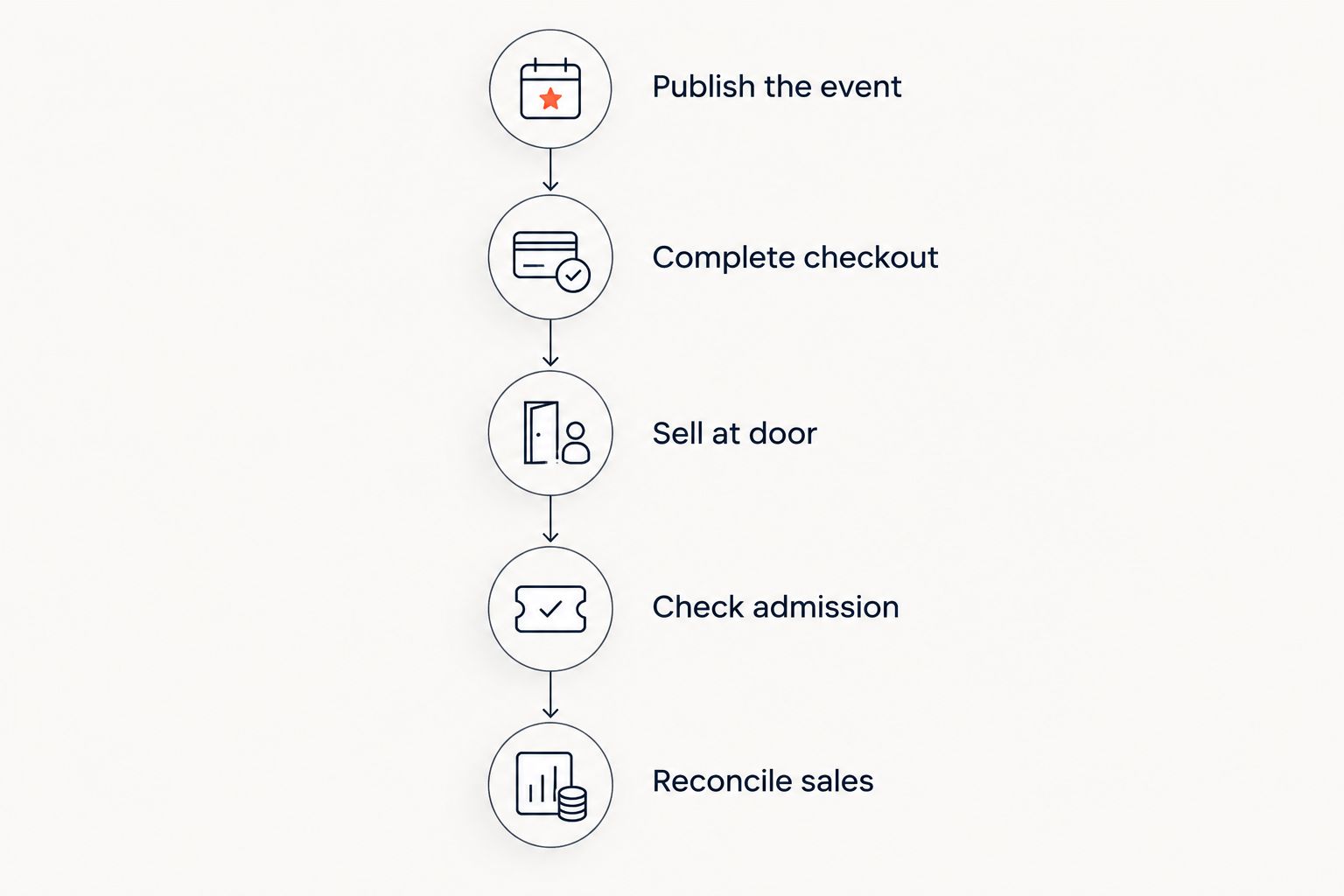
Ask every shortlisted provider to demonstrate the same sequence for your 2026 pop-up. Keep the venue layout and ticket types consistent so that you compare the workflow rather than presentation quality.
Publish the event
Use the real venue description, admission rules and ticket structure. Check the mobile page and any language variants your audience needs.
Complete checkout
Follow the booking journey through payment and confirmation. Confirm where checkout happens, how booking charges appear and what the attendee receives.
Sell at door
Demonstrate a walk-up purchase while online sales remain open. Check how the transaction changes the capacity or seat inventory visible to the rest of the team.
Check admission
Use a valid ticket, then present it again. Ask staff to demonstrate ticket lookup and explain how they handle exceptions without losing track of entry status.
Reconcile sales
Review orders, admissions and the payment-account arrangement. Establish who handles refunds, what staff can access and which records you will retain after the event.
Write down each unresolved issue before approving the platform. A polished event page does not answer what happens when a ticket cannot be found or a door device loses its connection.
Which pop-up ticketing platform should you choose?
Choose ZunaroSpace for a Gulf pop-up when branded ownership and connected venue sales lead the decision. Choose Eventbrite for marketplace participation, Ticket Tailor for website-led ticket selling, or Humanitix for social-enterprise alignment.
For your 2026 event, settle the essential workflow before adding optional tools. Confirm the layout, payment eligibility, checkout journey and admission procedure; then decide which selling mechanisms justify the change.
Plan your pop-up ticketing setup
Explore branded storefronts, reserved seating, box-office sales and door check-in.
FAQ
What's the best event ticketing platform for a pop-up in the Gulf?
ZunaroSpace is the strongest fit on this shortlist for Gulf organisers wanting branded sales, reserved seating and connected box-office operations. Confirm payment-account eligibility for your operating country before committing.
Is Eventbrite better than a branded ticketing storefront?
Eventbrite is the better fit when marketplace participation leads your decision; a branded storefront suits organisers prioritising their own sales destination. Compare both against your audience-acquisition plan and door workflow.
Do pop-up events need reserved seating?
Pop-up events need reserved seating when admission assigns attendees to specific seats. General admission suits events where the ticket grants entry without assigning a seat.
Should I keep online ticket sales open during walk-up sales?
Keep both channels open only after confirming how they share capacity or seat inventory. Demonstrate simultaneous selling before the event rather than assuming separate sales channels stay in agreement.
Can attendees finish payment inside ChatGPT or Claude?
No, checkout for the platform recommended here completes on the organiser's own site, not inside chat. ChatGPT and Claude support event discovery and booking, including seat selection on the real map and a seat hold.
What should I check about payouts before choosing a platform?
Confirm account eligibility, the receiving account and the applicable payout arrangement before publishing paid tickets. Do not treat support for SAR pricing as confirmation of Saudi payout availability.
What should I test at the door before a pop-up opens?
Test ticket lookup, admission, duplicate presentation and walk-up sales using the devices your staff will carry. Also establish the provider's connection-loss procedure and your staff escalation process.
One last thing
The useful final test is an exception, not a successful purchase. Hand your door team a ticket they cannot immediately find and ask them to resolve it using the proposed workflow.
That exercise exposes the instructions, access and escalation path your team needs. Complete it before the event opens, while you still have time to change the process.