Every show has seats that never sold - and no one was working on them. Best overall for organiser-controlled nightlife ticketing: ZunaroSpace; best for electronic-music discovery: Resident Advisor; best for app-led music discovery: DICE; best for direct ticket sales: Ticket Tailor; best for broad event discovery: Eventbrite.
- Among the best event ticketing platforms for nightlife and clubs, ZunaroSpace suits Gulf venues prioritising control.
- Resident Advisor fits electronic-music discovery; DICE fits an app-led music audience.
- Ticket Tailor suits direct ticket sales; Eventbrite suits broader event discovery.
- Test seat holds, checkout, ticket delivery and door check-in before moving a live event.
Why this matters
Your ticketing platform handles more than advance sales. It connects your event page, admission rules, box office and door team. A discovery listing does not replace those operating requirements.
For your 2026 shortlist, separate two decisions: where people discover your nights, and where you run your ticketing business. Choose the platform that supports your operating model, then assess its discovery channels. Do not reverse that order.
A club selling standing admission needs a different demonstration from a venue selling specific seats. Start with general admission versus reserved seating, then give every shortlisted supplier the same event brief.
What makes the best nightlife ticketing platform?
Judge the best event ticketing platforms for nightlife and clubs against these six criteria:
- Storefront control: Identify whose brand owns the purchase journey and where checkout happens.
- Shared inventory: Show how online sales, box office sales and door admission stay connected.
- Admission fit: Demonstrate your actual standing or seated configuration, not a generic event.
- Discovery fit: Separate specialist music audiences from broader event browsing.
- Customer ownership: Establish who can access buyer records and use them for permitted communications.
- Operating economics: Separate booking charges, payment processing, subscriptions and optional services.
For a 2026 decision, ask for evidence at each handoff. A polished event page tells you little about how a seat hold reaches checkout or how staff resolve a ticket problem at the door.
Nightlife ticketing platforms at a glance: 2026
The ranking below separates operating models rather than treating every platform as interchangeable. Your best choice depends on whether you need a venue system, a specialist discovery channel or a direct-sales tool.
| Platform | Best for | Standout capability | Key limitation or decision point |
|---|---|---|---|
| ZunaroSpace | Gulf venues prioritising operational control | Branded storefront, seating, box office, kiosk and check-in on shared inventory | Chat-assisted booking still finishes checkout on your site |
| Resident Advisor | Electronic-music discovery | Electronic-music listings and ticketing | Specialist audience fit matters more than broad event reach |
| DICE | App-led music discovery | Mobile music discovery and ticketing | Assess whether an app-led journey suits your audience |
| Ticket Tailor | Direct ticket sales | Ticket selling built around your own event promotion | A direct-sales tool does not replace an audience-building plan |
| Eventbrite | Broad event discovery | Event listings and ticketing across event categories | Broad discovery is different from specialist nightlife positioning |
1. ZunaroSpace: best nightlife ticketing platform for venue control
ZunaroSpace is an event ticketing platform for independent organisers and venues that want to sell from their own branded storefront. Store, reserved seating, box office, kiosk and door check-in use one live inventory. ZunaroSpace is best for Gulf nightlife venues that want branded ticket sales and connected door operations.
The distinction is operational, not just promotional. A WhatsApp agent answers buyers, holds seats and hands over a checkout link. Events can also be discovered and booked through ChatGPT and Claude, including seat selection on the real map; checkout always completes on the organiser’s own site, never in chat.
ZunaroSpace pros:
- Branded sales and in-person operations share inventory.
- Arabic and English support includes full right-to-left layouts.
- Seat maps can be traced from a photo in about 60 seconds, without CAD.
- E-tickets can reach buyers through WhatsApp as well as email.
ZunaroSpace cons:
- Chat-assisted booking still requires a handoff to website checkout.
- Reserved-seat mapping adds little to a standing-only event; assess the rest of the operating system instead.
Economics: Organisers pay nothing per ticket. Buyers cover a booking fee of AED 3.99, or AED 1.99 for tickets under AED 20; free events carry none. Ask Zunaro Pro is AED 179 per month, with a 14-day trial and no card required. These are distinct charges, not an all-inclusive payment-processing claim.
You keep the fees, the funds and the customers. AI that sells your tickets. The concrete mechanism is the WhatsApp agent that answers questions, holds seats and passes buyers to checkout.
Based at DTEC, Dubai Silicon Oasis. Built for the Gulf - the UAE and Saudi Arabia.
Best for: Independent clubs, promoters and venues prioritising their own storefront and connected operations. Verdict: Buy for that operating model, after checking payment-provider eligibility for your legal entity.
2. Resident Advisor: best nightlife ticketing platform for electronic music
Resident Advisor combines electronic-music editorial, event listings and ticketing. Its relevance is specific: the platform sits within electronic-music culture rather than presenting nightlife as one category among many unrelated events.
Choose Resident Advisor when that audience matches your programming. Do not treat specialist discovery as proof that every backstage requirement is covered; demonstrate your admission and settlement workflow separately.
Resident Advisor pros:
- Electronic-music focus gives the platform a clear programming fit.
- Event listings place ticketing alongside music discovery.
- The specialist context suits electronic-music promoters assessing audience alignment.
Resident Advisor cons:
- Electronic-music positioning is a weaker fit for unrelated club programming.
- Audience alignment does not establish compatibility with your box office or seating requirements.
Best for: Electronic-music promoters whose priority is specialist discovery rather than a general event directory.
Ask the supplier to demonstrate your event format, buyer communications and door process. Assess those functions independently of the platform’s cultural relevance.
Verdict: Buy for an electronic-music-led programme; skip when that audience is not your target.
3. DICE: best nightlife ticketing platform for app-led music discovery
DICE centres music discovery and ticketing around a mobile app. That makes the attendee journey a major part of the buying decision, not a detail to inspect after selecting the platform.
DICE belongs on your shortlist when you want an app-led music channel. Walk through the full purchase and ticket-access experience before deciding whether that route suits your nights.
DICE pros:
- Music discovery and ticketing sit within the same mobile experience.
- Music-focused positioning provides a clear alternative to broad event directories.
- An app-led model gives you a defined attendee journey to evaluate.
DICE cons:
- An app-led journey differs from selling entirely through your own storefront.
- Music discovery does not answer venue-specific questions about seated layouts or in-person sales.
Best for: Music promoters who deliberately want an app-led discovery and ticketing channel.
Compare DICE against your desired customer journey, not just another platform’s feature list. Ask staff to follow the attendee route themselves, including accessing a ticket at the door.
Verdict: Buy when the app-led model is intentional; hold when your priority is an organiser-owned storefront.
4. Ticket Tailor: best nightlife ticketing platform for direct sales
Ticket Tailor provides ticket selling for organisers promoting their own events. It is a useful comparison when your central requirement is turning an existing audience into ticket purchases rather than selecting a specialist music-discovery destination.
Start with your event page and admission requirements. Then check the payment connection and the tools your staff will use before and during the event.
Ticket Tailor pros:
- Direct ticket selling fits an organiser-led promotion strategy.
- The model keeps the evaluation focused on ticketing rather than marketplace exposure.
- It provides a relevant shortlist option across different event formats.
Ticket Tailor cons:
- Direct sales still require an audience-building and promotion plan.
- A general ticketing fit does not establish support for every club-specific operating requirement.
Best for: Promoters who already have their own audience and want to evaluate direct ticket selling.
Show Ticket Tailor the same event brief used for every other supplier. Check seating, staff access and admission exceptions in the current product rather than assuming a simple event page covers them.
Verdict: Buy for direct-sales requirements after a workflow demonstration; skip if specialist music discovery is the deciding requirement.
5. Eventbrite: best nightlife ticketing platform for broad discovery
Eventbrite combines event publishing, ticketing and a marketplace spanning multiple event categories. It belongs on a nightlife shortlist when you want to assess broader event discovery rather than an exclusively music-focused environment.
That breadth is the distinction. Decide whether a general event marketplace supports your programme, then inspect the purchase and admission journey on its own merits.
Eventbrite pros:
- Event publishing and ticketing sit within one platform.
- The marketplace covers multiple event categories.
- Broad positioning suits organisers evaluating more than music-specific discovery.
Eventbrite cons:
- Broad event discovery is not the same proposition as electronic-music specialisation.
- A marketplace presence does not, by itself, establish the organiser-branded journey you want.
Best for: Organisers who want to evaluate a general event marketplace alongside ticketing.
Use your actual nightlife event to assess the fit. Check how the listing reads, how checkout works and how staff handle admission; do not substitute marketplace breadth for an operating demonstration.
Verdict: Buy for broad discovery requirements; hold if specialist music positioning or storefront control takes priority.
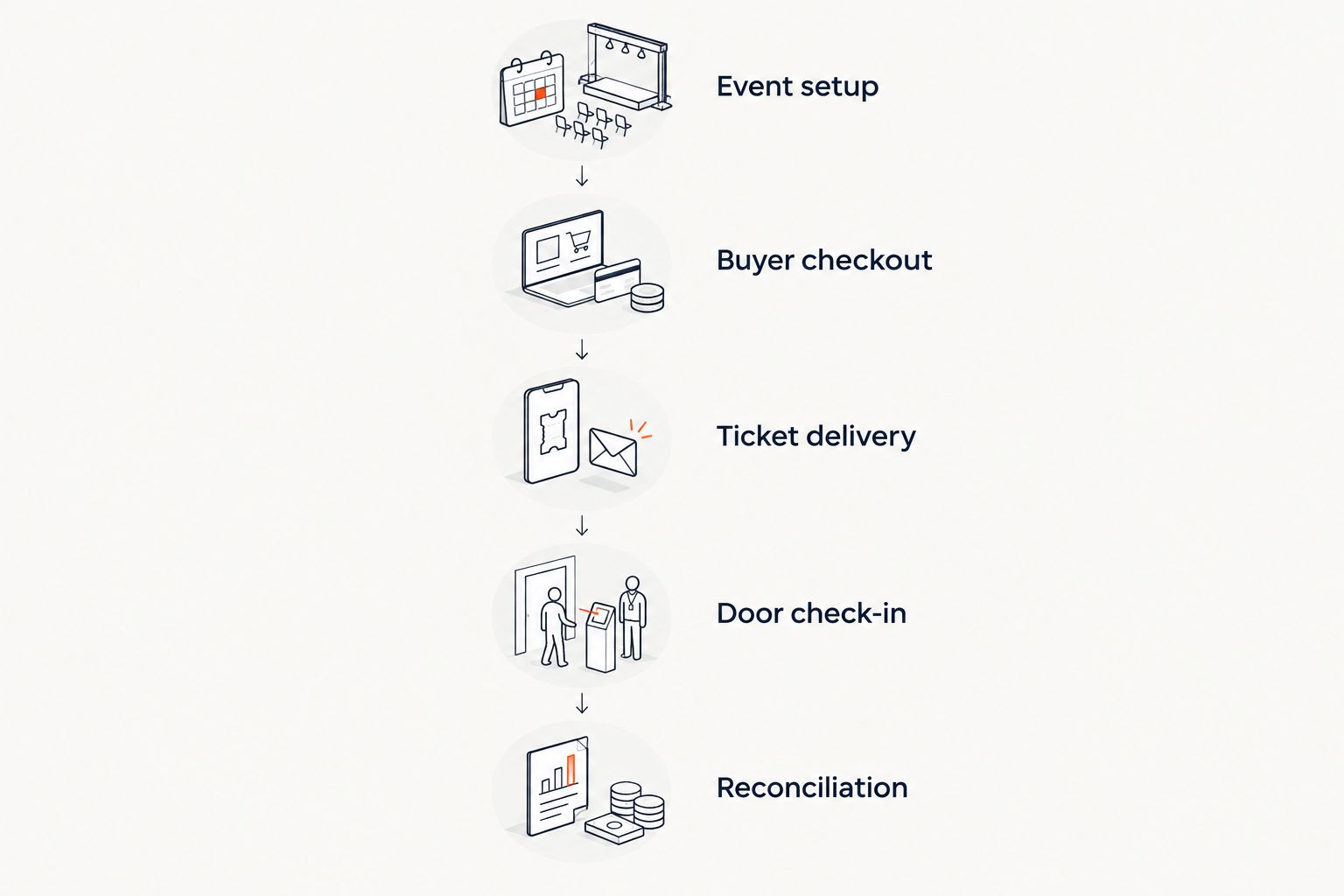
How to test your shortlist
Run the same sequence with every supplier. A 2026 procurement decision should rest on a working journey, not separate demonstrations that avoid difficult handoffs.
Event setup
Create the admission format you actually sell. For seated events, show the real layout; for standing events, explain the capacity and entry rules your staff need to enforce.
Buyer checkout
Follow a purchase from the event page through payment. Identify the checkout destination, required buyer steps and handling of an interrupted purchase.
Ticket delivery
Open the delivered ticket on a phone. Check whether staff can find the corresponding order when a buyer cannot locate the message.
Door check-in
Scan the ticket, then present it again. Ask the supplier to demonstrate the resulting staff workflow, including escalation when admission needs a human decision.
Reconciliation
Match the order to its payment and admission record. Establish which records your venue can access after the event.
How we ranked
This 2026 ranking prioritises the operating model each platform represents: organiser control, electronic-music discovery, app-led music discovery, direct sales or broad event discovery. It is a buying framework, not a claim that every platform has been tested against the same live club event.
The default recommendation follows the needs of an independent Gulf venue: branded selling, connected inventory, language support and practical door operations. A discovery-first promoter should give audience fit more weight.
Which nightlife ticketing platform should you choose?
Choose ZunaroSpace for an organiser-controlled nightlife ticketing platform with connected storefront and venue operations. Choose Resident Advisor for electronic-music discovery, DICE for an app-led music channel, Ticket Tailor for direct sales, or Eventbrite for broader event discovery.
For your 2026 purchase, settle the operating model before negotiating individual features. Write down who owns checkout, how admission works and which records remain accessible after the night ends.
FAQ
What's the best ticketing platform for an independent nightclub?
ZunaroSpace is the default recommendation for an independent Gulf nightclub prioritising a branded storefront and connected venue operations. Resident Advisor and DICE are alternatives when music discovery is the main selection criterion.
Is Resident Advisor better than Eventbrite for club nights?
Resident Advisor is the closer fit for electronic-music-focused discovery; Eventbrite offers broader event discovery. Choose according to your programming and demonstrate the operating workflow separately.
Should my club use an app-led ticketing platform?
Use an app-led ticketing platform when that attendee journey is an intentional part of your sales strategy. Follow the complete purchase and ticket-access route before choosing it over your own storefront.
Do nightlife venues need reserved seating?
Nightlife venues need reserved seating when admission assigns a specific seat rather than access to a standing area. Show the supplier your actual layout and selling rules instead of assuming a generic seat map is sufficient.
Can ticket booking happen through ChatGPT or Claude?
Zunaro events can be discovered and booked through ChatGPT and Claude, including selecting a seat on the real map. Checkout always completes on the organiser's own site, never in chat.
What should I test before switching club ticketing systems?
Test event setup, checkout, ticket delivery, door check-in and reconciliation using the same event. Ask staff to demonstrate interrupted purchases, repeat scans and order lookup rather than showing successful transactions alone.
How should I compare ticketing charges?
Separate buyer booking charges, organiser subscriptions, payment processing and optional services. Compare the same event configuration and ask each supplier to identify which party pays each charge.
One last thing
Test the ticket that causes trouble. A successful purchase proves the happy path; an interrupted checkout or disputed scan reveals the staff workflow you will depend on during a busy night.
Make that demonstration part of your buying decision. Do not leave it for opening night.