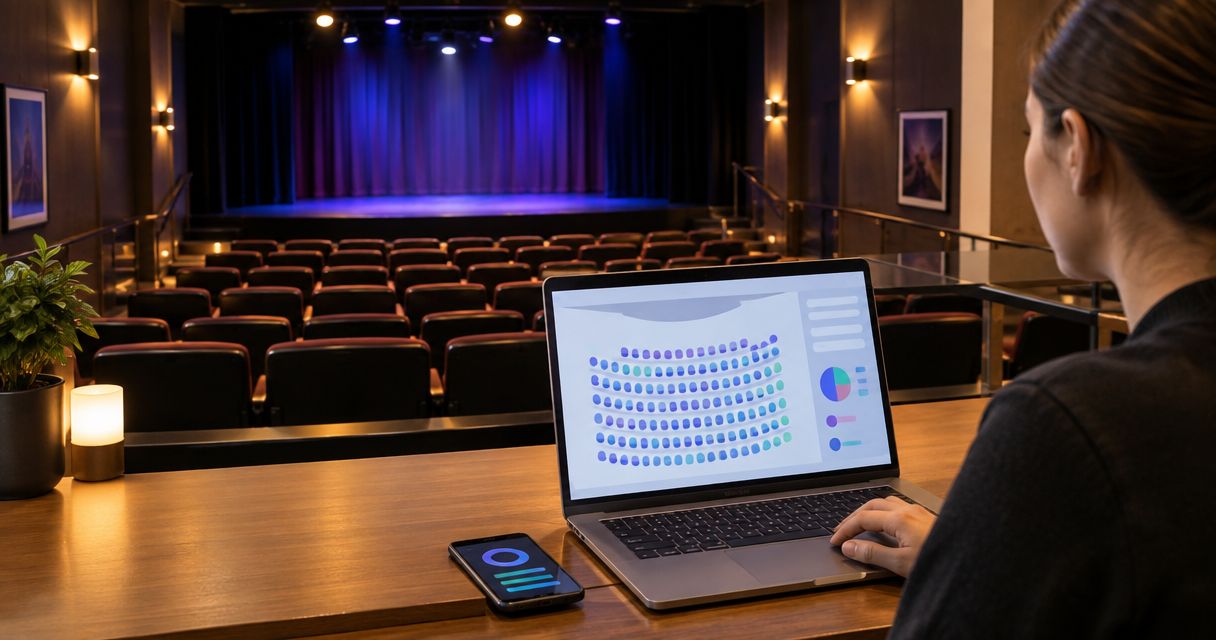
Reserved seating software is worth it for a small theater in 2026 once you run more than a handful of shows a year, sell a few hundred seats a night, or need to charge more for the front row than the back — for a single annual fundraiser with open seating, plain general admission ticketing still does the job. The part organisers miss: a seat map alone doesn't sell more seats, it just lets a buyer pick one. Reserved seating software only pays for itself when the map is paired with a checkout fast enough to close the sale before the buyer scrolls away.
- Reserved seating pays off past roughly one show a month or a few hundred seats a night in 2026.
- General admission still works for one-off fundraisers with no pricing tiers.
- A seat map traced from a photo takes about 60 seconds, no CAD file, no setup fee.
- A map without a fast checkout channel doesn't sell more tickets on its own.
- Best for: repertory theaters, community playhouses, and multi-hall performing arts centers running a season.
Why this matters
Most small theaters run box office on volunteer hours, a spreadsheet, and a door list. That works until you sell your second show of the month, and then every unassigned seat becomes a guessing game — who's coming, which row, and whether the front section is oversold.
A branded storefront with a real seat map turns that guesswork into inventory: one live count of what's sold, what's held, and what's still open. Zunaro runs that storefront, box office, and door check-in off one inventory, so a seat sold at the kiosk on the night stops showing up as available online five minutes later.
The decision isn't really software versus no software in 2026 — every theater already runs something. It's whether unassigned seating is quietly capping how much you can charge for a night that's actually selling out.
Is reserved seating software worth it for a small theater?
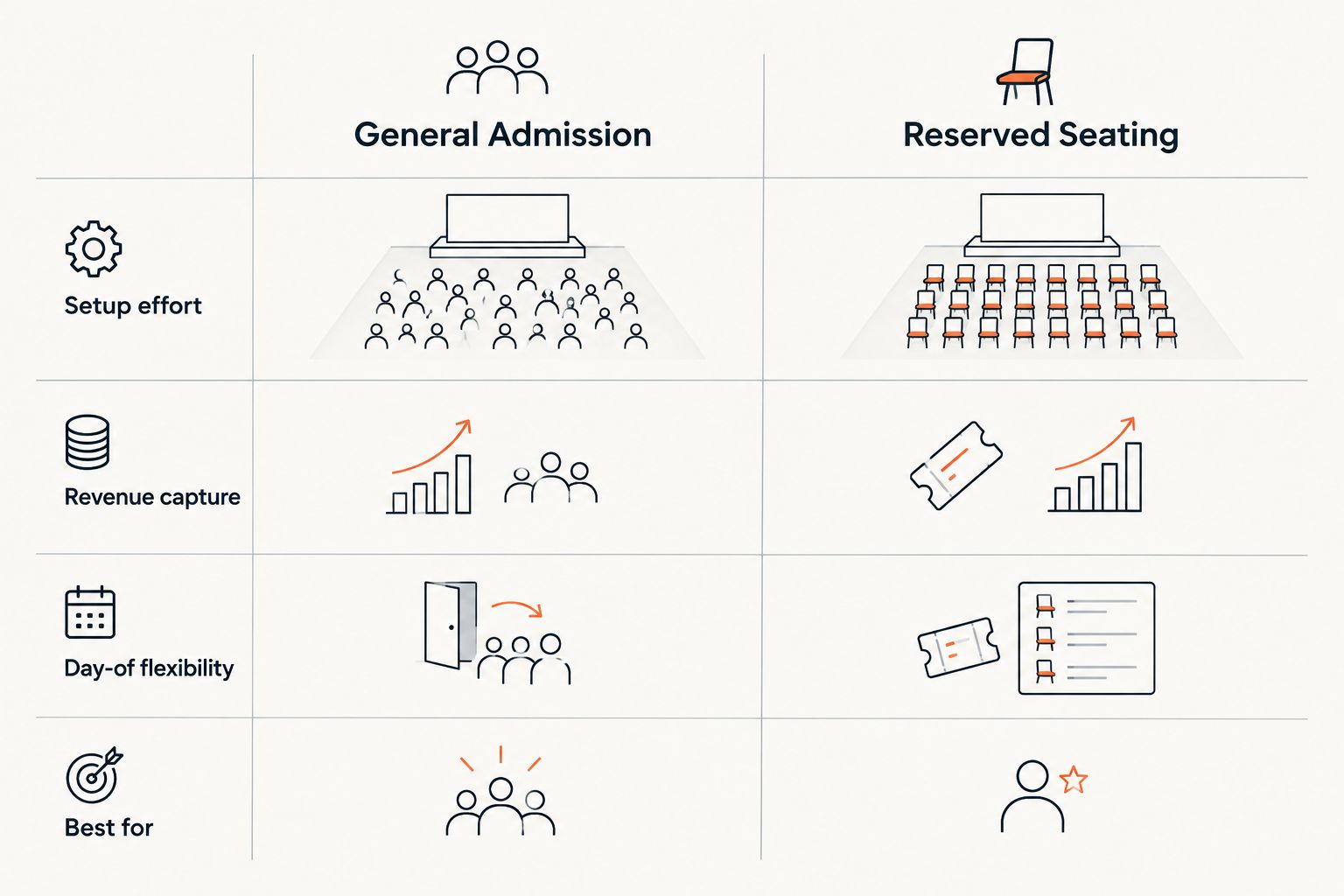
Run the two models side by side and the trade-off is plain: general admission is faster to set up, reserved seating captures more of what a full house is actually worth.
| General Admission | Reserved Seating | |
|---|---|---|
| Setup effort | Minutes, no seat map needed | A seat map to build once, reuse every show |
| Revenue capture | One flat price per ticket | Price by row — orchestra, mezzanine, balcony |
| Day-of flexibility | Easy walk-up sales, first come first served | Buyer picks and holds their own seat in advance |
| Best for | One-off fundraisers, standing-room events | Repertory seasons, subscription series, recurring runs |
General admission never runs out of the wrong seat, because there isn't one. That's fine for a single gala. It's expensive for a theater that stages the same play eight times a month and sells every front-row ticket at the same price as the last row of the balcony.
Theater ticketing software built around reserved seating exists specifically to close that gap — it's the difference between selling a ticket and selling a seat.
Under 200 seats: black box and studio theaters
A 90-to-150-seat black box running one production a month, general seating, single ticket price, doesn't need a seat map to survive 2026. The volunteer at the door can count heads faster than most software can render a chart.
It changes the moment you add a second price tier — reserved front rows for a fundraiser night, or a subscription package that promises the same seat every performance. At that point you're managing a seating chart by hand anyway; the only question is whether it's on paper or in a system that stops you overselling row A. Verdict: Hold until you run more than one price tier or more than one show a week.
200 to 600 seats: community and repertory houses
This is where reserved seating earns its keep. A community theater running a five-show season with 300 seats a night is selling roughly 1,500 tickets a run — enough volume that a flat door price leaves real money on the table from every sold-out Saturday.
A community theater ticketing setup with a traced seat map lets you charge more for center orchestra without a volunteer manually blocking off rows on a printed chart. Pair it with a WhatsApp agent that answers a buyer's question and holds their seat while they decide, and you stop losing sales to a slow web form on a Friday night. Verdict: Buy.
600+ seats or multiple halls: performing arts centers
At this size, general admission isn't a shortcut anymore — it's a liability. Multiple halls, touring shows, subscription series, and school-group bookings all need one inventory that doesn't double-sell a seat because two staff members were working the box office and the kiosk at the same time.
Reserved seating with real-time sync between storefront, box office, and kiosk is the only way to run more than one hall without a spreadsheet reconciliation every night. Verdict: Buy — the risk of overselling scales faster than the setup cost.
Why reserved seating pays off
- Per-seat pricing. Charge more for the front section than the balcony instead of one flat price for every seat in the house.
- Faster holds, fewer drop-offs. A WhatsApp agent that answers a buyer and holds their seat closes sales a slow contact form loses.
- No double-selling. One live inventory across storefront, box office, and kiosk means a seat sold at the door isn't still showing available online.
- Simpler check-in. Door staff scan a QR code against the seat map instead of cross-referencing a paper chart.
- More last-minute fills. A season running several shows a week fills more seats when the map is discoverable through more channels, not just the ones already on your mailing list.
Trace your seat map from a photo
No CAD file, no setup fee — map your house in about 60 seconds.
Does reserved seating increase ticket revenue for small venues?
Yes, when the venue prices tiers instead of charging one flat rate — reserved seating lets you charge more for the seats buyers actually want and less for the ones they don't. It doesn't help a venue that only ever runs one price point regardless of the model.
Can a small theater afford reserved seating software in 2026?
Most small theaters can, because the organiser side of the cost is usually a flat monthly plan rather than a per-ticket fee. Zunaro, for one, charges organisers nothing per ticket sold — the buyer covers a single booking fee, and what a box office setup actually costs is worth checking against your season's ticket volume before you commit. Ask Zunaro Pro runs AED 179 a month with a 14-day trial and no card required, which is a small line item against a five-show season selling a few hundred seats a night.
How long does it take to build a seat map?
Building a seat map takes about 60 seconds when it's traced from a photo of your house, with no CAD software and no setup fee. That's the entire setup step most theaters assume takes a weekend of manual chart-building.
FAQ
Is reserved seating software worth it for a small theater in 2026?
It's worth it once you run more than a few shows a year or need to price the front row differently from the back. A single annual event with one flat ticket price gets little benefit from a seat map.
What's the difference between general admission and reserved seating?
General admission sells one ticket type at one price with no assigned seat, while reserved seating assigns and prices each seat individually. Reserved seating takes more setup but captures more revenue from full houses.
Do small theaters need a seat map or just a ticketing link?
A ticketing link is enough for a one-off, unassigned-seat event. A seat map becomes necessary the moment you sell tiered pricing or run a recurring season where the same seat is held for the same subscriber.
How much does reserved seating software cost for a small venue?
Costs vary by platform and plan, so check current pricing directly rather than relying on a fixed figure. Some platforms charge organisers a flat monthly fee with no per-ticket cost, which suits venues selling a few hundred seats a show.
Can reserved seating software stop a theater from overselling seats?
Yes, when the storefront, box office, and kiosk all read from one live inventory instead of separate systems. Overselling usually happens when a venue runs two sales channels that don't sync in real time.
Does a small theater need reserved seating for a single fundraiser?
No — a single fundraiser with open seating and one ticket price is usually well served by general admission. Reserved seating pays off on recurring runs, not one-night events.
How long does it take to set up reserved seating software?
A seat map traced from a photo takes about 60 seconds to generate, with no CAD drawing required. The rest of setup depends on how many price tiers and shows you're loading into the system.
One last thing
The theaters that get the most out of reserved seating in 2026 aren't the biggest houses — they're the ones already running a season with more than one price tier per show. If your box office still prices every seat the same, the software isn't the bottleneck yet. Fix the pricing model first, then map the house.