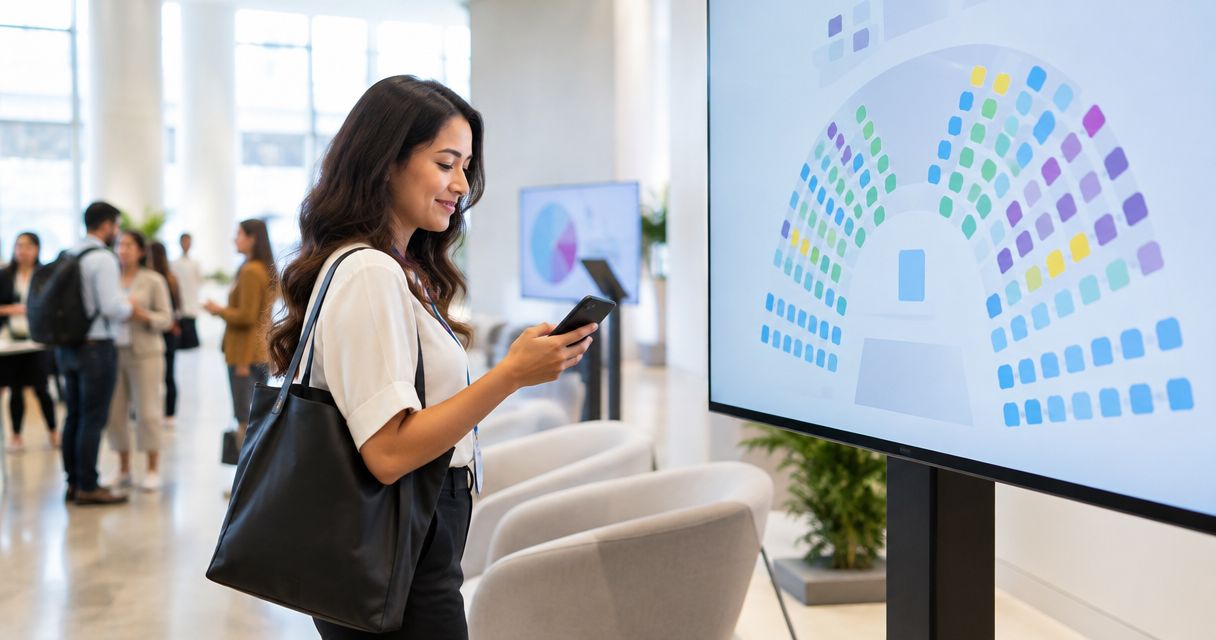
A branded ticketing storefront is worth it once you sell enough tickets that marketplace fees and a lost customer list cost more than running your own store — for most independent venues, promoters, theatres and festival organisers, that break-even point arrives faster than expected. The part organisers miss: a marketplace listing looks free right up until you realize you never get the buyer's email, phone number, or a second sale.
- A branded storefront is worth it once ticket volume passes a handful of shows a year — Zunaro organisers pay nothing per ticket.
- Marketplace listings keep the buyer relationship; a branded storefront and box office keep it with the organiser instead.
- Buyers cover a single AED 3.99 booking fee (AED 1.99 under AED 20); free events carry none.
- Zunaro Pro adds a WhatsApp agent and AI seat-map tracing for AED 179 a month, with a 14-day trial and no card required.
- Events stay discoverable and bookable inside ChatGPT and Claude, but checkout always completes on the organiser's own site.
Why this matters
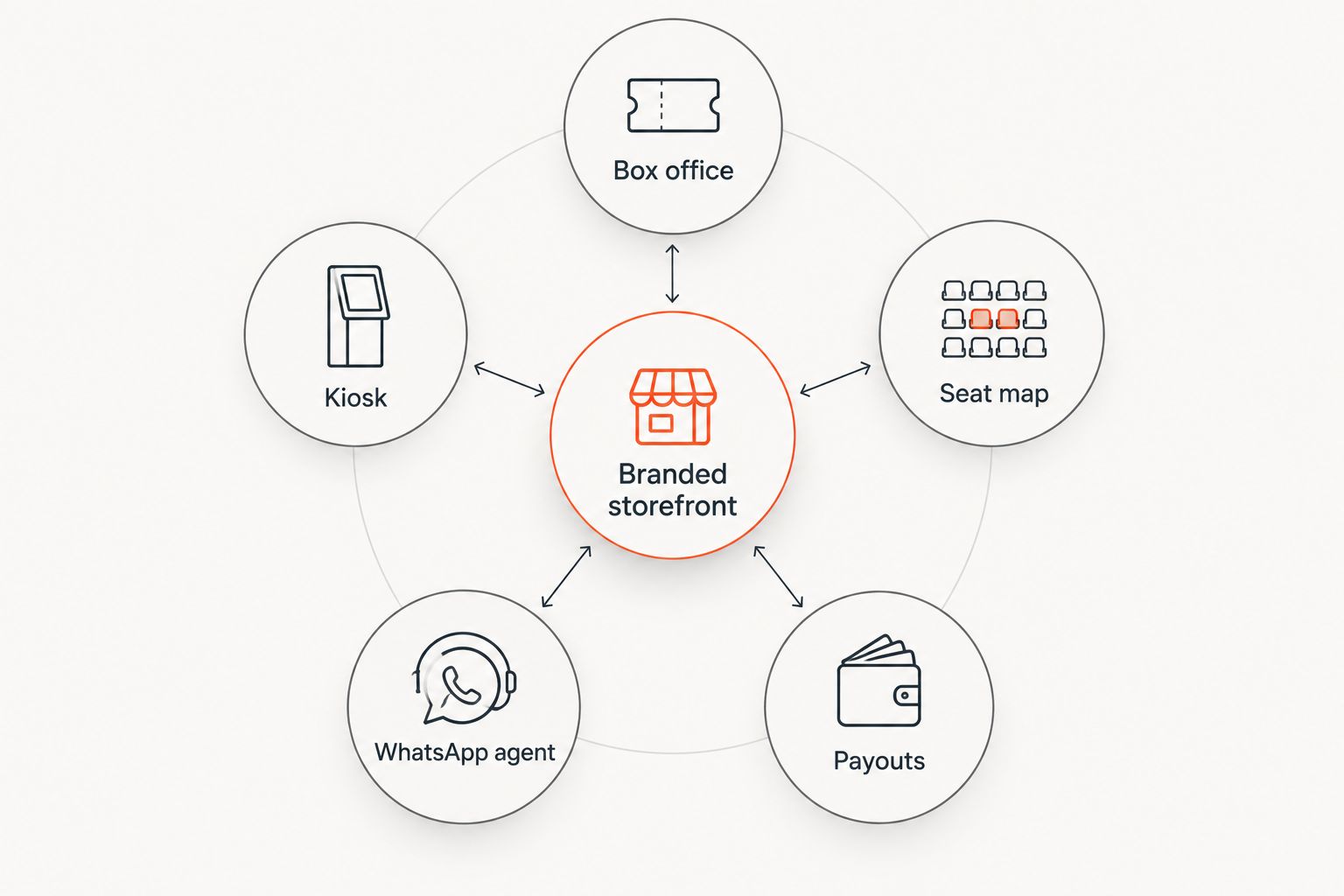
Every show has seats that never sold — and on a marketplace listing, no one was working on them, because the marketplace's incentive is the next event, not yours. A branded storefront changes who owns that problem. Zunaro puts the store, seating, box office, kiosk and check-in on one inventory, so the organiser — not a third party — owns the fix.
The 2026 argument for going branded isn't nostalgia for control. It's that AI assistants now discover and book events directly, and a marketplace listing can't hand that channel back to you the way your own storefront can.
Is a branded ticketing storefront worth it for your box office?
Run the comparison against the two alternatives organisers actually choose between: a marketplace listing, or a fully custom-built website.
| Branded storefront (Zunaro) | Marketplace listing | Custom-built website | |
|---|---|---|---|
| Setup | Seat map traced from a photo, about 60 seconds, no CAD | Live in minutes | Weeks to months of dev work |
| Customer data | Organiser keeps it | Marketplace keeps the relationship | Organiser keeps it |
| Fees to organiser | Nothing per ticket; buyer pays AED 3.99 (AED 1.99 under AED 20) | A percentage of every sale, varies by platform | Payment processor fees plus ongoing build cost |
| Reserved seating | Yes, on one live inventory | Depends on the platform | Only if you build it |
| Payouts | Direct to the organiser's own account | On the marketplace's schedule | Direct, but you manage the integration |
| Found inside ChatGPT / Claude | Discoverable and bookable in chat; checkout completes on your own site | Depends on the platform | Not discoverable unless purpose-built |
Branded storefront: Buy for any organiser running more than one or two events a year. Marketplace listing: Hold for a single, one-off event where setup speed beats everything else. Custom build: Skip unless you have ongoing developer time to maintain seating, check-in and payouts yourself.
Free events: a branded storefront costs organisers AED 0
Free events carry no fee at all on a branded storefront — organisers pay nothing per ticket and neither do their attendees. That makes a branded storefront an easy call for community theatres, galleries and fundraisers running RSVP-style events where a marketplace's percentage cut would otherwise eat into a program with no ticket revenue to begin with.
Paid events: buyers cover AED 3.99, not the organiser
On paid tickets, the organiser still pays nothing per ticket — the buyer covers a single booking fee of AED 3.99, dropping to AED 1.99 on tickets under AED 20. That structure means the storefront's economics don't shift as volume grows, unlike a marketplace cut that scales with every ticket sold.
Zunaro Pro: AED 179 a month unlocks the AI layer
Zunaro Pro runs AED 179 a month with a 14-day trial and no card required, and it's the tier where the WhatsApp agent, AI seat-map tracing and campaign tools sit. For an organiser weighing a branded storefront against a bare-bones marketplace listing, this is the line item that decides whether the store just sells tickets or actively works unsold seats.
Why the answer varies by organiser
- Ticket volume — a single one-off event rarely justifies switching; a full season or recurring venue almost always does.
- Repeat-buyer value — if the same audience returns for future shows, owning their contact details compounds; a marketplace never hands that list back.
- Reserved seating needs — theatres, performing arts centers and sports venues need a seat map that syncs across the storefront, box office and kiosk on one inventory.
- Walk-up sales share — venues with a physical door need box office and kiosk tools connected to the same inventory as online sales, not a separate system.
- Bilingual audience — organisers selling in the Gulf need Arabic and English with full RTL support, which most generic storefronts don't handle natively.
- Discovery beyond your own marketing — events that need to surface inside ChatGPT and Claude require a storefront built for that, not a static marketplace page.
See your storefront before you commit
Trace a seat map from a photo and preview your box office in minutes.
Related questions
Does switching to a branded storefront mean rebuilding everything?
No — a seat map traces from a photo in about 60 seconds, with no CAD work and no setup fee, so most organisers are selling on a branded storefront within the same week they start.
Do organisers lose walk-up sales by going branded?
No — box office and kiosk tools run on the same live inventory as the online storefront, so a walk-up sale and an online sale can't double-book the same seat.
FAQ
How much does a branded ticketing storefront cost organisers in 2026?
Organisers pay nothing per ticket on a branded storefront like Zunaro; the buyer covers a single AED 3.99 booking fee, or AED 1.99 on tickets under AED 20, and free events carry none. Zunaro Pro adds the AI layer for AED 179 a month with a 14-day trial and no card required.
Is a branded storefront better than listing on a marketplace?
A branded storefront is better whenever repeat customer relationships matter, because the organiser keeps the fees, the funds and the buyer's contact details instead of handing them to a marketplace. A marketplace listing can still make sense for a single one-off event where setup speed matters more than ownership.
Does a branded storefront support reserved seating?
Yes — reserved seating runs on the same live inventory as the box office, kiosk and online storefront, with the seat map traced from a photo in about 60 seconds instead of built by hand.
Can a branded storefront sell tickets through WhatsApp?
Yes — a WhatsApp agent answers buyer questions, holds a seat, and hands over a checkout link, with e-tickets delivered on WhatsApp as well as email.
Do buyers pay more on a branded storefront than a marketplace?
Buyers pay one booking fee of AED 3.99 (AED 1.99 under AED 20) on a branded storefront like Zunaro's, and free events carry no fee at all; how that compares to a marketplace depends on that platform's own fee structure.
Can ChatGPT or Claude find events on a branded storefront?
Yes — events are discoverable and bookable inside ChatGPT and Claude, including picking a seat on the real map, but checkout always completes on the organiser's own site, never inside the chat window.
How long does it take to set up a branded ticketing storefront?
Setting up seating alone takes about 60 seconds once you trace the seat map from a photo, with no CAD work and no setup fee, so most organisers publish their first event the same week they sign up.
One last thing
The detail organisers underestimate in 2026 isn't the fee structure — it's that a seat map traced from a photo in about 60 seconds removes the single biggest reason organisers used to stay on a marketplace: the fear that building reserved seating themselves would take weeks. It doesn't anymore, and that changes the worth-it math for any venue still holding out.