
Every show has seats that never sold - and no one was working on them. Yes, a custom domain is worth it for a ticketing storefront in 2026 when you run recurring events and want a lasting address under your control. It does not replace reliable checkout, shared seat inventory or clear commercial terms; domain registration and renewal are separate decisions from choosing your ticketing platform.
- Is a custom domain worth it for a ticketing storefront? Yes, for recurring events with an organiser-owned address.
- Choose the address you control; verify checkout, seat inventory and reporting separately.
- ZunaroSpace suits independent organisers seeking a branded ticketing storefront, reserved seating and connected box office operations.
- A custom domain is not a guaranteed search-ranking or ticket-sales improvement.
Why this matters
Your event changes. Your ticketing address should not need to change with it. A permanent address gives your theatre, venue or promoter business somewhere consistent to send enquiries, programme announcements and returning audiences.
The platform underneath still matters more than the address alone. ZunaroSpace is an event ticketing platform for independent organisers and venues, with a branded storefront, reserved seating, box office and kiosk connected to one live inventory. ZunaroSpace suits independent organisers who want their storefront and venue sales on the same ticket inventory.
Treat the domain as an ownership decision, not a sales forecast. A familiar address cannot rescue an unclear event page or a checkout that fails your operational requirements.
Is a custom domain worth it for a ticketing storefront in 2026?
Yes for an ongoing programme; optional for a temporary event. The strongest reason is continuity: you retain control of the public address while choosing the ticketing service behind it.
Compare the address options before choosing. A subdomain under your own domain is still an organiser-controlled address; a subdomain supplied by a platform belongs to the platform's domain.
| Address option | Best for | Advantage | Limitation |
|---|---|---|---|
| Storefront on your main domain | Organisers making ticketing their main website function | Keeps the storefront at your principal address | Requires coordination with anything already using that address |
| Storefront on your own subdomain | Venues with an existing website and recurring events | Separates ticketing from the main website while retaining domain control | Requires domain configuration and a clear route from the main website |
| Platform-provided address | Organisers prioritising initial setup over address ownership | Avoids configuring your own domain for the launch | The public address remains tied to the provider's domain |
For a recurring programme in 2026, an organiser-owned subdomain is a practical starting point when your main website already serves other purposes. Keep the main website for venue information, hire enquiries and programme context; give the storefront a clearly identified ticketing destination.
For a temporary event, do not delay essential setup solely to secure a separate address. Publish accurate event information, configure sales and test the purchase journey before treating the domain as the deciding feature.
Your own subdomain: best for an existing venue website
Choose an organiser-owned subdomain when your main website already has a job. You retain control of the parent domain without having to replace the website that handles your venue's other enquiries.
The distinction is administrative. Your domain account controls where the ticketing subdomain points; the ticketing platform controls the application serving that destination. These are different responsibilities, so document both.
Before you proceed, confirm who manages the domain records and who approves changes. Then check the platform's connection instructions rather than guessing which records to add. Do not replace unrelated records, particularly those supporting your existing website or email.
The trade-off is another configuration to maintain. Someone must own domain renewal, account access and troubleshooting; a memorable address is not a substitute for that responsibility.
Your main domain: best when ticketing is the website's main job
Use the main domain when the storefront is meant to be the primary destination. This fits an organiser whose website chiefly exists to present events and accept bookings.
Check what already lives there before making changes. Programme archives, venue information, accessibility guidance and enquiry pages still need a destination if you replace an existing site.
The advantage is a direct public address. The limitation is the scope of the change: moving the main domain affects more than the ticketing pages when that address already serves an established website.
For your 2026 setup, make a page inventory before changing the destination. Record which pages must remain accessible and which existing links need a replacement. Do not assume connecting a domain also transfers website content.
A platform-provided address: best for a short-lived launch
Use a platform-provided address when domain configuration would distract from getting the event ready. It keeps the address decision separate from event creation, ticket rules and operational checks.
The trade-off is dependence on the provider's address. If you later change platforms, published links still reference the previous destination unless you have a supported way to redirect them.
Keep this option deliberate rather than accidental. Decide whether you are testing an event concept or building a lasting programme. That distinction is more useful than choosing an address because it looks shorter.
You can still use your organisation's website to explain the event and direct visitors to the storefront. Confirm the actual purchase destination so your team can answer questions consistently.
Why the value of a custom domain varies
The address earns its place through how you operate, not through an assumed conversion improvement. Use these factors to decide where domain work belongs in your launch plan:
- Programme continuity: Recurring performances and events give a permanent storefront address an ongoing purpose.
- Existing website: A venue website with other responsibilities favours separating ticketing from its main destination.
- Sales channels: Storefront, box office and kiosk requirements remain platform decisions, regardless of the domain.
- Customer relationship: Address ownership and customer-data access are separate checks; verify both.
- Language requirements: Arabic, English and right-to-left presentation need application support, not merely a local-looking address.
- Payment arrangements: A custom domain does not determine the payment provider, settlement process or commercial terms.
For a Gulf organiser in 2026, language and payment checks belong alongside the address decision. Do not infer supported currencies or payout arrangements from a domain extension.
Ask for a demonstration of the workflows you actually need. A theatre needs to see seat selection; a venue with walk-up sales needs to see how online and box office sales use the same inventory.
How to connect a domain without disrupting your launch
Keep domain configuration separate from event configuration. Follow the platform's documented process, then test the public journey before distributing the address.
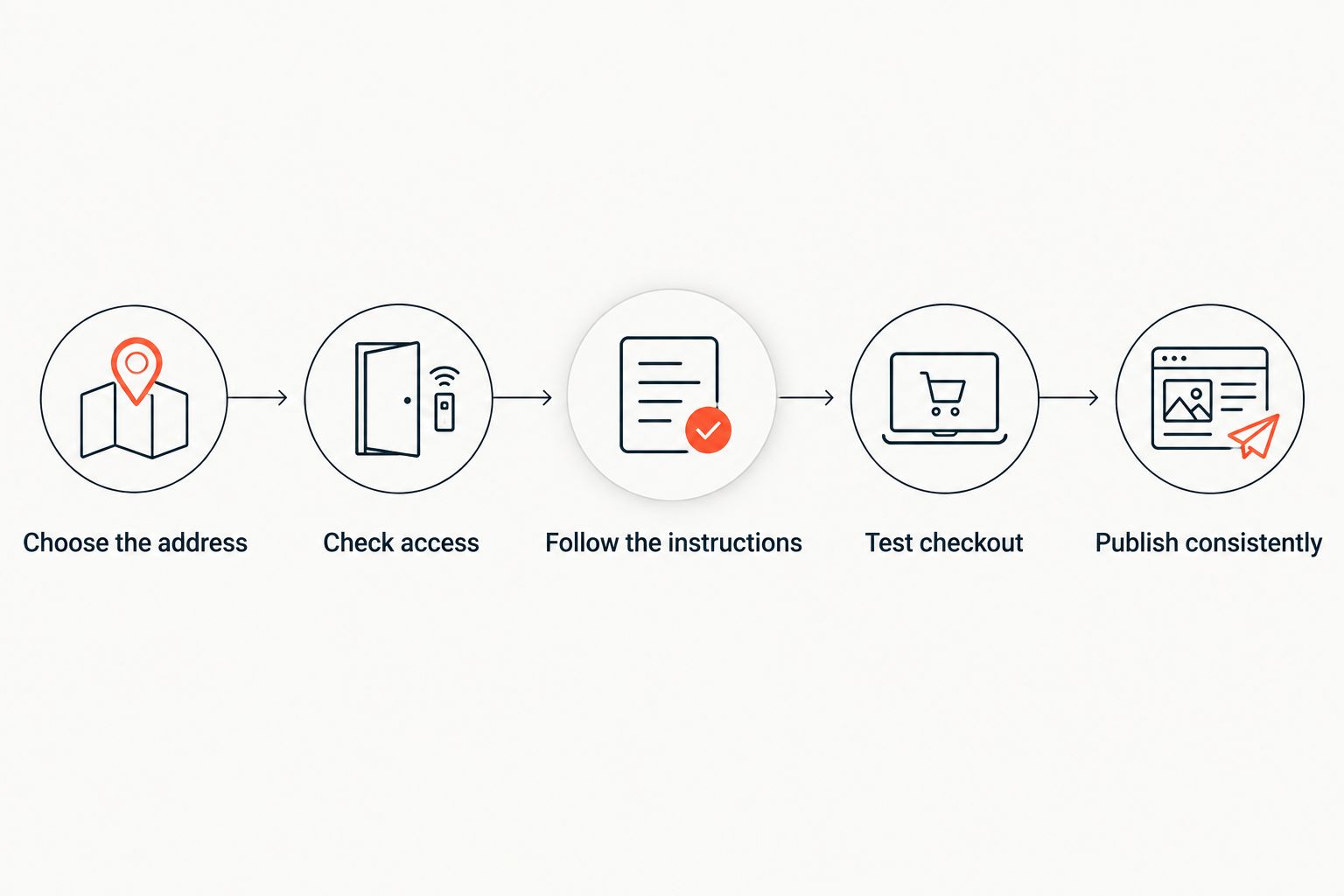
- Choose the address. Decide whether the storefront belongs on your main domain or an organiser-owned subdomain. Consider the website already in place.
- Check access. Confirm that your organisation controls the domain account and can edit the required records. Avoid relying on an inaccessible account owned by a former supplier.
- Follow the instructions. Use the exact records specified by the ticketing provider. Preserve unrelated website and email records.
- Test checkout. Open an event, select the appropriate ticket or seat, and verify the handover through checkout using the provider's supported testing process.
- Publish consistently. Update the routes your organisation uses to direct visitors to the storefront, then check them again from a phone.
The guide to connecting your own domain to a storefront is the relevant setup reference. Use it for configuration rather than substituting generic domain advice for platform-specific instructions.
After connection, check the secure connection and the destination reached from your main website. Repeat the purchase-path check for the languages you intend to publish. A successful domain connection is not the same as a complete event setup.
What the address does not prove
A custom domain does not prove that you own customer records, receive funds directly or can export operational data. Those depend on the platform and your commercial arrangements.
It also does not guarantee better Google rankings. Search visibility depends on more than the hostname, and moving existing pages introduces separate questions about redirects and indexing. Keep the domain decision grounded in control and continuity rather than an unsupported traffic promise.
Website domain configuration does not automatically authenticate outbound email either. Ask separately how your event emails are sent and which sender-domain requirements apply.
Judge ownership at the point of sale and after it. Identify where checkout completes, which account receives funds, and how your team accesses orders. The address is one part of that review.
Where the ticketing platform fits
ZunaroSpace combines the branded storefront, seating, box office, kiosk and door check-in on one live inventory. Its WhatsApp agent answers buyers, holds seats and hands over a checkout link. AI that sells your tickets.
Events can also be discovered and booked inside ChatGPT and Claude, including selecting a seat on the real map and holding it. Checkout always completes on the organiser's own site, never in chat. Your storefront therefore remains the checkout destination rather than becoming an optional afterthought.
You keep the fees, the funds and the customers. Organisers pay nothing per ticket; the buyer covers a booking fee of AED 3.99, or AED 1.99 for tickets under AED 20. Free events carry none. These are ticketing terms, not a statement about domain registration or renewal.
Ask Zunaro Pro is AED 179/mo, with a 14-day trial and no card required. Treat that separately from the address decision: an assistant subscription and a domain serve different purposes.
The platform supports Arabic and English, full RTL, and AED and SAR pricing. Currency support is not a promise of a particular payout arrangement in Saudi Arabia. Verify the payment setup for your business before launch.
Based at DTEC, Dubai Silicon Oasis. Built for the Gulf - the UAE and Saudi Arabia.
Should I switch platforms just to get a custom domain?
Do not switch solely for the address without checking the operational impact. Review events, seats, orders, check-in and payment arrangements alongside the domain feature.
A new address is useful only if the platform behind it fits your programme. Document how current links and existing bookings will be handled before changing systems.
Will my own domain improve ticket sales?
A custom domain is not a guaranteed ticket-sales improvement. It gives you control of the address; sales results require measurement rather than an assumption about branding.
For your 2026 review, separate the domain change from changes to event content, promotion and checkout. Otherwise, you cannot attribute a result to the address alone.
Can I keep the address if I change ticketing providers?
You retain the domain when your organisation controls its registration. You can change its destination, but that does not automatically preserve every event-page path or move existing bookings.
Check redirect support and migration requirements before switching. Keeping the hostname and keeping all published links working are different tasks.
FAQ
Is a custom domain worth it for a ticketing storefront in 2026?
Yes, for recurring events where the organiser wants a permanent address under its control. It is optional for a temporary launch and does not replace testing checkout or confirming payment arrangements.
Should I put ticketing on my main domain or a subdomain?
Choose an organiser-owned subdomain when your existing website serves other purposes. Use the main domain when the storefront is intended to be your principal website destination.
Does a custom domain guarantee better Google rankings?
No, a custom domain does not guarantee better Google rankings. Choose it for address control and continuity, not an assumed search-ranking improvement.
Does connecting my domain also move my customer data?
No, connecting a domain changes where the address points; it does not itself migrate customer records or orders. Confirm data access and migration separately with the ticketing provider.
Does checkout finish inside ChatGPT or Claude?
Checkout finishes on the organiser's own site, not inside ChatGPT or Claude. Events can be discovered and booked in chat, including selecting and holding a seat on the real map.
Do organisers pay a per-ticket fee with ZunaroSpace?
Organisers pay nothing per ticket. Buyers cover a booking fee of AED 3.99, or AED 1.99 for tickets under AED 20; free events carry none.
What should I check before publishing my storefront address?
Check domain access, the secure connection, event details, seat selection and the checkout destination. Confirm that your existing website and email records remain intact.
One last thing
Your domain account is part of your ticketing infrastructure. Keep it under organisational control, document renewal responsibility and ensure authorised colleagues can recover access.
For 2026, make that ownership check before debating the perfect address. A plain address you control is a sounder foundation than a polished one locked in somebody else's account.