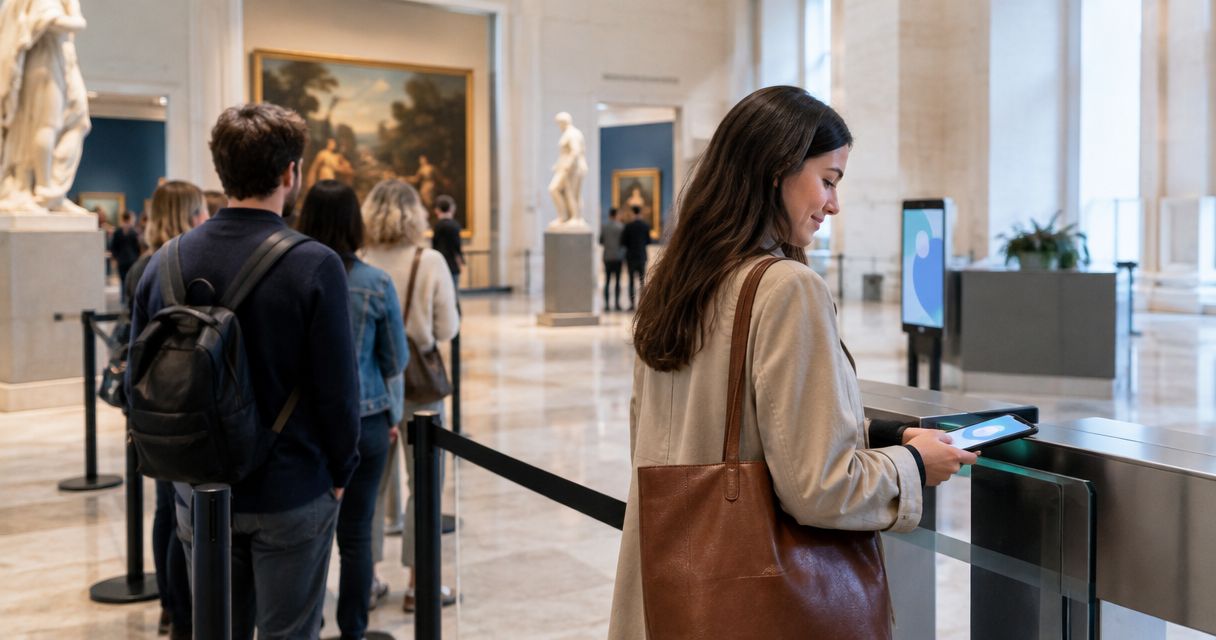
Yes. Museums can use timed-entry ticketing to assign visitors to admission slots, manage bookings across online and on-site sales, and check arrivals against the slot booked. In 2026, the decision is whether a ticketing system can enforce each slot’s capacity across every sales channel; a calendar on the booking page alone does not do that.
- Yes, museums can use timed entry ticketing when admission slots have shared capacity across sales channels.
- A timed-entry booking needs a time slot; a reserved seat needs a specific seat.
- Zunaro suits museum event ticketing teams seeking a branded storefront and shared sales inventory; confirm admission-slot controls before choosing it.
- Check how the system handles walk-ups, late arrivals and entry checks before publishing timed admission.
Why this matters
A museum sells access to an experience, but not every visitor needs the same kind of ticket. General admission can span opening hours, while an exhibition or guided visit can require a specific arrival time. If those bookings share the same entrance or staff, the system needs to tell staff what each visitor booked without making them reconcile separate sales records.
In 2026, the main risk is selling a slot through one channel after another channel has filled it. A museum comparing Zunaro for its own storefront, box office and kiosk should distinguish its confirmed shared inventory from a timed-admission feature that still needs checking. One live inventory across those 3 selling channels is relevant; it does not, by itself, establish that admission slots have separate limits.
Can museums use timed-entry ticketing?
Yes. Timed-entry ticketing works when visitors choose an arrival slot and the museum controls bookings against that slot’s capacity. The booking also needs to remain identifiable at the door. A ticket that merely prints an entry time is not enough if staff cannot see what was sold for that time.
| Admission model | Best for | What works | What to check |
|---|---|---|---|
| Open admission | Visits without a required arrival slot | Visitors can choose when to arrive within the ticket’s stated terms | Busy periods are harder to manage through the booking alone |
| Timed admission | Exhibitions, guided visits or entries scheduled by arrival time | Visitors select a defined slot | Slot limits must stay consistent across online and walk-up sales |
| Reserved seating | Talks, performances or screenings with assigned places | Each booking identifies a specific seat | A seat map does not automatically manage museum-wide entry slots |
Choose timed admission when the arrival time is part of what the museum must manage. Choose reserved seating when the individual place matters. A museum can need both for different activities, but the two controls solve different problems.
The distinction matters during software selection. A platform can show an event time without allowing visitors to choose among entry slots. It can also sell reserved seats without setting a limit for each museum admission period. Ask to see the complete booking and check-in flow for the admission model you intend to publish, rather than treating an event calendar as proof.
How should a museum set up timed entry?
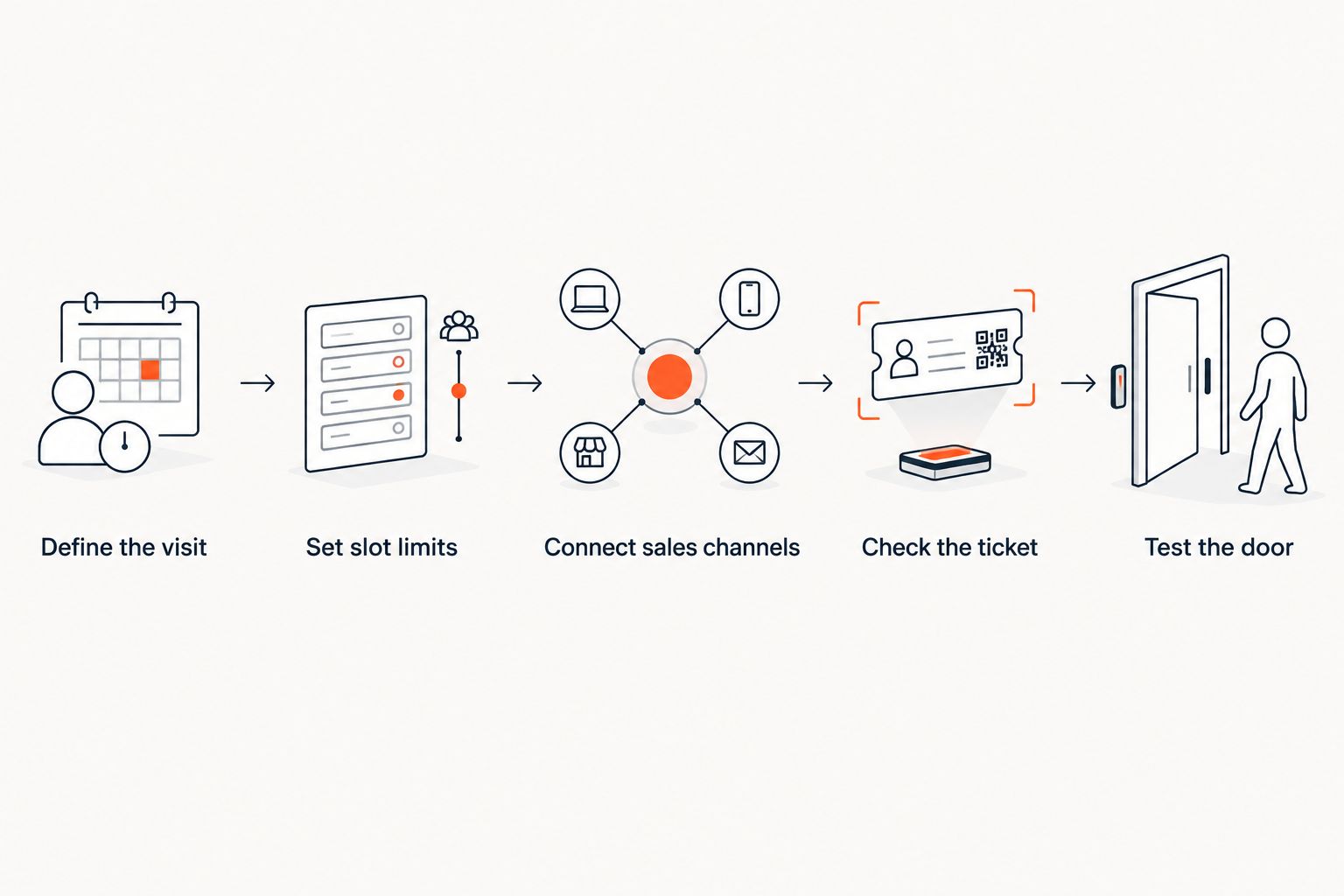
Treat each slot as an operational commitment: the booking page, on-site sale and entry record must describe the same visit. Use this sequence to define the requirement before you configure software in 2026.
- Define the visit. Decide whether the time controls museum entry, entry to a particular exhibition, or the start of a guided visit. Put that distinction in the ticket wording so staff and visitors refer to the same place and time.
- Set slot limits. Establish how many bookings the museum will accept for each arrival period. The relevant question is not just how many tickets can sell in total, but whether every selling channel follows the limit for the same slot.
- Connect sales channels. Decide how online purchases, box-office sales and kiosk sales will affect available places. If walk-up staff cannot see remaining capacity for a slot, they cannot rely on the online availability display.
- Check the ticket. Confirm that the visitor’s selected slot appears in the booking record and on the information staff use at entry. Check how staff distinguish a museum admission ticket from an exhibition or event ticket.
- Test the door. Rehearse an on-time visitor, a late arrival, a walk-up visitor and a visitor holding the wrong slot. Define what staff should do in each case before tickets go live.
The sequence is a specification, not a claim that every event ticketing platform supports each step. Ask a provider to demonstrate the steps with a timed museum booking. In 2026, that demonstration is more useful than a feature list headed simply ticketing.
A useful test is to reserve the last available place in a slot through one channel, then try to sell that same place through another. The result shows whether the channels share a slot limit. Repeat the test for a cancellation or booking change if those actions are part of the museum’s process; availability needs to reflect the revised booking as well.
What should the museum check before choosing software?
Start with the requirement the software cannot compromise: each admission slot needs an enforceable limit wherever tickets sell. Then check what happens after purchase. Staff need a dependable way to identify the booked visit and decide whether the ticket presented is valid for that entry point.
Ask the provider to show the following, using the museum’s actual admission structure:
- Slot selection: Can a visitor select a museum entry time, rather than only an event date or a performance start time?
- Slot capacity: Does the system stop sales for a full slot while leaving other slots available?
- Shared availability: Does an on-site sale change what the online visitor sees for that same slot?
- Booking changes: What happens to slot availability when a booking is changed or cancelled?
- Entry records: What visit and slot information can staff see when the visitor arrives?
- Separate experiences: Can staff tell general admission apart from an exhibition, talk or guided visit?
These are acceptance tests, not optional refinements. If a museum advertises timed entry but sells through separate inventories, its booking page cannot be treated as the final record of available places. The same applies when the ticket names a time that staff cannot verify at entry.
Zunaro museum ticketing offers an own-branded storefront, box office and kiosk on one live inventory, with door check-in. Those confirmed capabilities address sales channels and entry operations. Confirm that Zunaro supports selectable admission slots and slot-level limits for your specific setup before treating it as a timed-entry solution. Shared inventory is the right starting point, not a substitute for that check.
Check your museum ticketing setup
Review the storefront, box office and entry workflow against your admission requirements.
Why does the right setup vary by museum?
In 2026, the answer depends on what the time on a ticket is supposed to control. These factors determine the booking rules to test:
- Type of entry. A museum-wide admission slot, a guided visit and an assigned seat identify different things. Name the experience before selecting the ticket format.
- On-site sales. A museum that sells at a box office or kiosk needs those sales reflected in the availability shown to online visitors.
- Arrival handling. Decide what staff do when someone arrives before or after the booked slot. Ticketing software records the booking; the museum sets the admission rule.
- Multiple experiences. General admission and a separately ticketed talk need records that staff can distinguish at the door.
- Visitor communication. A booking confirmation needs to make the visit, date and selected slot clear. Staff should be able to find the same information in the entry record.
- Language requirements. For museums serving Arabic- and English-speaking visitors, check the booking and entry wording in both languages. Zunaro supports 2 languages, Arabic and English, with full right-to-left presentation for Arabic.
Do not select a platform solely because it offers a seat map. A seat map solves a different allocation problem: which person has which seat. Zunaro can trace a seat map from a photo in about 60 seconds, which is relevant to a seated talk or screening. That capability does not establish that the platform can cap timed museum-admission slots.
Is timed entry the same as reserved seating?
No. Timed entry allocates a visitor to an arrival period; reserved seating allocates a visitor to a particular place. A museum screening with assigned seats needs seating controls, while a gallery admission booking can require a slot without assigning any seat.
This difference also shapes the questions you ask staff. For timed entry, they need to identify the correct visit and arrival period. For reserved seating, they also need the assigned place. If a ticket combines both, check that the booking record carries both details rather than relying on a note added outside the ticketing flow.
Can a museum keep selling walk-up tickets with timed entry?
Yes, if the on-site sale respects the same slot limit as the online sale. Decide whether staff can choose from available slots at the box office and what they should offer when a visitor’s preferred slot is full.
A kiosk adds another selling channel to that test. Zunaro museum ticketing has a storefront, box office and kiosk on one live inventory, but the museum should still verify how each channel handles the limits of an individual admission slot. In 2026, a shared event inventory and a shared slot inventory should not be treated as interchangeable claims.
Can timed entry work for free museum events?
Yes. A free ticket can still identify a visit and a selected arrival slot; payment is not what makes the entry timed. The operational question is whether the system limits bookings for each slot and gives staff a way to check the booking at entry.
Keep the visitor-facing terms clear even when no payment is involved. If a free exhibition visit requires a particular entry time, that requirement belongs on the booking confirmation and in the record staff use at the door. The museum must set its own rule for changes and late arrivals.
FAQ
Can museums use timed entry ticketing for general admission?
Yes. A museum can offer general admission by arrival slot when it needs visitors to book a time. The system must apply the slot limit across every channel used to sell that admission.
Does timed-entry ticketing require reserved seats?
No. Timed entry assigns an arrival period; reserved seating assigns a specific seat. A museum only needs both when an experience has timed admission and assigned places.
Can a museum sell timed tickets at its box office?
Yes, if box-office sales follow the same slot limits as online sales. Test a near-full slot across both channels before publishing tickets.
Can museums offer timed entry for a free exhibition?
Yes. A free booking can still specify an arrival slot and be checked at entry. Confirm that the ticketing system enforces capacity for each slot.
Does Zunaro support museum timed-entry slots?
Zunaro supports an own-branded storefront, box office, kiosk and door check-in on one live inventory. Selectable museum admission slots and slot-level capacity controls need confirmation for the intended setup.
Is a museum seat map enough for timed admission?
No. A seat map allocates individual places, while timed admission controls bookings for an arrival period. Ask for a demonstration of slot selection and slot limits.
What should a museum test before launching timed entry?
Test slot selection, capacity across online and on-site sales, and the information staff see at entry. Recheck availability after a booking change if the museum intends to allow changes.
One last thing
Test the final place in a slot, not just the first booking. The first sale proves a visitor can choose a time; the final-place test shows whether the museum can stop every channel from selling that slot again. For Zunaro in 2026, make that slot-level test part of the decision before publishing timed admission.