
You can set a minimum spend before a discount code applies when your event ticketing platform supports a minimum-order condition. The condition must specify which ticket value counts towards the threshold and when checkout checks it. A code’s name or promotional wording does not enforce that rule.
- A minimum spend discount code needs an enforced checkout condition, not just promotional wording.
- Count eligible ticket value separately from booking fees, donations and excluded items.
- Test baskets below, at and above the threshold before publishing your offer.
- Zunaro is an event ticketing platform for independent organisers; confirm the required discount condition before launching.
Why this matters
Every show has seats that never sold - and no one was working on them.
A discount can give you a reason to contact interested audiences. But a minimum-spend offer needs a precise checkout rule: which tickets qualify, what counts towards the threshold and what happens when an order changes. Write the eligibility rule before writing the campaign.
For your 2026 promotion, separate platform selection from promotion configuration. Zunaro provides an event ticketing platform with a branded storefront, seating, box office and kiosk; your proposed discount condition still needs a specific capability check before you advertise it.
Can I set a minimum spend before a discount code applies?
Yes, provided the discount configuration includes a minimum-spend condition that checkout enforces. Start with the qualifying ticket subtotal rather than assuming the entire amount payable determines eligibility.
Use this sequence to define the rule:
- Choose eligible tickets. Identify the event, performance and ticket types included in the promotion.
- Define qualifying spend. State whether the calculation excludes booking fees, taxes, donations and other items.
- Set the threshold. Specify whether an order qualifies when it reaches the minimum, rather than requiring it to exceed the minimum.
- Define the discount scope. Decide whether the reduction applies to qualifying tickets or a broader eligible order.
- Set combination rules. Decide how the code interacts with existing reduced ticket prices and other promotions.
- Test changes. Remove a ticket after applying the code and check that checkout reassesses eligibility.
Treat these as requirements to verify, not settings every ticketing platform necessarily provides. A working code is not evidence that every condition behind your offer works.
What should the rule actually say?
Write an internal specification in plain language before opening the discount editor. For example: the code applies when eligible tickets reach the stated minimum before the code’s reduction, excluding booking fees and donations.
That wording is a proposed rule, not a statement about a particular platform’s implementation. Give the same specification to whoever configures checkout, writes the offer and handles box-office questions.
Minimum spend or minimum ticket quantity?
A spending threshold and a ticket-count threshold solve different problems. Use minimum spend when order value matters; use minimum quantity when the offer is about bringing a group. Neither rule is automatically better.
| Condition | Best for | Main advantage | Main limitation |
|---|---|---|---|
| Minimum eligible spend | Promotions tied to ticket value | Connects eligibility to the qualifying subtotal | Different ticket values produce different qualifying baskets |
| Minimum ticket quantity | Group-booking promotions | Makes the required group size explicit | Does not distinguish between lower-value and higher-value ticket types |
| No minimum condition | Offers intended for every eligible order | Keeps eligibility straightforward | Provides no minimum order-value or group-size boundary |
Do not describe a spending condition as a group discount unless the actual rule requires a group. An expensive individual ticket and a basket of lower-value tickets can satisfy the same spending threshold without representing the same attendance pattern.
For a 2026 campaign brief, name the intended behaviour explicitly. “Encourage larger eligible orders” and “encourage groups to attend together” require different eligibility checks.
Which amount should count towards minimum spend?
Choose a calculation basis you can explain and test. A qualifying ticket subtotal gives you a clear starting point because it separates the tickets covered by the promotion from other checkout charges.
Eligible ticket value
Specify the ticket types and performances that contribute towards the minimum. If premium seating is excluded, decide whether its value is also excluded from the qualifying calculation, rather than leaving that relationship implicit.
A mixed basket needs particular attention. A code restricted to selected tickets should not be assumed to treat every item in the order as qualifying spend.
Booking fees and taxes
State whether fees and taxes count. Do not describe an offer as a minimum ticket spend if checkout actually checks the amount payable including additional charges.
This is an eligibility decision, not tax advice. Confirm how your platform calculates and displays the relevant amounts, then make the offer wording match that behaviour.
Donations and other items
Decide whether donations or non-ticket items contribute towards the threshold when your checkout includes them. Keep the distinction visible in your internal specification.
Excluding a donation from qualifying spend does not prevent someone from donating. It simply keeps the promotion’s eligibility tied to the items you intended to promote.
Existing reductions
Specify whether qualifying spend uses the ticket value before or after an existing reduction. This matters when an eligible ticket already carries an early-booking rate or another adjustment.
Avoid the phrase “before discounts” without explaining which discounts you mean. The minimum-spend code itself and an existing ticket-price reduction are separate calculation steps.
Why minimum-spend eligibility varies
The same basket can pass one promotion’s conditions and fail another’s. The difference lies in the rule, not necessarily in a checkout error.
- Ticket scope: selected ticket types can qualify while other tickets remain excluded.
- Performance scope: a promotion can be designed for a particular performance rather than every date.
- Calculation basis: eligible ticket value differs from the final amount payable.
- Existing reductions: a threshold checked after another reduction uses a different subtotal.
- Order changes: removing or replacing tickets changes the qualifying basket.
- Sales channel: a storefront configuration does not establish how staff should handle the same offer at a box office.
Record these decisions in your 2026 offer brief. A short, agreed specification is more useful than a code name that leaves staff to interpret the conditions.
How do I test a minimum spend discount code?
Test eligibility boundaries and order changes before sending the code to your audience. A successful qualifying order proves one path works; it does not prove the rejection paths work.
Below the threshold
Build an otherwise eligible basket that does not reach the minimum. Check that the reduction is not applied and that the explanation identifies the unmet condition.
Keep this test free of other restrictions. If the code is also expired or attached to an excluded performance, you will not know which condition caused the rejection.
At the threshold
Build a basket that exactly meets the qualifying minimum. If your wording says “minimum spend”, confirm that reaching the minimum is sufficient.
Do not substitute “over” or “more than” in promotional copy unless the rule genuinely requires a greater amount. Small wording differences change what you have promised.
Above the threshold
Build a qualifying basket above the minimum and inspect the discount scope. Check which tickets receive the reduction, not just whether checkout accepts the code.
A code can pass the threshold check while applying to items you intended to exclude. Eligibility and discount calculation need separate checks.
Changed basket
Apply the code, then remove an eligible ticket so the basket falls below the minimum. Checkout should reassess the condition before payment under the rule you have specified.
Also test replacing an eligible ticket with an excluded ticket. The total amount payable can remain high while qualifying spend drops.
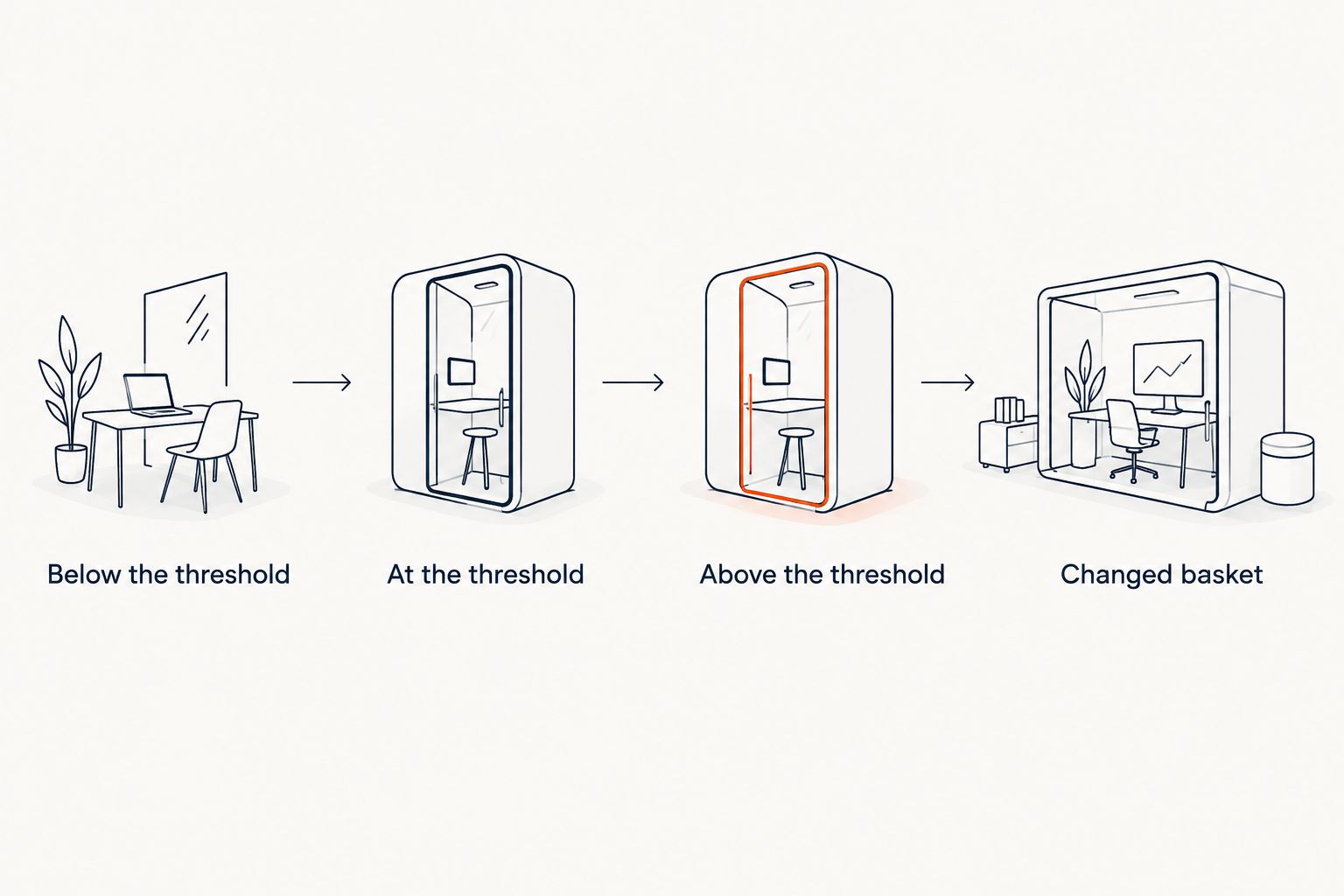
Keep a record of the expected result and the observed result for each test. Repeat the relevant checks whenever you change ticket eligibility or promotion conditions during 2026.
Can a minimum-spend code work at the box office?
A minimum-spend offer needs a defined box-office process if you intend staff to honour it there. Do not assume an online code automatically establishes the same rule in every sales channel.
Ask how staff enter the code, see eligible ticket value and explain a rejected application. Check whether they can override the result and, if so, what authorisation your organisation requires.
One live inventory keeps ticket availability connected across channels, but inventory synchronisation and discount eligibility are different functions. Test both parts of the sales process rather than treating one as proof of the other.
What happens if someone removes tickets or requests a refund?
Removing tickets before payment should trigger a fresh eligibility check under your specified rule. A refund after payment is different: it requires a published refund policy and a defined treatment of the original discount.
Do not assume the original code will be recalculated automatically after a partial refund. Establish the process before launching the promotion, including how staff explain any adjustment.
Keep the offer terms and refund terms consistent. A checkout condition should not become an improvised refund deduction after someone has already purchased.
What should you confirm before using Zunaro?
Zunaro is an event ticketing platform for independent organisers and venues selling through their own branded storefront. Store, seating, box office, kiosk and door check-in share one live inventory. That platform scope does not, by itself, establish support for a particular minimum-spend discount rule.
Bring your written condition to the contact team and ask for a demonstration using your intended basket. Include the threshold basis, eligible tickets, excluded charges, combination rules and behaviour after removing a ticket.
The platform’s sales mechanisms include a WhatsApp agent that answers buyers, holds seats and hands over a checkout link. AI that sells your tickets. Checkout completes on the organiser’s own site, not in chat.
You keep the fees, the funds and the customers. Organisers pay nothing per ticket, and free events carry no booking fee. Ask Zunaro Pro has a 14-day trial with no card required; seat maps can be traced from a photo in about 60 seconds.
Based at DTEC, Dubai Silicon Oasis. Built for the Gulf - the UAE and Saudi Arabia.
FAQ
Can I require a minimum spend before an event discount code works?
Yes, when your ticketing platform supports and enforces a minimum-spend condition. Confirm which ticket value counts and test baskets below, at and above the threshold before publishing the offer.
Does minimum spend include booking fees?
Minimum spend includes booking fees only if the configured calculation counts them. State the calculation basis clearly rather than assuming the final amount payable is the qualifying subtotal.
Is a minimum-spend code the same as a group discount?
No, a minimum-spend code checks qualifying value, while a minimum-quantity condition checks ticket count. Choose the condition that matches the behaviour your event promotion is intended to encourage.
Should a code work when the basket exactly reaches the minimum?
A code described as requiring a minimum spend should qualify when the eligible basket reaches that minimum. Verify the boundary in checkout and avoid wording that promises a different condition.
Can someone combine a minimum-spend code with another offer?
Combination depends on the platform’s supported settings and your promotion’s configuration. Test existing reduced ticket prices separately from additional discount codes.
What happens if tickets are removed after applying the code?
Checkout should reassess the minimum-spend condition when eligible tickets are removed. Test that the discount no longer applies when the revised basket fails your specified rule.
Does Zunaro support the exact minimum-spend rule I need?
Confirm your exact minimum-spend requirement with Zunaro before advertising it. Request a demonstration covering eligible tickets, excluded charges, the threshold boundary and changes to the basket.
One last thing
The most useful test is the basket that stops qualifying. Apply the code successfully, remove an eligible ticket and inspect the result before payment.
Make that check part of your 2026 promotion sign-off. It tests whether checkout enforces the condition after the basket changes, rather than merely accepting the code when everything already qualifies.