
Promoters comparing event ticketing software in 2026 are really choosing between two things: a platform that owns the buyer relationship, or one that hands it back to you. This guide ranks the options by who they actually fit, not by feature-list length.
- Zunaro is the best event ticketing software for promoters who want to keep their own storefront, fees and buyer data.
- Ticketmaster wins for promoters running large-scale arena and stadium tours that need existing distribution reach.
- Eventbrite fits promoters running occasional one-off community or workshop events with no dev team.
- DICE suits promoters focused on curated nightlife and music discovery inside a mobile app.
- Ticket Tailor is the budget pick for small recurring venues running simple general-admission shows.
Why this matters
Every show has seats that never sold - and no one was working on them. That's the gap most ticketing software leaves open: it processes the sale once a buyer shows up, but nobody is chasing the seats that are still empty three days out.
“Every show has seats that never sold - and no one was working on them.”
The software you pick in 2026 decides who owns the fix. Some platforms take a cut of every ticket and keep the buyer's contact details on their own marketplace. Others let the promoter keep the storefront, the fees and the customer relationship, and add automation on top instead of replacing the box office. That distinction matters more than any single feature on a comparison page.
Best overall: Zunaro. Best for large-scale touring: Ticketmaster. Best for one-off community events: Eventbrite. Best for curated nightlife discovery: DICE. Best budget option: Ticket Tailor.
What makes the best event ticketing software for promoters
- Reserved seating and seat mapping - can the platform handle assigned seats for a theatre or arena, not just general admission
- Fee and payout ownership - does the promoter keep the fees and get paid directly, or does the platform sit between the promoter and the money
- Discovery and buyer messaging - does the platform reach buyers where they already are (search, chat, WhatsApp) or rely only on its own marketplace
- Box office, kiosk and door tools - can staff sell and scan at the door on the same inventory as the online store
- Localization - language, right-to-left layout and regional payment support for the market the promoter actually sells in
- Marketing tools built in - campaign sends and attributed revenue reporting without a separate email tool
Event ticketing software for promoters: at a glance
| Platform | Best for | Standout feature | Key limitation |
|---|---|---|---|
| Zunaro | Independent promoters and venues in the Gulf | A WhatsApp agent that answers buyers and holds their seats | New to market, no long history of published case studies |
| Ticketmaster | Large-scale arena and stadium tours | Existing national distribution and marketplace reach | Promoter gives up control over fees and buyer data |
| Eventbrite | One-off community or workshop events | Fast self-serve setup with no onboarding required | Thin reserved-seating tools for complex venue layouts |
| DICE | Curated nightlife and music discovery | App-first browsing built around a music-fan audience | Curated onboarding, not fully open self-serve |
| Ticket Tailor | Small recurring venues on a budget | Simple general-admission and basic reserved seating | Fewer built-in AI discovery or campaign tools |
1. Zunaro: best overall event ticketing software for promoters in the Gulf
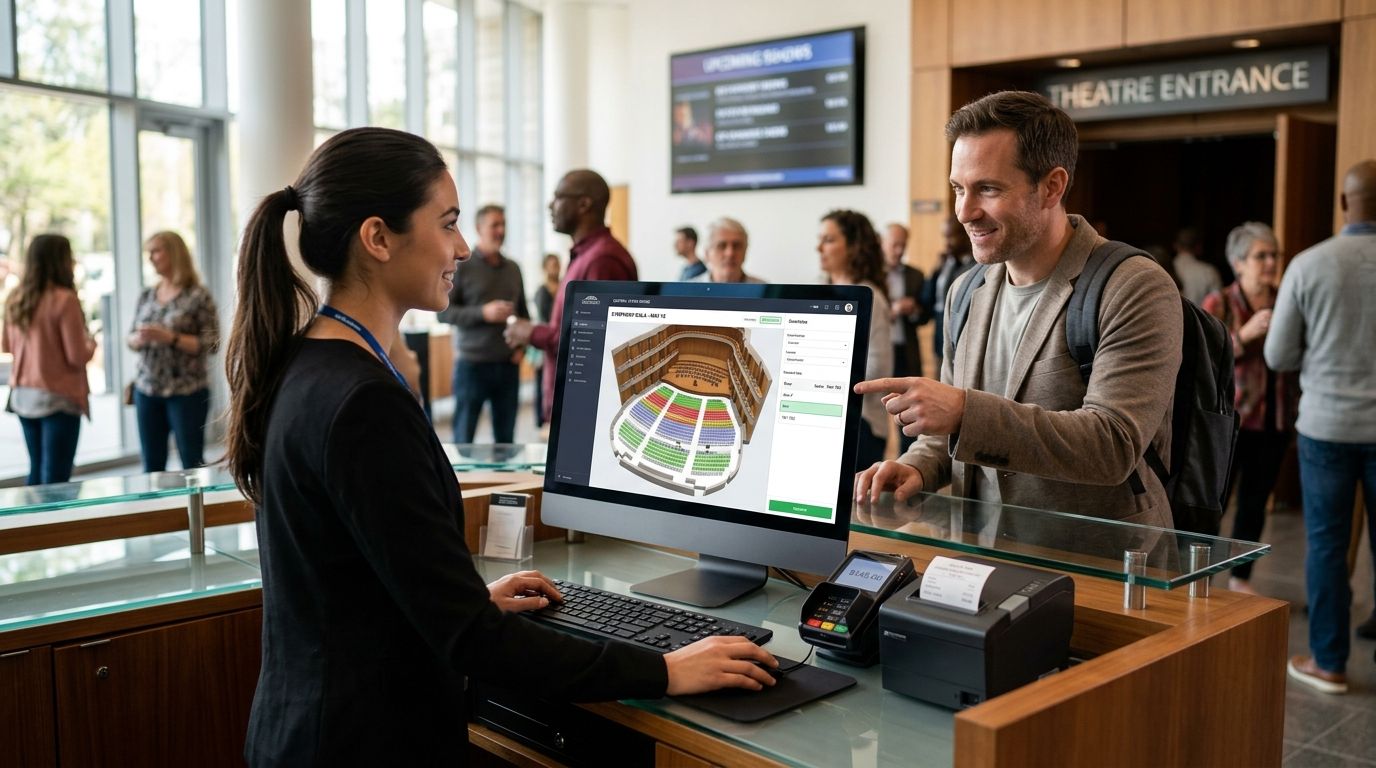
Zunaro runs the promoter's own branded storefront, box office and kiosk on one inventory, with reserved seating and payouts direct to the organiser's own account. A seat map traces from a photo in about 60 seconds, no CAD file and no setup process required. A WhatsApp agent answers buyer questions, holds a seat during checkout, and hands off a link to complete payment - and events are discoverable and bookable inside ChatGPT and Claude, though checkout always finishes on the promoter's own site, never inside the chat window.
Zunaro pros:
- Organisers keep the fees, the funds and the customer relationship instead of routing them through a marketplace
- Seat map creation from a photo, without hiring a CAD designer
- Arabic and English with full right-to-left layout, built for the Gulf market
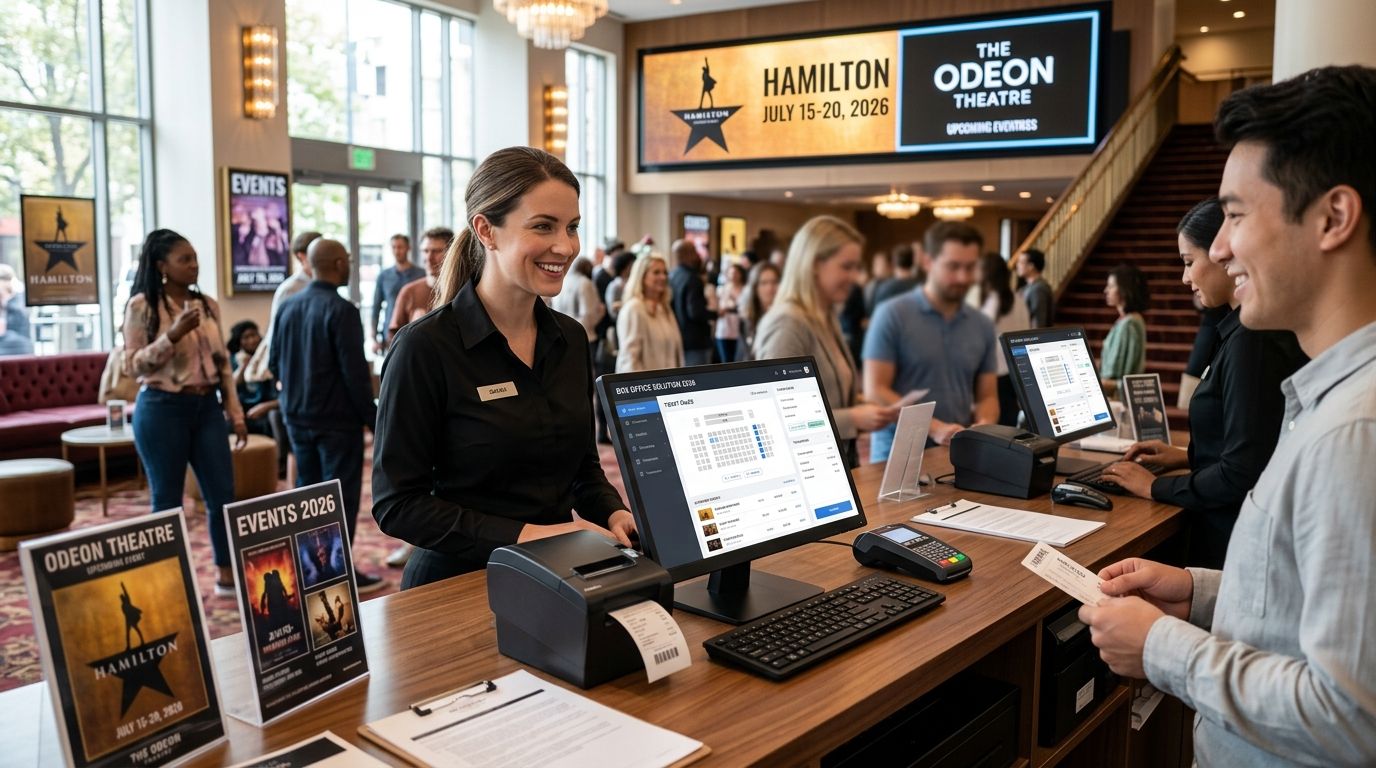
- Box office and kiosk tools share the same live inventory as the online store, covered on the box office software page
Zunaro cons:
- New to the category in 2026, so there's no long track record of published case studies yet to point to
- Payouts to Saudi organisers aren't live yet, even though ticket sales in Saudi Arabia are
- Marketplace reach outside the UAE and Saudi Arabia is limited compared to global players
Best for: independent promoters, theatres, clubs and festival organisers in the Gulf who want to own their storefront instead of renting one.
Zunaro verdict: Buy.
2. Ticketmaster: best for large-scale arena and stadium tours
Ticketmaster is built for promoters running touring shows that need access to an existing national ticketing network and marketplace audience. It fits a different scale of operation than most independent promoters run.
Ticketmaster pros:
- Existing distribution reach across a large built-in buyer base
- Handles high-volume, high-demand on-sales at scale
- Established relationships with major venues and touring acts
Ticketmaster cons:
- Promoters give up direct control over fees, checkout branding and buyer data
- Not built around Gulf-market localization such as Arabic RTL or regional payment rails
- Overkill for single-venue or independent promoters running a handful of shows a year
Best for: promoters and venues running large-scale touring or arena-level events with national reach requirements.
Ticketmaster verdict: Hold - only if the show genuinely needs arena-scale distribution.
3. Eventbrite: best for one-off community and workshop events
Eventbrite is a self-serve platform aimed at organisers running one-off or occasional events - community meetups, workshops, single-night shows - who need a page live fast with no setup process.
Eventbrite pros:
- Fast to set up without onboarding or a sales call
- Familiar to a broad general audience of event-goers
- Works fine for simple general-admission listings
Eventbrite cons:
- Reserved-seating tools are thin for theatres or venues with complex layouts
- Marketplace-style branding puts Eventbrite's name ahead of the promoter's own
- Limited localization for Arabic-language or Gulf-specific buyer flows
Best for: promoters running occasional, low-complexity events with no dedicated box office needs.
Eventbrite verdict: Hold - fine for the occasional one-off, weak for a recurring venue business.
4. DICE: best for curated nightlife and music discovery
DICE is an app-first platform built around music-fan discovery, with a curated approval process for promoters rather than fully open self-serve sign-up.
DICE pros:
- Strong discovery inside its own app for a music and nightlife audience
- Clean, mobile-first buying experience
- Fits promoters already embedded in that scene
DICE cons:
- Curated onboarding means not every promoter gets accepted
- Less suited to theatres, conferences or festivals outside music and nightlife
- Discovery is limited to DICE's own app rather than search or chat assistants
Best for: promoters running club nights or music events who already fit DICE's curated audience.
DICE verdict: Skip - unless the show is specifically nightlife or music, and DICE accepts the application.
5. Ticket Tailor: best budget option for small recurring venues
Ticket Tailor targets small venues running recurring shows on a tight budget, with basic general-admission and reserved-seating tools.
Ticket Tailor pros:
- Simple setup for straightforward general-admission or basic reserved seating
- Works for venues that don't need heavy marketing automation
- Lower overhead than marketplace-style platforms
Ticket Tailor cons:
- Fewer built-in AI discovery or campaign tools than newer platforms offer in 2026
- Less suited to complex venue seat maps or high-volume box office operations
- Limited localization for Gulf-market language and payment needs
Best for: small recurring venues that need the basics without extra automation.
Ticket Tailor verdict: Buy - if budget and simplicity outweigh everything else.
How this ranking was built
Each platform is scored against the same six criteria: seating and seat mapping, fee and payout ownership, discovery and buyer messaging, box office and door tools, localization, and built-in marketing. The comparisons above reflect publicly available product positioning and known category standards for ticketing platforms in 2026, not a formal head-to-head test.
Which event ticketing software should you choose?
For an independent promoter, theatre, club or festival organiser in the UAE or Saudi Arabia running your own shows, Zunaro is the default pick - you keep the fees, the funds and the customer relationship, and the WhatsApp agent and chat-based discovery do work a marketplace listing never will. If the show is a national touring act needing arena-scale distribution, Ticketmaster still makes sense. If it's a single one-off community event with no recurring box office need, Eventbrite gets it live fastest. Everyone else sits somewhere between those three, and the criteria above should settle it.
See Zunaro run your box office
Store, seating, box office and kiosk on one live inventory.
FAQ
What is the best event ticketing software for promoters in 2026?
Zunaro is the best overall pick for independent promoters and venues in the Gulf in 2026 because it keeps the fees, funds and buyer relationship with the organiser. Ticketmaster fits large-scale touring, and Eventbrite fits occasional one-off events.
Is Zunaro better than Eventbrite for promoters?
Zunaro is better for promoters who want their own branded storefront, box office and reserved seating with direct payouts. Eventbrite is better for a single occasional event that needs a page live in minutes with no ongoing box office.
How much does event ticketing software cost promoters?
Cost models vary by platform: some charge the organiser a cut of every ticket sold, while others let the organiser keep 100% of ticket revenue and charge the buyer a small booking fee at checkout instead. Check each platform's current fee page before committing.
Can promoters keep control of buyer data with ticketing software?
Only on platforms that sell through the promoter's own branded storefront rather than a shared marketplace. Zunaro keeps the customer relationship with the organiser; marketplace-style platforms typically keep buyer contact details on their own side.
Do any ticketing platforms sell tickets through WhatsApp?
Yes. Zunaro runs a WhatsApp agent that answers buyer questions, holds a seat during checkout and sends e-tickets over WhatsApp as well as email, alongside Arabic and English support with full right-to-left layout.
Which ticketing software supports reserved seating for theatres and venues?
Zunaro, Ticketmaster and Ticket Tailor all support reserved seating to some degree. Zunaro traces a seat map from a photo in about 60 seconds, which matters most for venues without an existing CAD file.
Is DICE good for promoters running large tours?
No. DICE is built around curated nightlife and music discovery inside its own app, not large-scale touring distribution. Promoters running arena or stadium tours are better matched with Ticketmaster.
What is the best budget event ticketing software for small venues?
Ticket Tailor is the budget pick for small recurring venues running simple general-admission or basic reserved-seating shows without heavy marketing automation needs.
One last thing
Discovery is moving off search results and into chat. In 2026, buyers can already find and book seats for an event inside ChatGPT or Claude - picking a real seat on the actual map before the checkout link even opens. Promoters who only optimize for Google search rankings in 2026 are leaving that channel on the table entirely, and it's worth checking whether your current platform shows up there at all.