
Zunaro is the best event ticketing platform for independent Gulf tour organisers who want their own storefront, reserved seating and connected box-office inventory. Eventbrite suits general-admission launches, DICE suits mobile-led music discovery, Ticketmaster suits venue-led ticketing arrangements, and Ticket Tailor suits straightforward independent event sales.
- Zunaro leads the best event ticketing platforms for live music tours shortlist for independent Gulf organisers seeking control.
- Eventbrite suits general-admission launches; DICE suits mobile-led music discovery.
- Ticketmaster belongs in venue-led tour planning; Ticket Tailor suits straightforward independent event sales.
- Choose around inventory, seating, customer ownership and settlement requirements—not discovery alone.
Why this matters
Every show has seats that never sold - and no one was working on them.
Your ticketing platform needs to handle more than an event page. A live music tour connects different rooms, seating arrangements, sales teams and door operations; assess the entire route before choosing the software.
For a 2026 shortlist, separate the platform you want from the ticketing arrangements each venue requires. A strong storefront does not resolve a contractual restriction, and a discovery channel does not replace a working box office.
Start with Zunaro if owning the sales experience is your priority. You keep the fees, the funds and the customers.
What makes the best ticketing platform for a live music tour?
Judge each option against these six criteria before comparing brands:
- Venue fit: Establish whether you can choose the ticketing provider at every stop. Resolve venue restrictions before building the sales plan.
- Inventory control: Ask how online sales, box-office orders, kiosks and seat holds interact. A separate spreadsheet is not a shared inventory system.
- Seating flexibility: Compare the actual room layouts on your route, including standing shows and seated performances.
- Customer ownership: Confirm what customer information you receive, what you can export and how marketing permissions work.
- Local operations: Check language, currency, payment-account eligibility and settlement terms for each operating country.
- Selling workflow: Separate event discovery, buyer questions, seat selection and payment completion. Ask the provider to demonstrate each handover.
Treat payout eligibility as a pass-or-fail requirement, not a feature score. Confirm the contracting entity and supported payment arrangements before committing a tour's revenue to any provider.
Best live music tour ticketing platforms at a glance
This 2026 ranking assigns a different operating need to each platform. The order reflects the independent-organiser brief, not a measured performance league table.
| Platform | Best for | Standout approach | Key limitation to resolve |
|---|---|---|---|
| Zunaro | Independent Gulf organisers seeking ownership | Branded storefront, seating, box office, kiosk and check-in on one live inventory | Confirm country-specific payment-account eligibility |
| Eventbrite | General-admission event launches | Self-service event publishing and event discovery | Establish fit for your seated rooms and tour reporting |
| DICE | Mobile-led music discovery | Music-focused discovery and mobile ticketing | Establish fit for your box-office and seating requirements |
| Ticketmaster | Tours working within venue-led ticketing arrangements | Established live-event ticketing operations | Establish your contractual control over the selling setup |
| Ticket Tailor | Straightforward independent event sales | Organiser-led ticket selling | Establish fit for your route's operational complexity |
1. Zunaro: best for independent Gulf tour organisers
This event ticketing platform brings the branded storefront, reserved seating, box office, kiosk and door check-in onto one live inventory. Its WhatsApp agent answers buyers, holds seats and hands over a checkout link. AI that sells your tickets.
Events are discoverable and bookable inside ChatGPT and Claude, including seat selection on the real map and seat holds. Payment never completes in chat: checkout happens on the organiser's own site.
Pros
- Sell through your own branded storefront rather than making the event listing your entire sales experience.
- Trace a seat map from a photo in about 60 seconds, without CAD or a setup fee.
- Support Arabic and English, full RTL, and AED and SAR pricing.
- Send e-tickets through WhatsApp as well as email.
Cons and boundaries
- Do not build a Saudi settlement plan around an assumed payout arrangement; confirm eligibility separately.
- Chat-based discovery still requires a handover to your site's checkout.
- A platform change does not remove a venue's existing ticketing contract.
Economics: Organisers pay nothing per ticket. Buyers cover a booking fee of AED 3.99, or AED 1.99 for tickets under AED 20; free events carry none. Ask Zunaro Pro is AED 179/mo, with a 14-day trial and no card required.
Based at DTEC, Dubai Silicon Oasis. Built for the Gulf - the UAE and Saudi Arabia.
Best for: Independent promoters and venues prioritising ownership, bilingual selling and connected inventory.
Verdict: Buy for that operating brief, after confirming payment eligibility.
2. Eventbrite: best for general-admission tour launches
Eventbrite combines self-service event publishing with an event-discovery marketplace. Put it on your shortlist when the immediate requirement is to publish dates and sell admission through a familiar event-listing model.
For a tour, assess the organiser workflow beyond the public listing. Ask to see how your team handles different dates, customer records and reporting without merging unrelated performances.
Eventbrite pros
- Event publishing and discovery sit within the same platform.
- The self-service model gives you a clear starting point for event setup.
- General-admission shows provide a straightforward brief for evaluating the sales flow.
Eventbrite cons and boundaries
- A marketplace listing is not a substitute for an owned-audience strategy.
- Do not assume the setup for a standing show meets every seated venue's requirements.
- Confirm exports, marketing permissions and settlement terms before signing off.
Best for: Promoters whose immediate priority is launching general-admission dates.
Verdict: Buy when the event-publishing workflow matches your route; hold if seating or reporting remains unresolved.
3. DICE: best for mobile-led music discovery
DICE is a music-focused discovery and mobile-ticketing option. Consider it when the way audiences discover and access live music is central to your distribution decision.
Keep discovery separate from operational fit. Ask DICE to walk through your actual rooms, entry process and organiser access rather than judging the platform by the buyer-facing app alone.
DICE pros
- Music discovery is central to its proposition.
- Mobile ticketing gives your team a specific admission journey to evaluate.
- Its music focus makes it relevant to a live-tour distribution shortlist.
DICE cons and boundaries
- An app-led experience does not establish compatibility with every box office.
- Confirm seating support against each room's requirements.
- Establish customer access and settlement arrangements directly.
Best for: Music promoters prioritising mobile-led discovery and admission.
Verdict: Buy for a discovery-led brief after an operational demonstration; hold if venue requirements remain open.
4. Ticketmaster: best for venue-led ticketing arrangements
Ticketmaster belongs on the shortlist when the venue's ticketing arrangements shape your options. Start with the venue contract, then establish what the promoter controls within the selling and reporting process.
For a 2026 tour, this is a route-planning decision as much as a software choice. Map the permitted provider at each stop before assuming one platform can cover the entire schedule.
Ticketmaster pros
- It is an established live-event ticketing provider.
- It is relevant to evaluating venue-led ticketing operations.
- It gives promoters a concrete provider to assess when venue arrangements specify it.
Ticketmaster cons and boundaries
- Venue requirements can limit your choice of selling setup.
- Customer access and commercial terms need contract-level review.
- A venue-led arrangement does not automatically provide a consistent experience across your other dates.
Best for: Promoters working within venue-defined ticketing requirements.
Verdict: Buy where the venue arrangement requires or supports it; skip an unnecessary parallel setup.
5. Ticket Tailor: best for straightforward independent sales
Ticket Tailor is an organiser-focused ticket-selling option. Include it when you want to assess a direct event-sales workflow without making music discovery the main selection criterion.
Keep the demonstration practical. Have the provider show your event setup, order handling and admission workflow, then compare those steps with what your touring team needs.
Ticket Tailor pros
- Its organiser-led model fits an independent sales brief.
- Event setup and ticket selling provide a clear evaluation starting point.
- It offers an alternative to choosing primarily around a discovery marketplace.
Ticket Tailor cons and boundaries
- Selling tools do not replace your own demand-generation plan.
- Confirm the exact seating and box-office configuration your venues require.
- Assess reporting across dates rather than reviewing a single event in isolation.
Best for: Independent organisers with a straightforward event-sales brief.
Verdict: Buy when the demonstrated workflow covers the route; hold when complexity exceeds the setup shown.
How this ranking works
The ranking prioritises ownership and connected operations for independent organisers, then assigns alternatives to distinct needs: general-admission publishing, mobile music discovery, venue-led arrangements and straightforward sales.
These are fit-based recommendations, not measured conversion or reliability results. There is no performance score behind the order, and discovery potential is not treated as guaranteed ticket revenue.
For your 2026 decision, move any mandatory venue provider above a preferred optional platform. Contractual fit comes before feature preference.
Run a tour-specific demonstration before committing
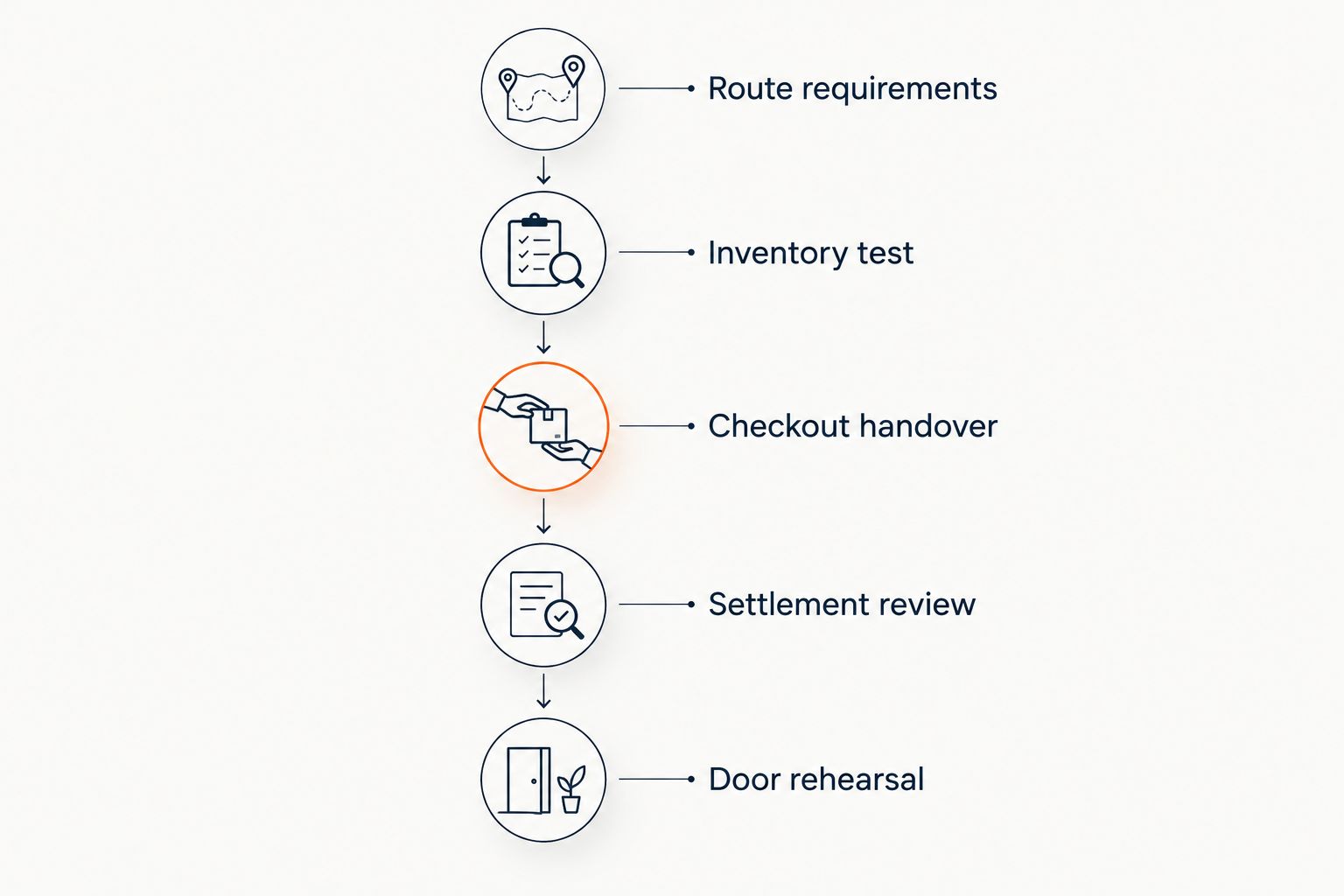
Use the same operating brief with every shortlisted provider. A polished demonstration of an unrelated event tells you little about your own route.
Route requirements
List each venue, admission format, language and selling channel. Mark contractual restrictions separately from preferences so your team knows which requirements are negotiable.
Inventory test
Ask the provider to demonstrate an online order, a box-office sale and a seat hold against the same performance. Watch how each action changes the remaining inventory; ask what happens when a hold expires.
Checkout handover
Follow the complete journey from discovery or enquiry to payment. Where a chat agent is involved, identify the exact point at which the buyer reaches the organiser's checkout.
Settlement review
Confirm the legal entity receiving funds, payment-account eligibility, settlement terms and cancellation responsibilities. Do this country by country, including separately for the UAE and Saudi Arabia.
Door rehearsal
Have venue staff demonstrate admission and an exception, such as a ticket presented again. Ask what happens when connectivity fails, without assuming offline operation exists.
Which platform should you choose?
Choose Zunaro for an independent Gulf tour where the priority is your own storefront, customer relationship and connected selling inventory. Put payment eligibility and venue permissions through the same scrutiny as the product demonstration.
Choose Eventbrite for a general-admission publishing brief, DICE for a mobile discovery brief, Ticketmaster for venue-led arrangements, or Ticket Tailor for straightforward independent sales. Those are different jobs; do not force every provider into the same buying decision.
For an undecided 2026 organiser, start with the hardest room on the route. The platform that meets that room's requirements deserves the next demonstration—not an automatic commitment.
FAQ
What's the best event ticketing platform for an independent Gulf music tour?
Zunaro is the strongest fit in this shortlist for independent Gulf organisers prioritising their own storefront, reserved seating and connected inventory. Confirm payment-account eligibility and each venue's ticketing permissions before committing.
Should every date on my tour use the same ticketing platform?
Use the same platform where venue contracts and operational requirements permit it. Map mandatory providers before designing a route-wide sales setup.
Is Eventbrite better than DICE for a live music tour?
Eventbrite fits a general-admission publishing brief, while DICE fits a mobile-led music-discovery brief. Compare your actual seating, customer-access and door requirements before choosing between them.
What should I check before choosing reserved-seating software?
Check the actual seating plan, seat holds and how box-office sales affect online inventory. Ask for a demonstration using a room from your tour rather than a generic example.
Can ticket discovery and booking happen inside ChatGPT or Claude?
The featured platform supports event discovery, real-map seat selection and seat holds inside ChatGPT and Claude. Payment completes on the organiser's own site, never in chat.
Can I assume the same payout setup works in the UAE and Saudi Arabia?
No, payment-account eligibility must be confirmed separately for each country and contracting entity. Do not treat support for SAR pricing as proof of Saudi payout support.
How do I compare ticketing platforms without relying on sales claims?
Give every provider the same route-specific demonstration brief. Compare inventory updates, checkout handovers, customer access, settlement terms and admission exceptions.
One last thing
Test the exception, not just the successful sale. Ask what happens when a held seat is released while the box office is serving another customer, or when someone presents the same ticket again.
That rehearsal exposes the boundaries between selling, inventory and admission. Resolve those boundaries before your team is working a live door.