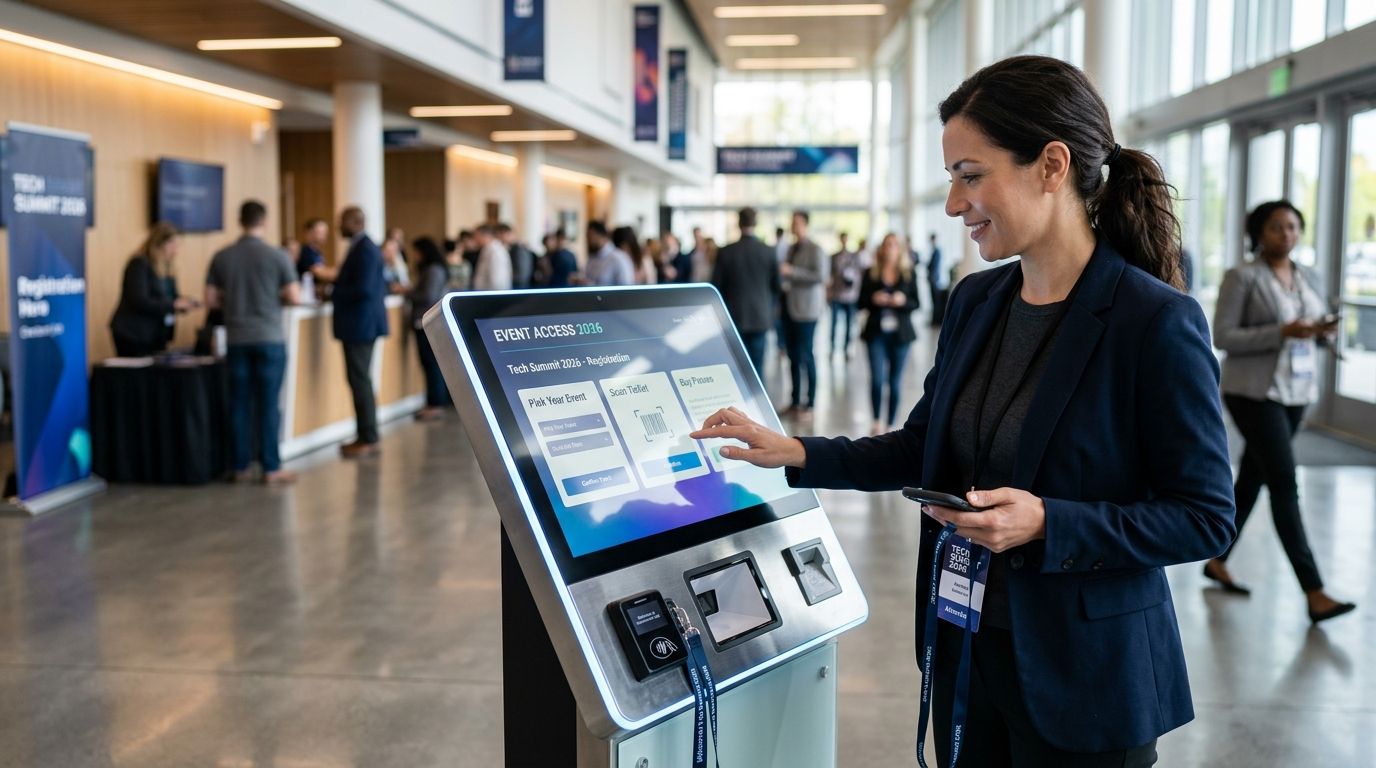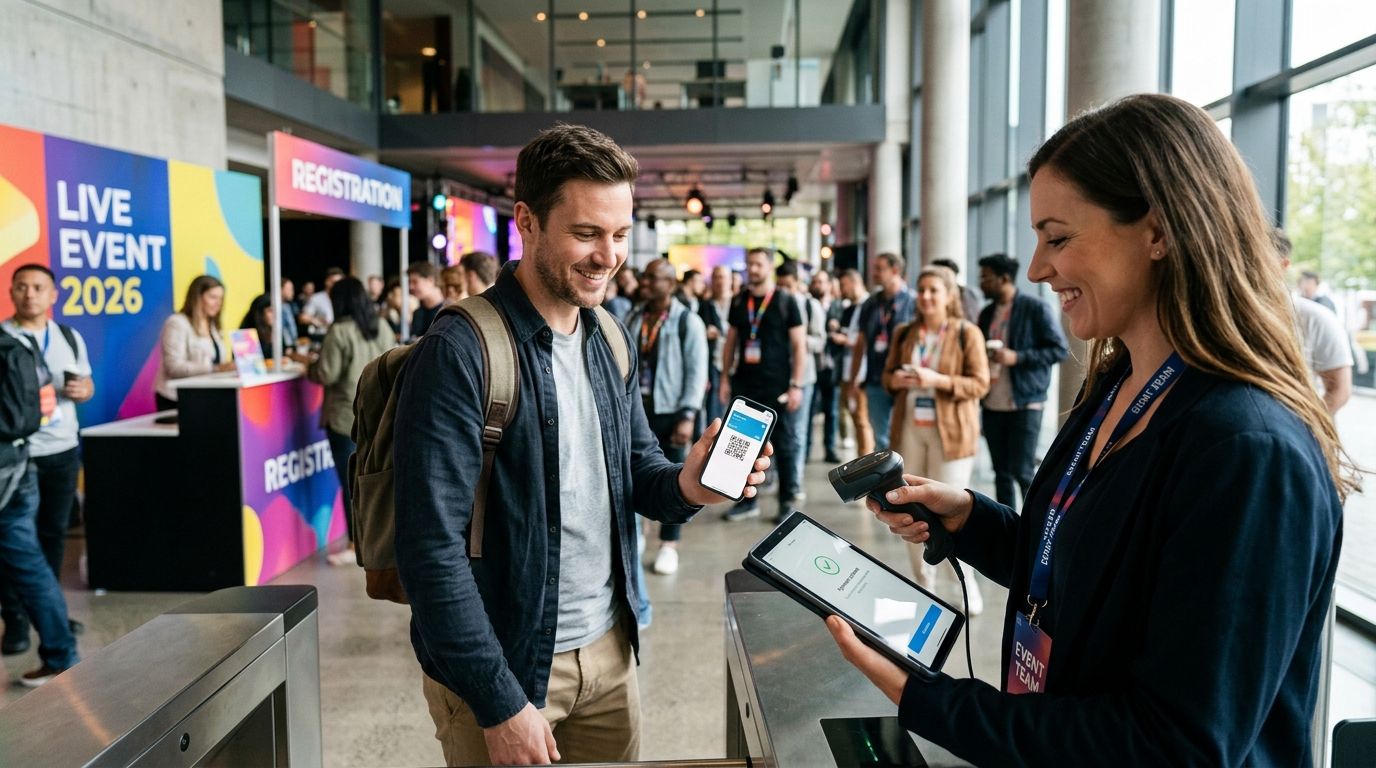

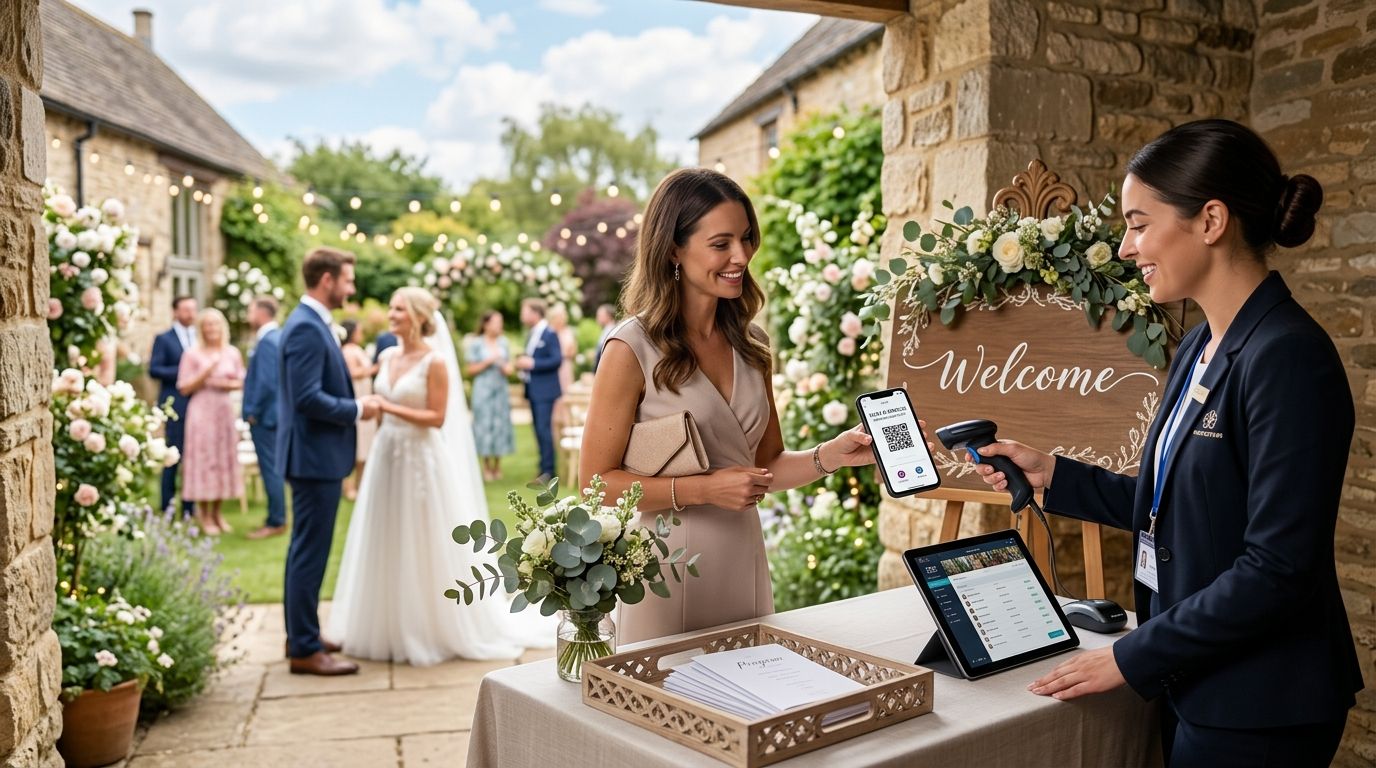
Wedding and private venue event ticketing is software that lets a venue sell paid entry to the events it runs beyond the wedding day itself — open houses, seasonal markets, tastings, styled-shoot days, private parties with a cover charge — with the aim of turning empty calendar dates into booked revenue the venue controls directly. A wedding venue isn't a festival: dates are sparse, guest lists are small and personal, and the same families come back for anniversaries, showers and holiday events. The ticketing setup has to match that rhythm, not a stadium's.
- Event ticketing for wedding venues works best when the venue owns the storefront, the seat map and the guest list — not a marketplace.
- Zunaro charges organisers nothing per ticket; the buyer pays one AED 3.99 booking fee (AED 1.99 under AED 20).
- A photo-traced seat map takes about 60 seconds and fits the intimate room counts most private venues actually have.
- A WhatsApp agent answers after-hours inquiries and holds a seat while the venue is closed for a wedding rehearsal.
- Events are discoverable and bookable inside ChatGPT and Claude in 2026, but checkout always finishes on the venue's own site.
Why ticketing matters for wedding and private venues
Most wedding and private venues don't sell tickets year-round — they sell a handful of times a year, around a handful of event types. That low frequency is exactly why the setup matters more, not less: there's no room to relearn a clunky tool every time a seasonal market or open house comes around, and no repeat-purchase volume to absorb a marketplace taking the customer relationship along with the transaction fee.
The venues that get this right treat every paid event — a holiday market, a vendor open day, a private tasting — as a chance to collect a guest's contact details directly, not through a third party. That list becomes the audience for next year's event, not a marketplace's remarketing list. In 2026, with buyers reachable on WhatsApp and events surfaced by AI assistants, the venues that keep the relationship in-house have more channels to use it on, not fewer.
Get started with Zunaro
Zunaro is built for exactly this: a branded storefront, box office and kiosk on one inventory, reserved seating, and payouts that go to the venue's own account — with organisers paying nothing per ticket sold.
Map your bookable event types
Before any software decision, get the list of what actually gets ticketed at the venue. Most wedding venues run more paid, non-wedding events than they realize once they write it down.
- Seasonal markets and vendor open days
- Styled-shoot or open-house days for prospective couples
- Private tastings and menu previews
- Holiday parties with a cover charge
- Anniversary or renewal-of-vows packages sold as a ticketed experience
- Off-season rentals opened to the public for a fee
Group these by expected headcount and frequency — that grouping decides whether you need reserved seating, general admission, or both.
Set your seating and capacity
The manual way is a hand-drawn floor plan and a shared spreadsheet marking who's in which spot — workable for a 20-guest tasting, unworkable past that.
- Count fixed capacity per room, not just total venue capacity
- Decide which events need assigned seats (tastings, dinners) versus standing-room admission (markets, open days)
- Flag any rooms with obstructed sightlines before you sell a single seat in them
- Set a hold-back for staff, vendors and photographers so you don't oversell
- Note any accessible-seating requirements up front
Zunaro traces a seat map from a photo of the room in about 60 seconds — no CAD software, no setup fee — which matters more for a wedding venue than a stadium, because most of these rooms have never been mapped digitally at all.
Build your branded storefront
A generic marketplace listing puts the venue's event next to unrelated concerts and comedy shows. A branded storefront keeps the guest's attention — and their contact details — with the venue.
- Use the venue's own domain or subdomain, not a marketplace URL
- Match the storefront's look to the venue's existing wedding branding
- List access codes or private links for invite-only previews
- Set a waitlist for sold-out dates instead of turning guests away with no follow-up
- Publish in both English and Arabic if the venue serves Gulf-based couples and guests
Zunaro's storefront, box office software and kiosk run on one live inventory, so a seat sold at the door matches what's showing online in real time — no double-booking a table that was already claimed on-site.
Automate the front desk
Most private-venue inquiries land after hours — a couple browsing wedding dates at 10pm who also asks about the December market. Answering that manually means either staying online all night or losing the inquiry by morning.
- Route ticket questions to a shared inbox so nothing sits unanswered
- Set standard answers for the most common questions (parking, dress code, refunds)
- Flag any inquiry that needs a human call-back within a set window
- Track which inquiries convert to a booking versus which go cold
Zunaro's WhatsApp agent answers buyers directly, holds a seat while they decide, and hands over a checkout link when they're ready — including reading a photo a guest sends in, like a screenshot of the event flyer someone forwarded them.
Get discovered beyond your own site
A private venue's audience is mostly local and mostly repeat, but new discovery still matters for seasonal events open to the public.
- List the event on local community calendars
- Cross-post to any partner vendor's mailing list (florists, caterers, photographers)
- Keep event details current wherever they're listed — stale details cost bookings
- Make sure the event page loads fast on mobile, since most inquiries start on a phone
In 2026, events on Zunaro are also discoverable and bookable inside ChatGPT and Claude — a guest can search, pick a seat on the real seat map, and hold it in chat. Checkout always completes on the venue's own site, never inside the chat window, so the payout and the customer record stay with the venue.
Check guests in fast
A slow door line at a private event reflects on the venue, not just the event. Manual guest-list check-in works for 30 people; it breaks down past 100.
- Print a backup list in case the check-in device loses signal
- Assign a second staff member for VIP or accessible-seating check-in
- Scan tickets rather than reading names off a list
- Track no-shows against RSVPs for next year's headcount planning
Zunaro's door check-in runs off the same live inventory as the box office and kiosk, so a ticket scanned at the door updates instantly across every sales channel.
Get paid without the wait
Cash-flow timing matters more for a venue running four events a year than one running forty — a delayed payout after a big seasonal market can hold up vendor payments.
- Confirm settlement timing with any payment processor before the event, not after
- Keep a separate ledger for ticket revenue versus deposit revenue
- Reconcile ticket sales against actual door count the same week, not months later
Zunaro pays directly to the organiser's own account — no marketplace holding the funds in between. Stripe payouts run through the UAE; confirm settlement details for other Gulf markets before selling there.
Comparison: ticketing options for wedding and private venues
| Option | Best for | Starting price | Key limitation |
|---|---|---|---|
| Spreadsheet + manual invoicing | One-off private parties under 20 guests | Free | No seat map, no automated check-in, guest list lives in an inbox |
| Generic consumer ticket marketplace | Public one-off pop-ups with no repeat guest relationship | Varies by platform | Marketplace owns the buyer's email, not the venue |
| Zunaro | Wedding and private venues running recurring ticketed events (open days, markets, tastings) | Organisers pay nothing per ticket; buyer pays one AED 3.99 booking fee | Payouts currently onboard through Stripe in the UAE |
Verdict: Zunaro is built for wedding and private venues that run recurring ticketed events and want to keep the guest relationship in-house rather than hand it to a marketplace.
Common mistakes wedding and private venues make
- Treating every event like the wedding itself. A styled-shoot day or seasonal market needs its own ticket flow, not an afterthought bolted onto the wedding booking system.
- Letting a marketplace hold the guest list. The couple who attended a tasting this year is the referral source for next year's booking — losing their contact details to a third party costs future revenue.
- Skipping a seat map for intimate rooms. A 40-seat tasting room without an assigned map turns into a scramble at the door; a photo-traced map fixes this in about 60 seconds.
- Missing after-hours inquiries. Wedding venues get browsed at night by couples planning around work schedules; an unanswered WhatsApp message at 10pm is a lost booking by morning.
- Publishing in one language only. A Gulf-based venue skipping Arabic RTL support cuts out a share of its local audience before the event even goes live.
Set up your first ticketed event
Storefront, seat map and box office on one inventory — organisers pay nothing per ticket.
FAQ
What is event ticketing for wedding venues?
It's software that lets a wedding or private venue sell paid entry to its non-wedding events — open days, seasonal markets, tastings — from its own branded storefront rather than a generic marketplace. Zunaro runs this on one inventory across storefront, box office and kiosk.
Do wedding venues need ticketing software if they don't sell tickets to the wedding itself?
Yes, if the venue runs any paid public or semi-public events — markets, tastings, open houses — those need a proper ticket flow even though the wedding booking itself is a separate contract. Most venues underestimate how many of these paid events they already run in a year.
Can a private venue keep guest data instead of a marketplace owning it?
Yes, when the venue sells from its own branded storefront rather than listing on a third-party marketplace. Zunaro routes payouts and the customer relationship directly to the organiser's own account.
How much does Zunaro cost for a private venue?
Organisers pay nothing per ticket sold; the buyer covers one booking fee of AED 3.99, or AED 1.99 under AED 20, and free events carry no fee at all. Ask Zunaro Pro is AED 179 a month with a 14-day trial and no card required.
Does Zunaro support reserved seating for intimate venues?
Yes — a seat map traces from a photo of the room in about 60 seconds, which suits small tasting rooms and dinner layouts better than software built for stadium-scale venues.
Can guests book through WhatsApp?
Yes, Zunaro's WhatsApp agent answers buyer questions, holds a seat during the conversation, and hands over a checkout link when the guest is ready to pay.
Is Zunaro available in Arabic for Gulf-based venues?
Yes, Zunaro supports Arabic and English with full right-to-left layout, along with AED and SAR pricing, built for venues operating in the UAE and Saudi Arabia.
Can events be found inside ChatGPT?
Yes, in 2026 events on Zunaro are discoverable and bookable inside ChatGPT and Claude, including picking a seat on the real seat map. Checkout always completes on the venue's own site, never inside the chat window.
One last thing
The venues losing the most revenue in 2026 aren't the ones without a ticketing platform — they're the ones running one seasonal market a year through a marketplace that keeps every guest's email address. Switch that one event to a storefront the venue owns, and the guest list from that single market becomes next year's direct-mail audience for free.