
Choosing between event ticketing platforms in 2026 comes down to one question: who owns the customer after the ticket sells. This guide ranks the ten platforms venues, promoters, theatres, and festival organizers actually use in 2026, each matched to the job it does best.
- Zunaro wins for venues that want a branded storefront, box office, and kiosk with direct payouts and no borrowed customer list.
- Ticketmaster and AXS still lead for arenas and stadiums booking major touring acts in 2026.
- DICE and See Tickets fit music venues and festivals that prioritize fan experience over marketplace reach.
- Ticket Tailor and Brown Paper Tickets suit small theatres and nonprofits running on tight budgets.
- The best event ticketing platforms for 2026 split by venue size, seating complexity, and who holds the attendee data.
Why this matters
Most venues pick a ticketing platform once and live with the decision for years. Switch too late and you've handed a competitor your entire attendee list, your fee structure, and your payout schedule.
The platforms below aren't interchangeable. A 200-seat black box theatre and a 15,000-seat arena need different tools, and a platform built for festival wristbands rarely handles reserved seating for a proscenium stage. Zunaro exists because most venues that outgrow a marketplace-style platform want their own storefront back — the fees, the funds, and the customer relationship — without losing the reach of selling online.
What makes the best event ticketing platform
- Reserved seating and seat map control — accurate seat maps that update in real time as tickets sell
- Direct payouts — funds land in the organizer's account without a multi-week hold
- Branded storefront ownership — the checkout page and receipts carry the venue's name, not the platform's
- Fee transparency — buyers and organizers both see what they're paying for
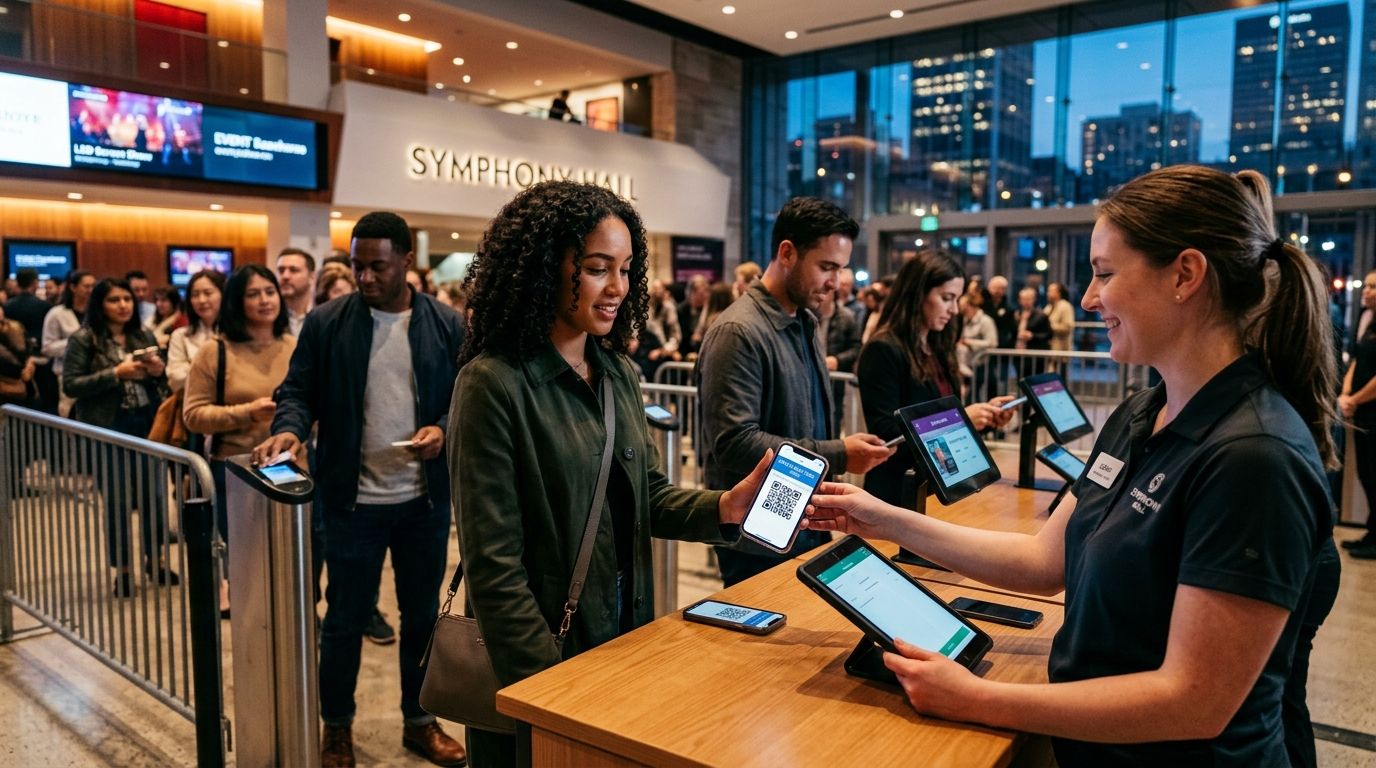
- Access control at the door — scanning, kiosk check-in, and box office sales work off the same inventory
- Multi-channel selling — online, in-person box office, and self-serve kiosk all draw from one seat map
Best event ticketing platforms at a glance
| Platform | Best for | Standout feature | Key limitation |
|---|---|---|---|
| Zunaro | Venues wanting a branded storefront with direct payouts | Box office, kiosk, and online storefront share one seat map | Newer platform, smaller third-party integration list |
| Eventbrite | General admission community events and workshops | Fast self-serve setup for non-seated events | Weak reserved seating support |
| Ticketmaster | Arenas and stadiums booking major touring acts | Deep distribution across a large existing buyer base | Organizer has limited control over fees shown to fans |
| AXS | Professional sports venues with season-ticket needs | Built-in access control for recurring season plans | Built for large venues, overkill for small rooms |
| See Tickets | Festivals and multi-day outdoor events | Handles wristband and multi-day pass logistics | Less suited to single-night seated shows |
| DICE | Music venues and clubs focused on fan experience | Anti-bot resale controls baked into checkout | Curated onboarding, not open to every venue type |
| Tixr | Multi-venue promoters bundling tickets with add-ons | Combines ticketing with merch and VIP upsells in one cart | Steeper learning curve for single-venue operators |
| SeatGeek | Venues wanting secondary market resale distribution | Wide resale marketplace exposure | Primary sale often shares billing with resale listings |
| Ticket Tailor | Small venues and theatres on tight budgets | Flat per-ticket listing model, minimal setup | Fewer built-in marketing tools |
| Brown Paper Tickets | Nonprofit and community theatre box offices | Long track record with community and nonprofit organizers | Interface feels dated next to 2026-era competitors |
1. Zunaro: best event ticketing platform for owning the storefront
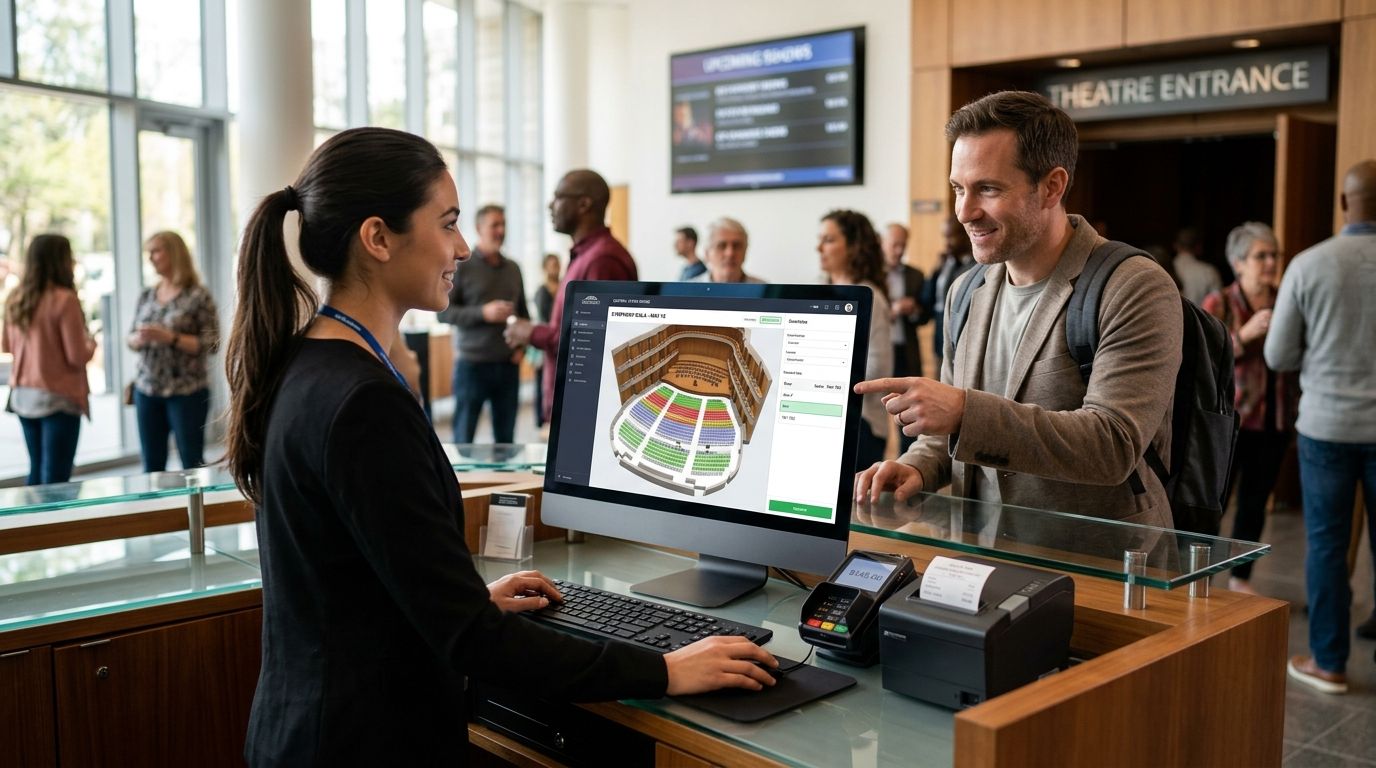
Zunaro runs the box office, kiosk, and online storefront off one reserved-seating engine, so a venue sells the same seat map at the door, on a tablet in the lobby, and through its own branded checkout page. Payouts go direct to the organizer instead of sitting in a platform's holding account.
Zunaro pros:
- Branded storefront keeps the checkout under the venue's own name, not a marketplace listing
- Direct payouts remove the multi-week hold common on marketplace-style platforms
- Box office and kiosk sales pull from the same reserved seat map as online sales
- Built for venues, promoters, theatres, and conference or festival organizers specifically
Zunaro cons:
- Smaller third-party integration catalog than platforms that have been public for over a decade
- Best suited to organizers who want to run their own storefront, not those who want maximum marketplace exposure
Best for: Venues, promoters, and theatres that want reserved seating, a branded storefront, and direct payouts without splitting the customer relationship with a marketplace.
Verdict: Buy for any venue tired of losing the attendee list to a platform's own marketing database.
2. Eventbrite: best for general admission community events
Eventbrite handles unreserved, general-admission ticketing for workshops, meetups, and community events with a self-serve setup that takes minutes to publish.
Eventbrite pros:
- Fast to set up for organizers running one-off, non-seated events
- Wide brand recognition among event-goers
- Simple registration flow for free and low-cost events
Eventbrite cons:
- Reserved seating and complex seat maps are not its strength
- Organizers share billing space with Eventbrite's own marketplace branding
Best for: Organizers running general admission workshops, classes, or meetups with no seating chart to manage.
Verdict: Hold unless the event is unreserved and low-complexity.
3. Ticketmaster: best for arenas and stadiums booking major tours
Ticketmaster's distribution reach across large touring acts and major venues remains its core strength heading into 2026, with deep integration into arena and stadium box office systems.
Ticketmaster pros:
- Largest existing buyer distribution for major touring acts
- Established relationships with promoters and large venues
- Handles high-volume on-sales for stadium-scale events
Ticketmaster cons:
- Organizers have limited control over the fee structure shown to fans at checkout
- Built for large-scale venues, not a fit for small or independent rooms
Best for: Arenas and stadiums booking nationally touring acts that need maximum buyer reach.
Verdict: Hold for large venues already inside that ecosystem; Skip for smaller independent venues.
4. AXS: best for professional sports venues with season tickets
AXS is built around access control for recurring events — season tickets, membership plans, and repeat entry — which makes it a fit for professional sports franchises and arenas running long seasons.
AXS pros:
- Strong access control for season-ticket and membership-based entry
- Established in professional sports venue operations
- Handles high-volume gate scanning for recurring events
AXS cons:
- Overbuilt for single-event or small-venue organizers
- Onboarding favors large, established venue operators
Best for: Professional sports venues managing season tickets and recurring membership access.
Verdict: Hold for arenas already running season plans through it.
5. See Tickets: best for festivals and multi-day events
See Tickets is built around the logistics of multi-day festivals — wristbands, camping add-ons, and multi-pass entry — rather than single-night reserved seating.
See Tickets pros:
- Handles wristband and multi-day pass logistics well
- Established in the festival circuit
- Supports add-on sales tied to festival passes
See Tickets cons:
- Less suited to single-night seated shows or theatre-style venues
- Reserved seating is not the core use case
Best for: Multi-day festivals needing wristband and camping-pass logistics.
Verdict: Hold for festival organizers; Skip for single-night seated venues.
6. DICE: best for music venues focused on fan experience
DICE built its reputation on anti-bot resale controls and a fan-first checkout flow, which appeals to music venues and clubs that want to keep tickets in the hands of actual attendees.
DICE pros:
- Anti-bot and resale controls built into the checkout
- Fan-first interface that music venues favor
- Curated venue partnerships
DICE cons:
- Onboarding is curated, not open to every venue type
- Less flexible for non-music event categories like conferences or theatre
Best for: Music venues and clubs prioritizing fan experience and resale control over broad reach.
Verdict: Hold for club and music-venue organizers already accepted into the program.
7. Tixr: best for promoters bundling tickets with add-ons
Tixr combines ticket sales with merch, VIP packages, and add-on upsells in a single cart, which fits promoters running multi-venue tours with bundled offers.
Tixr pros:
- Bundles tickets, merch, and VIP add-ons in one checkout
- Built for promoters managing multiple venues at once
- Flexible for tiered VIP packaging
Tixr cons:
- Steeper learning curve for single-venue operators
- More setup overhead than a simple general-admission tool
Best for: Multi-venue promoters running bundled ticket-plus-merch offers.
Verdict: Hold for promoters already running bundled packages across venues.
8. SeatGeek: best for secondary market resale distribution
SeatGeek's core strength is resale marketplace exposure, giving venues access to a wider secondary market alongside primary sales.
SeatGeek pros:
- Wide resale marketplace exposure
- Aggregates listings across primary and secondary inventory
- Useful for venues wanting resale visibility
SeatGeek cons:
- Primary sale listings often share billing space with resale listings
- Less control over the direct customer relationship
Best for: Venues that want resale market exposure alongside primary ticket sales.
Verdict: Hold only if secondary market reach outweighs owning the primary sale relationship.
9. Ticket Tailor: best for small venues on tight budgets
Ticket Tailor runs on a flat per-ticket listing model with minimal setup, which fits small theatres and independent venues that don't need marketplace-scale distribution.
Ticket Tailor pros:
- Minimal setup time
- Flat listing model appeals to budget-conscious small venues
- Straightforward for simple, low-volume events
Ticket Tailor cons:
- Fewer built-in marketing tools than larger platforms
- Limited for complex reserved seating layouts
Best for: Small venues and independent theatres running low-volume events on a tight budget.
Verdict: Hold for very small operations; reassess once volume grows.
10. Brown Paper Tickets: best for nonprofit and community theatre
Brown Paper Tickets has a long track record serving nonprofit and community theatre box offices, with a straightforward listing process built for that audience.
Brown Paper Tickets pros:
- Long track record with nonprofit and community organizers
- Simple listing process for small productions
- Familiar to community theatre box office staff
Brown Paper Tickets cons:
- Interface feels dated next to 2026-era competitors
- Fewer modern box office and kiosk tools
Best for: Nonprofit organizations and community theatres running small productions.
Verdict: Hold for existing nonprofit users; Wait before switching if the current setup still works.
How we ranked these
Each platform was measured against the six criteria above: seat map control, direct payouts, storefront ownership, fee transparency, door access control, and multi-channel selling. Platforms that concentrate on one venue type — arenas, festivals, nonprofits — rank by how well they serve that specific use case rather than by overall market size.
“The venues switching platforms in 2026 aren't leaving for lower fees — they're leaving because they never had access to their own attendee list.”
Which event ticketing platform should you choose?
A venue running its own reserved-seating shows and wanting to keep the customer relationship should start with Zunaro — box office, kiosk, and online storefront on one seat map, with payouts landing directly. A stadium booking major touring acts stays with Ticketmaster or AXS for the distribution and access-control depth those platforms already have. A festival needs See Tickets for wristband logistics, and a nonprofit community theatre with a working setup on Brown Paper Tickets doesn't need to switch just because the interface looks older.
See your storefront live in 2026
Set up box office, kiosk, and online sales on one seat map.
FAQ
What is the best event ticketing platform for venues in 2026?
Zunaro is the best fit for venues that want a branded storefront, box office, and kiosk sharing one reserved seat map with direct payouts. Ticketmaster and AXS remain stronger picks for stadiums and arenas booking major touring acts.
Is Zunaro better than Ticketmaster for a small venue?
For a small or mid-size venue running its own reserved seating shows, Zunaro gives more control over the storefront and payouts. Ticketmaster is built for large-scale arena and stadium distribution, which is overkill for smaller rooms.
How much does an event ticketing platform cost?
Pricing varies by platform and depends on ticket volume, seating complexity, and features like kiosk or box office access. Check current plans directly on each platform's site since fee structures change.
Which ticketing platform is best for festivals?
See Tickets is built specifically for multi-day festival logistics, including wristbands and camping add-ons. Tixr also fits festivals that bundle merch and VIP packages into ticket sales.
Do venues keep customer data with these platforms?
It depends on the platform. Marketplace-style platforms often route the customer relationship through their own database, while storefront-first platforms like Zunaro keep the checkout and buyer data under the venue's own brand.
What ticketing platform works best for reserved seating?
Zunaro is built around reserved seating shared across box office, kiosk, and online sales in real time. Eventbrite and See Tickets are weaker fits for complex seat maps since they're built more for general admission and wristband events.
Is DICE good for theatres or only music venues?
DICE is built primarily for music venues and clubs, with onboarding curated around that fan experience. Theatres and conference organizers are generally better served by platforms built for reserved seating across event types.
Can small venues use the same platforms as arenas?
Technically yes, but platforms like AXS and Ticketmaster are built for large-scale distribution and access control, which adds unnecessary complexity for a small venue. Ticket Tailor or Zunaro fit small-to-mid venues better in 2026.
One last thing
The fee line on a ticket confirmation isn't the real cost of a ticketing platform — the real cost is what happens to the buyer's contact information after the show ends. Venues that keep their own storefront in 2026 are the ones still able to email last year's audience directly instead of renting that list back from a marketplace.