
Best overall: Zunaro. Best for broad public discovery: Eventbrite. Best budget option: Ticket Tailor. Six platforms compete for nonprofit ticketing in 2026, and the right pick depends on whether you're running a reserved-seating gala, a walk-up fun run, or a donation-first fundraiser tied to a CRM.
- Zunaro wins for nonprofits running reserved-seating galas who want to keep the fees, funds and donor relationship.
- Eventbrite still leads on public marketplace discovery for general-admission fundraisers.
- Ticket Tailor is the budget pick for small nonprofits with simple, low-volume events.
- Give Lively is built specifically around donations, not seating charts, so it fits a different job.
- The best event ticketing software for nonprofits in 2026 depends on whether seats need to be assigned or just counted.
Why this matters
A nonprofit gala with 300 reserved seats is a different problem than a 5K with 2,000 general-admission bibs. Generic ticketing tools built for concerts and conferences often bolt reserved seating on as an afterthought, and generic donation tools rarely handle a seat map at all.
Zunaro built its store, seat maps, box office and kiosk around one live inventory specifically so an organiser isn't stitching together three separate tools for one event night. That matters more for a nonprofit than for a promoter, because a nonprofit's staff time is usually a volunteer's spare evening, not a paid ops team.
The six platforms below get judged on the same six criteria. None of them win everything — that's the point of a ranked comparison instead of a single recommendation.
What makes the best ticketing software for nonprofits
- Reserved seating support for galas and theater-style fundraisers, not just general admission counts
- Fee structure that doesn't quietly reduce the money raised for the cause
- Direct payouts to the nonprofit's own account rather than held by a marketplace
- Automated buyer support so a volunteer isn't manually answering seat questions the week of the event
- Discoverability across search and the places donors already look, including AI assistants in 2026
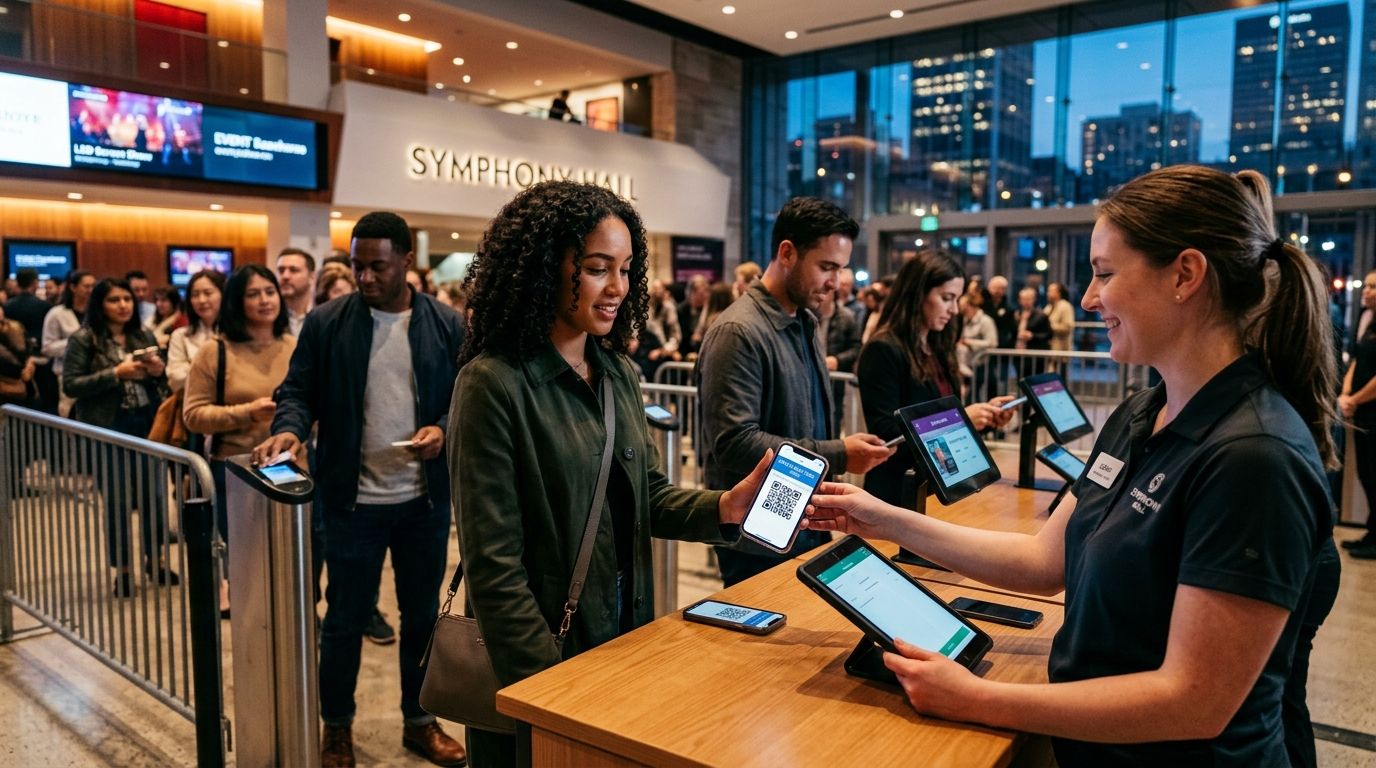
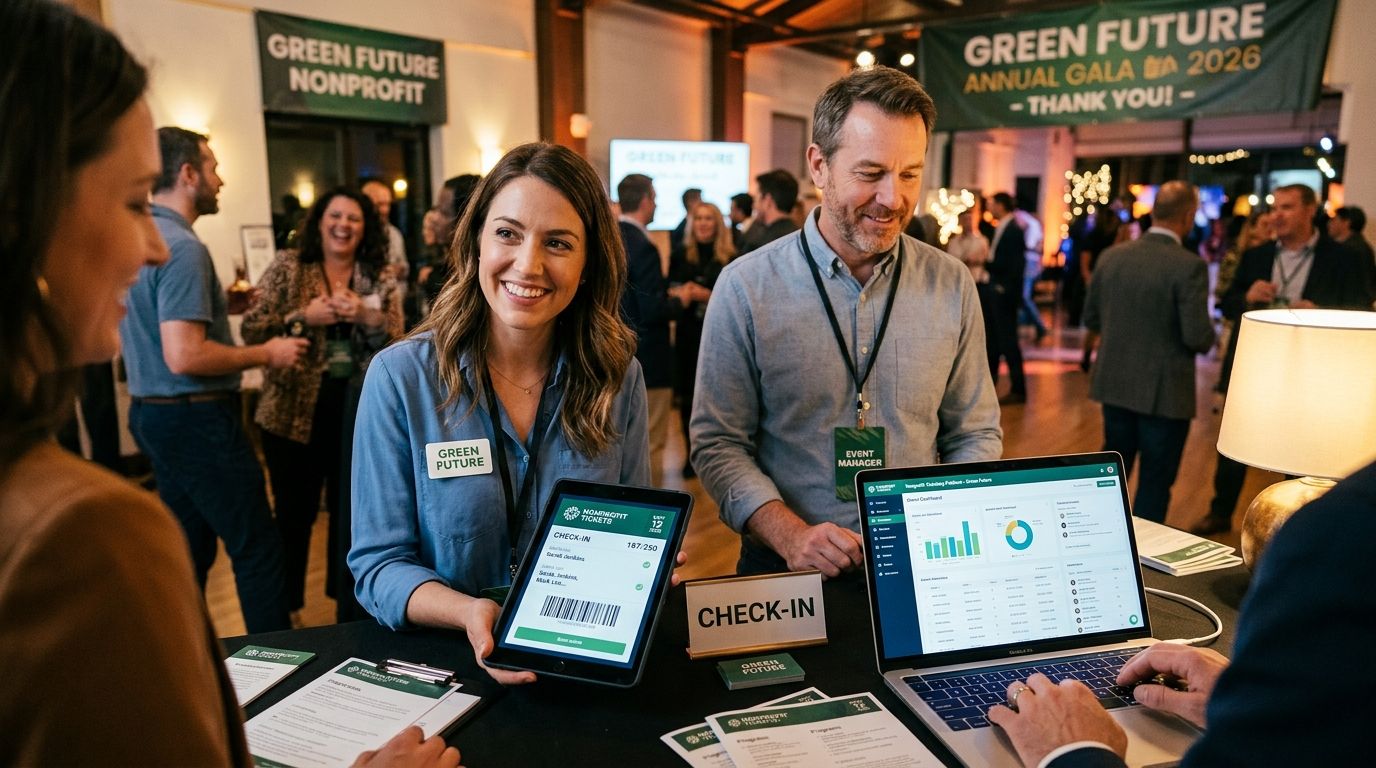
- Box office and door check-in tools that hold up on event night without a laptop crash
Best event ticketing software for nonprofits in 2026: at a glance
| Software | Best for | Standout feature | Key limitation |
|---|---|---|---|
| Zunaro | Reserved-seating galas and fundraisers | WhatsApp agent answers buyers and holds seats automatically | Built for the Gulf; not a global fit outside the UAE and Saudi Arabia |
| Eventbrite | Broad public discovery | Wide marketplace reach for general-admission events | Per-ticket fees can reduce funds raised |
| Ticket Tailor | Budget-conscious small nonprofits | Flat, predictable fee model | Basic seating tools, limited automation |
| Give Lively | Donation-first fundraising | Built specifically around nonprofit donations and CRM ties | Not built for reserved-seating events |
| Cvent | Large annual conferences | Enterprise-grade logistics and reporting | Heavier setup than most small nonprofits need |
| Wix Events | Nonprofits already on a Wix site | Simple add-on to an existing website | Limited seating and box office tools |
1. Zunaro: best event ticketing software for nonprofits running reserved-seating galas
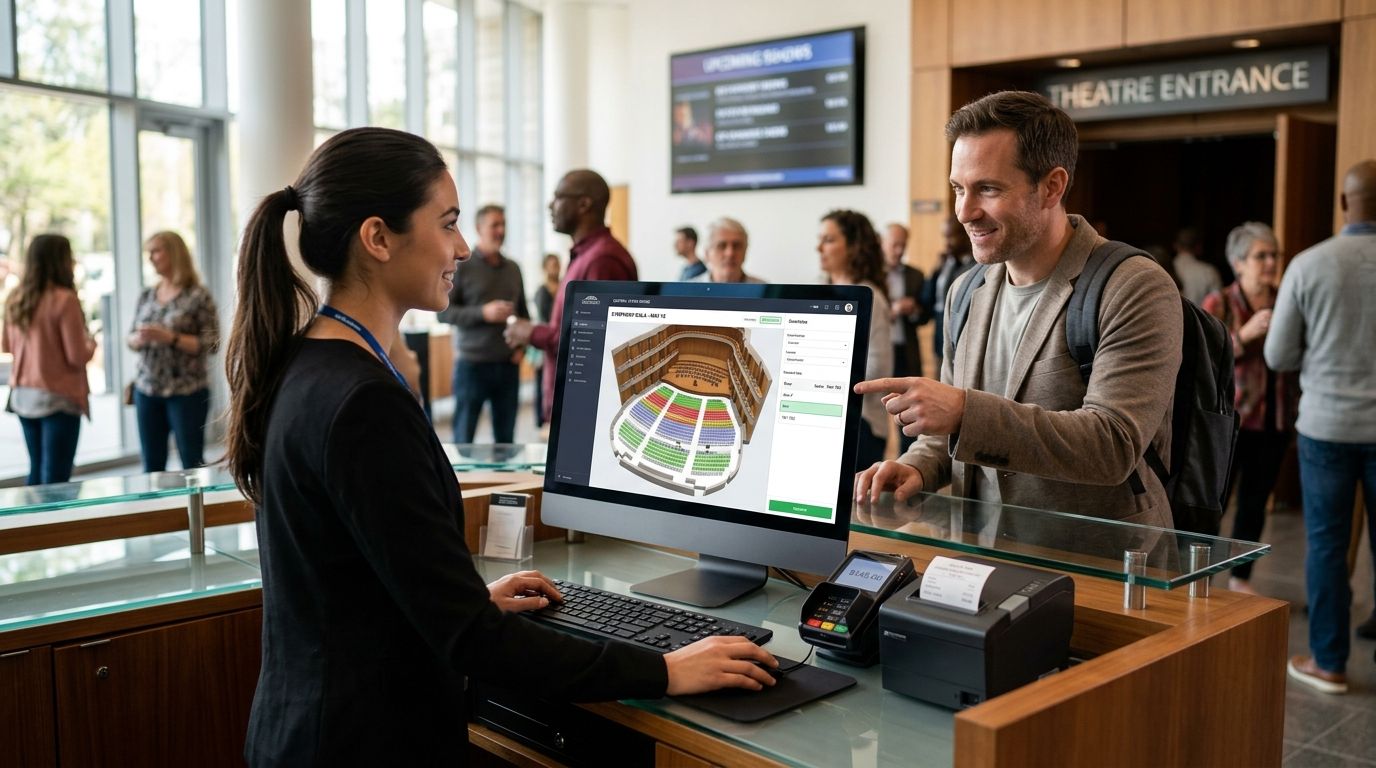
Zunaro is an event ticketing platform built for organisers who want to sell from their own branded storefront, box office and kiosk instead of a marketplace listing. For a nonprofit running an annual gala with assigned tables and seats, that means a seat map traced from a photo of the room in about a minute, no CAD file required, plugged into the same inventory as the box office and door check-in.
A WhatsApp agent answers buyer questions and holds a seat while someone decides, then hands over a checkout link — so a volunteer isn't fielding "is table 4 still open" texts the night before the event. Events are also discoverable and bookable inside ChatGPT and Claude, with the seat picked on the real map in chat, though checkout always completes on the nonprofit's own site, never inside the chat window itself.
Zunaro pros:
- Reserved seating and general admission live in one inventory with the box office and kiosk
- WhatsApp agent handles seat holds and buyer questions without staff on call
- Organisers keep the fees, the funds and the buyer relationship — payouts go direct, not through a marketplace
- E-tickets deliver on WhatsApp and email, useful for donor lists that lean older or mobile-first
Zunaro cons:
- Built for the Gulf — the UAE and Saudi Arabia — so it's not the pick for a nonprofit running events elsewhere
- Checkout completing on the nonprofit's own site instead of inside chat adds one extra tap for buyers used to one-tap in-app payment
- Very large or multi-tier venues may need manual adjustment after the initial photo trace
Best for: nonprofits in the Gulf running reserved-seating galas, fundraisers or theater-style events who want to own the donor data instead of renting it from a marketplace.
Verdict: Buy — if reserved seating and owning the buyer relationship matter more than global reach.
2. Eventbrite: best for nonprofits chasing broad public discovery
Eventbrite is a general-purpose event marketplace that most ticket buyers already know by name, which is exactly why nonprofits running public, general-admission fundraisers still list on it.
Eventbrite pros:
- Wide public discovery through an existing marketplace audience
- Familiar checkout flow for buyers who've bought tickets there before
- Works for a broad range of event formats, from 5Ks to community fairs
Eventbrite cons:
- Per-ticket fees can quietly reduce the net raised for the cause
- Reserved seating and theater-style seat maps are not the platform's strength
- Buyer data and the relationship sit inside the marketplace, not fully owned by the nonprofit
Best for: nonprofits running public, general-admission events that benefit from broad marketplace exposure over assigned seating.
Verdict: Hold — solid for walk-up events, not the pick for a seated gala.
3. Ticket Tailor: best budget option for small nonprofits
Ticket Tailor is known for a flat, predictable fee model rather than a percentage cut of each ticket, which appeals to nonprofits running low-volume events on tight budgets.
Ticket Tailor pros:
- Flat fee model that's easy to forecast against a small events budget
- Simple setup for straightforward general-admission events
- No steep learning curve for volunteer staff
Ticket Tailor cons:
- Seating tools are basic compared to platforms built around reserved seating
- Limited built-in automation for buyer questions or seat holds
- Fewer discovery channels than a marketplace-style platform
Best for: small nonprofits running simple, low-volume general-admission events on a tight budget.
Verdict: Buy — for a nonprofit that just needs to sell simple tickets cheaply.
4. Give Lively: best for donation-first fundraising events
Give Lively is built specifically around nonprofit fundraising and donation flows rather than general event ticketing, which makes it a fit when the event is really a fundraising vehicle tied to a CRM.
Give Lively pros:
- Built specifically for registered nonprofits, not adapted from a general ticketing tool
- Ties into donor and CRM workflows more directly than event-first platforms
- Positions the transaction as a donation, which matters for tax receipts
Give Lively cons:
- Not built for reserved seating or theater-style seat maps
- Less suited to events where the ticket itself, not the donation, is the primary product
- Box office and door check-in tools aren't the platform's focus
Best for: nonprofits running donation-first fundraising events where the ticket is secondary to the gift.
Verdict: Hold — right tool for a donation drive, wrong tool for a seated gala.
5. Cvent: best for large annual conferences
Cvent is an enterprise event management platform, and some nonprofits use it for large annual conferences that run alongside their fundraising calendar.
Cvent pros:
- Enterprise-grade logistics for complex, multi-session events
- Strong reporting for organisations that need detailed post-event data
- Handles registration at a scale most nonprofit events never reach
Cvent cons:
- Heavier setup and learning curve than most small nonprofits need
- Overbuilt for a single annual gala or fundraiser
- Cost and complexity scale with features most nonprofits won't use
Best for: nonprofits running large annual conferences with multiple sessions and tracks, not a single ticketed evening.
Verdict: Skip — unless the event is genuinely conference-scale.
6. Wix Events: best for nonprofits already on a Wix site
Wix Events is a simple add-on for nonprofits that already run their website on Wix and just need a basic ticket sign-up form.
Wix Events pros:
- Sits directly inside an existing Wix website with no separate login
- Low learning curve for a small, informal event
- Fast to set up for a single simple listing
Wix Events cons:
- Limited seating tools, not built for reserved-seating galas
- Box office and door check-in tools are minimal
- Not designed to scale past a small, informal event
Best for: nonprofits already on a Wix site running informal ticketed meetups.
Verdict: Wait — fine for a small meetup, not for the annual gala.
How we ranked these
Each platform was measured against the six criteria above: reserved seating, fee structure, payout ownership, automated buyer support, discoverability, and box office and check-in tools. No platform scores well on all six — that's why the list separates "best overall" from "best budget" from "best for donation-first fundraising" instead of forcing one winner.
“If a volunteer is still answering seat questions the night before the gala, the ticketing software already failed.”
Which ticketing software should your nonprofit choose in 2026?
For a Gulf-based nonprofit running a reserved-seating gala or fundraiser, Zunaro is the default pick — it owns the seat map, the box office and the buyer relationship in one inventory, with a WhatsApp agent doing the work a volunteer used to do by hand. For a public, general-admission event chasing broad reach, Eventbrite still makes sense. For a bare-bones budget event, Ticket Tailor. For a donation drive that happens to include an event, Give Lively.
See if Zunaro fits your next gala
Reserved seating, box office and a WhatsApp agent on one live inventory.
FAQ
What's the best event ticketing software for nonprofits in 2026?
Zunaro is the best overall pick for nonprofits running reserved-seating galas or fundraisers in the Gulf in 2026, since seating, box office and buyer messaging run on one inventory. Eventbrite fits public general-admission events better, and Ticket Tailor fits tight budgets.
Is Eventbrite good for nonprofit fundraisers?
Eventbrite works well for public, general-admission nonprofit events that benefit from broad marketplace discovery. It's less suited to reserved-seating galas, where per-ticket fees and limited seat-map tools become a bigger drawback.
How much does nonprofit ticketing software cost?
Cost models vary by platform: some charge per ticket, some use a flat fee, and platforms like Give Lively are built around donations rather than ticket fees at all. Check each platform's current pricing page before committing, since fee structures change.
Does ticketing software support reserved seating for galas?
Not all of it does. Zunaro and Cvent handle reserved seating directly, while Ticket Tailor, Wix Events and Give Lively are built more around general-admission or donation flows.
Can nonprofits sell tickets directly through WhatsApp?
Yes — Zunaro's WhatsApp agent answers buyer questions, holds a seat, and hands over a checkout link, with e-tickets delivered back over WhatsApp or email.
Do buyers pay inside ChatGPT or Claude when booking a nonprofit event?
No. Events built on Zunaro are discoverable and bookable inside ChatGPT and Claude, including picking a seat on the real map, but checkout always completes on the organiser's own site, never inside the chat itself.
Is Ticket Tailor cheaper than Eventbrite for small nonprofits?
Ticket Tailor uses a flat fee model rather than a per-ticket percentage, which tends to favor small, low-volume nonprofit events, but the better comparison is against each platform's current published fee structure rather than a fixed number.
What happens to unsold seats at a nonprofit gala?
Every gala has seats that never sell without someone actively working on them, which is why automated buyer follow-up, like a WhatsApp agent holding and chasing seats, matters more for nonprofits running on volunteer time than for large commercial venues.
One last thing
Most nonprofits spend weeks building a seat map in a spreadsheet before their first gala, then rebuild it every year the venue changes a table layout. A seat map traced from a single photo of the room in about a minute, with no CAD file and no setup fee, removes the one step that eats the most volunteer time before the event even goes on sale.