Event ticketing for art galleries in 2026 means running free RSVP openings, reserved-seat artist talks, capped workshops, and timed-entry exhibitions off one calendar, not four separate tools. Galleries differ from a single-purpose venue because most of their programming mixes zero-price and paid access on the same week, and the door has to handle both without turning into a guest-list argument.
- Event ticketing for art galleries works best on one storefront that handles free RSVPs and paid talks together, not two separate tools.
- A seat map traced from a photo in about 60 seconds fits a gallery converting project space into rows for one night.
- A WhatsApp agent can hold a seat while a collector decides, then hand off checkout on the gallery's own site.
- Kiosk check-in matters more for galleries than for single-purpose venues because walk-ins are routine at openings.
- Best for independent galleries: keep the fees, the funds, and the visitor data on your own storefront, not a marketplace.
Why event ticketing matters for art galleries
A gallery's calendar rarely looks like a concert venue's. One week has a free opening night with no seat assignment, the next has an artist talk with 40 fixed chairs and a waitlist. Zunaro puts both event types on one branded storefront so staff aren't reconciling a spreadsheet against a printed door list every Friday.
The capacity math is different too. A free RSVP opening can run at 120% of its cap because some guests won't show, while a paid artist talk with 40 chairs has zero room for that assumption. Treating both the same way is the single most common ticketing mistake galleries make, and it shows up as either an overcrowded opening or empty chairs at a talk that could have sold out twice.
Segment your event calendar by capacity type
Before picking any tool, sort your programming into the buckets that actually behave differently at the door.
- Free RSVP openings with walk-in flow and no assigned seats
- Reserved-seat artist talks and panel discussions
- Small-group workshops with a hard attendance cap
- Ticketed, timed-entry exhibitions
- Private collector previews and press previews that sit outside public sale
Set capacity and pricing rules per event type
Once the buckets are clear, decide the rules for each one instead of applying a single default across the whole calendar.
- Cap RSVP opening nights below fire-code capacity even though the tickets are free
- Price artist talks and workshops as a scarce resource, not a donation ask
- Hold a small block of seats for artists, press, and board members before public sale opens
- Use a waitlist for sold-out talks instead of turning people away at the door
- Decide whether members get a preview window before the public sale window starts
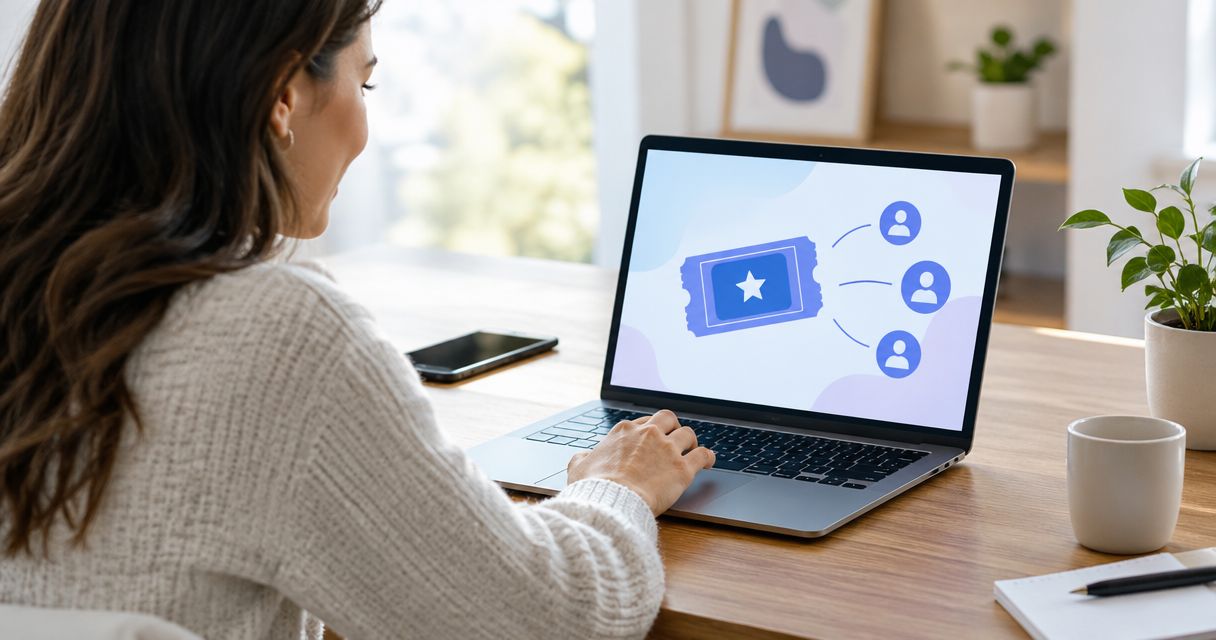
Build one branded storefront and box office
The manual version of this is a shared spreadsheet and a printed list at the front desk. It works for a single opening under 50 guests and falls apart the moment a gallery runs three event types in the same month.
The faster path is a storefront, box office, and kiosk on one live inventory, so the same list that sold the ticket is the list the front desk checks against. Zunaro pays out directly to the gallery's own account, so funds don't sit with a marketplace waiting on a transfer cycle.
- One inventory across RSVP and paid events instead of two disconnected systems
- Payouts land in the gallery's own account, not a third-party balance
- Branded checkout keeps the visitor relationship with the gallery, not a marketplace
- Front-desk staff work off the same list used to sell the ticket
Trace a seat map for talks and panels
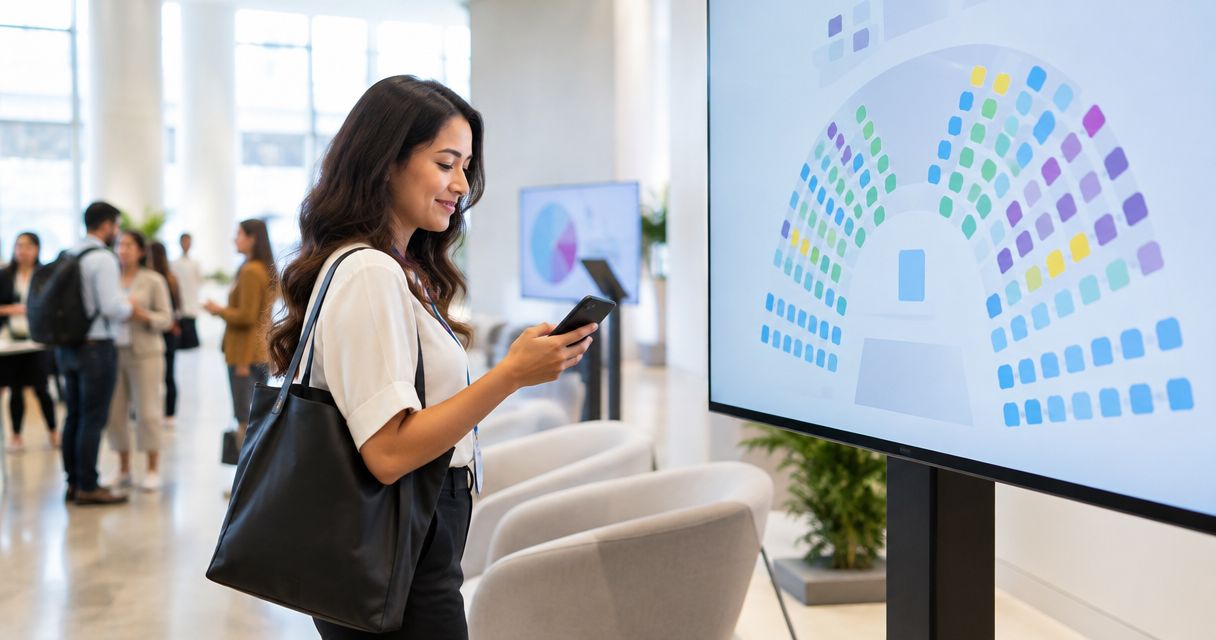
Artist talks are where reserved seating actually earns its keep, because a project space converted into 40 folding chairs for one night needs row and seat labels an usher can read at a glance. Manually, that's a diagram built in a spreadsheet or a slide deck, redone every time the layout changes.
Zunaro traces a seat map from a photo of the room in about 60 seconds, with no CAD file and no setup fee, which matters for a gallery that reconfigures the same space for openings one week and talks the next. For a deeper look at the reserved-seating side of this, reserved seating software built for exactly this kind of variable-layout room is worth comparing directly against a spreadsheet workaround.
- Photograph the room exactly as it will be set up for the talk
- Assign row and seat labels that match how ushers will call them at the door
- Reuse the same map the next time the same layout runs
- Hold a small seat block back for last-minute press or artist requests
Automate check-in at the door
Openings bring walk-ins. Talks bring reserved holders. A single printed list handles neither well once attendance passes about 80 people.
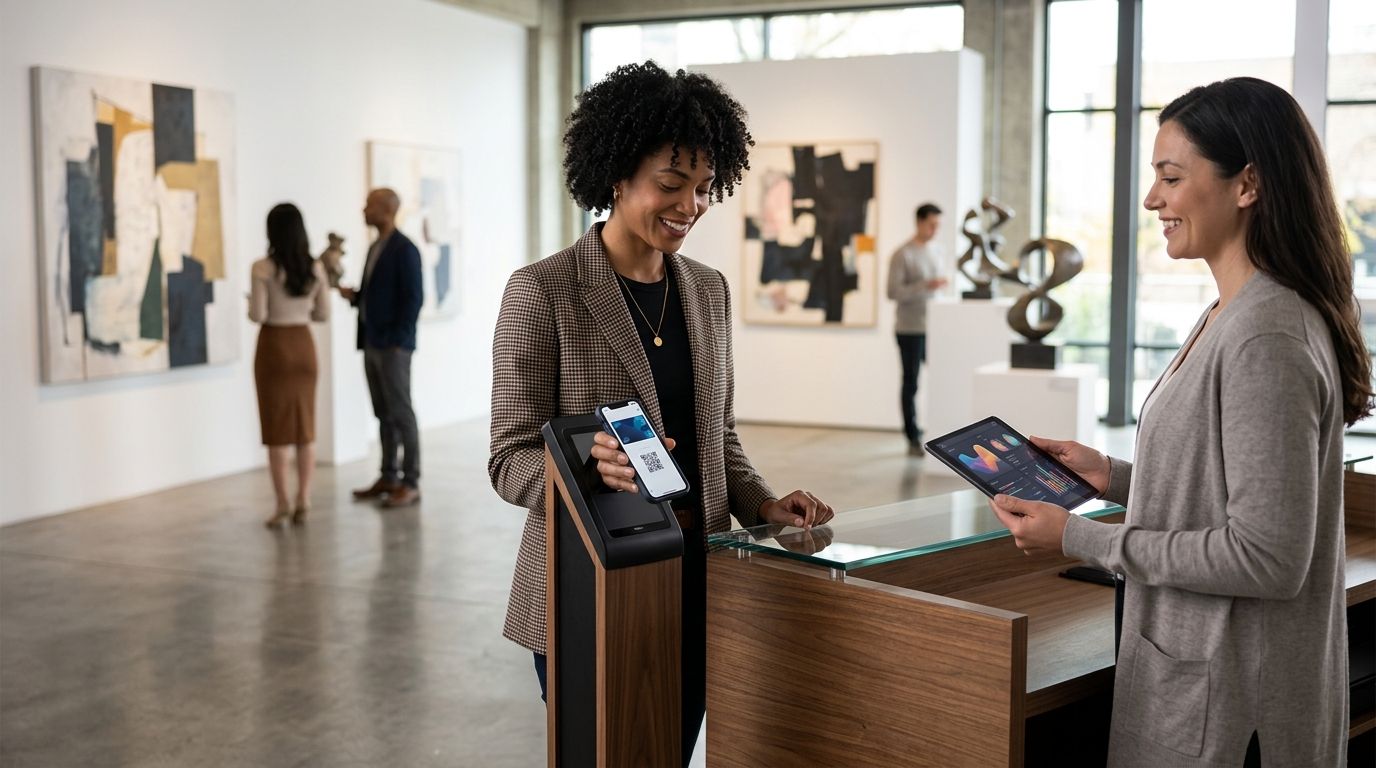
Scanning at a kiosk instead of checking names against paper cuts the door bottleneck that causes the worst opening-night complaints. Some galleries evaluate dedicated ticketing kiosk software once check-in lines start backing up past the gallery entrance.
- Scan tickets at a kiosk instead of matching names against a printed list
- Run separate lines for RSVP-only guests and paid ticket holders
- Track no-shows on free events to size the next opening's RSVP cap accurately
- Flag VIP and press tickets so the front desk recognizes them without asking twice
Sell where collectors and visitors already are
A gallery's audience doesn't always check email first. Some ask questions on WhatsApp after hours, and some are now searching for events inside AI assistants before they ever land on a website.
Events can be discoverable and bookable inside ChatGPT and Claude, with the seat picked on the real map inside the conversation, though checkout always completes on the gallery's own site, never inside the chat. A WhatsApp agent can answer a buyer's question and hold their seat while they decide, then hand over the checkout link instead of losing the sale to a slow reply the next morning.
- List events so they're discoverable and bookable inside ChatGPT and Claude
- Answer inbound WhatsApp questions instead of an inbox nobody checks after 6pm
- Let the WhatsApp agent hold a seat while a collector finishes deciding
- Send an email or WhatsApp message to past attendees before public sale opens
Reconcile funds and reuse the data
The event isn't done when the doors close. The data from three or four events tells you more than any single opening night does.
- Match payouts to each event before closing the books, not weeks later
- Compare RSVP counts to actual walk-ins across several events to spot a pattern
- Export contact data from paid events into the mailing list for the next show
- Track which artist talks sell out first as a signal for future programming
Comparison: ticketing options for art galleries in 2026
| Option | Best for | Key limitation |
|---|---|---|
| Manual RSVP + printed door list | A single opening night under 50 guests | No capacity control, no payment processing, no reusable visitor data |
| General consumer ticketing marketplaces | A one-off public event with an existing audience on the marketplace | Buyer fees stack up, no seat map for talks, funds sit with the platform before payout |
| Large-institution museum ticketing systems | High-volume timed entry across multiple daily sessions | Built for a scale most single-gallery spaces don't need, longer setup |
| Zunaro | Independent galleries running openings, talks, and ticketed exhibitions from one storefront | Newer platform, best suited to organisers ready to own their storefront rather than list on someone else's marketplace |
Put your gallery calendar on one storefront
RSVP openings, paid talks, and workshops on one live inventory.
Common mistakes art galleries make
- Capping a free opening the same way as a paid talk — RSVP-only events can run overbooked on purpose; a 40-seat talk can't.
- No door check-in system — a printed list at the entrance is where opening-night disputes start.
- Not separating free RSVP data from paid ticket data — the two audiences behave differently and shouldn't be merged blindly into one mailing list.
- Letting sold-out talks close without a waitlist — that's lost revenue on the next available slot with the same artist.
- Never following up with opening-night RSVPs — the free crowd is the easiest group to convert into paid workshop attendees, and most galleries never ask.
FAQ
What's the best event ticketing platform for art galleries in 2026?
For an independent gallery running free openings alongside paid talks and workshops, a platform that handles both event types on one storefront with reserved seating and direct payouts is the better fit than a general consumer marketplace. Zunaro is built for exactly this mix of free and paid events on one calendar.
Do art galleries need reserved seating software?
Only for event types with a fixed number of chairs, like artist talks and panel discussions. Opening nights with walk-in flow don't need assigned seats, but a talk in a converted project space does.
How much should a gallery charge for an opening night ticket?
Most galleries keep opening nights as free RSVP events and reserve paid tickets for talks, workshops, and ticketed exhibitions where capacity is fixed. Pricing decisions vary by gallery and program, so this is worth setting per event type rather than applying one rule across the calendar.
Can a gallery set up ticketing without technical help?
Yes. A seat map for a talk or panel can be traced from a photo of the room in about 60 seconds, with no CAD file and no setup fee, which removes the usual technical barrier to reserved seating.
Is WhatsApp used for gallery ticket sales?
Yes, a WhatsApp agent can answer buyer questions, hold a seat while someone decides, and hand over a checkout link, which suits galleries whose audience asks questions outside business hours.
What happens to no-shows on free RSVP events?
Free events typically see a gap between RSVPs and actual walk-ins, which is why galleries often set RSVP caps above the room's real capacity. Tracking that gap across a few events shows the right overbooking ratio for your specific space.
How should galleries handle VIP or press invitations differently from public tickets?
Hold a separate seat block for artists, press, and board members before public sale opens, and flag those tickets so front-desk staff recognize them without checking a separate list.
Do art galleries need a box office or kiosk on-site?
A kiosk speeds up check-in once attendance passes roughly 80 people, since scanning a ticket is faster than matching a name against a printed list, especially when RSVP and paid guests arrive in the same line.
One last thing
The event type most galleries under-serve isn't the opening — it's the artist talk. Openings run on walk-in flow and forgive some overbooking; a 40-chair talk with a real seat map doesn't, and it's the one format on a gallery's calendar built specifically for reserved seating rather than a workaround borrowed from a bigger venue.